Selling a House: A 2026 Guide to Conveyancing

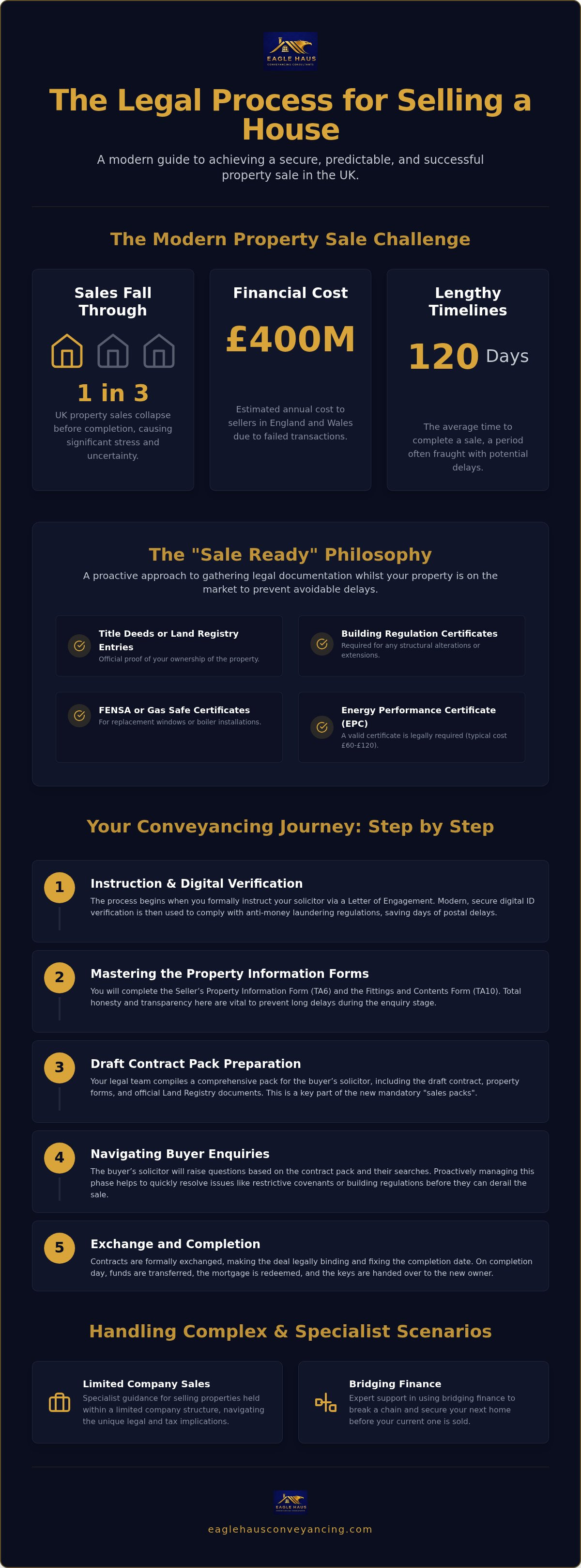
Did you know that one in three property sales in England and Wales falls through before completion, costing sellers an estimated £400 million every year? It is a sobering figure that highlights why the legal process for selling a house can feel so daunting. You are likely juggling the pressure of a shifting completion date whilst trying to decode complex jargon and avoid hidden delays. We understand that you want a sale that is secure, predictable, and, above all, successful.
We agree that the current system often feels opaque, especially with new government reforms introducing mandatory upfront sales packs. This guide is designed to be your modern professional partner, helping you master property law with ease. You will learn how to navigate the 120-day average completion timeline, manage the various costs involved, and ensure your transaction remains on track. From understanding your Capital Gains Tax obligations to preparing for a digital-first conveyancing experience, we provide the step-by-step clarity you need for a smooth move.
Table of Contents
Preparing for the Sale: The Proactive Legal Groundwork
The landscape of the UK property market changed significantly following the government reforms of June 2026. Sellers no longer wait for a buyer to appear before engaging professional help. Instead, they start the legal process for selling a house at the same time they contact an estate agent. This proactive approach is a direct response to the fact that the average time to complete a sale in England currently sits at around 120 days. By starting early, you can significantly reduce this timeline and provide the transparency that modern buyers expect.
Understanding What is Conveyancing involves much more than just signing papers at the end of a transaction; it is about building a secure foundation for your move from day one. In 2026, the introduction of mandatory "sales packs" means that having your information ready is not just helpful, it is becoming a standard requirement for a smooth listing.
The "Sale Ready" Philosophy
"Sale Ready" is the proactive gathering of all regulatory and title information before an offer is accepted. Adopting this mindset allows you to identify potential "red flags" in property searches before a buyer's solicitor finds them. If you have extended your home or replaced windows, having your planning permissions and FENSA certificates ready prevents the frantic last-minute searches that often lead to chain collapses. Early legal audits can catch issues with restrictive covenants or boundary disputes whilst you still have the time to resolve them calmly.
Organising your paperwork amongst the chaos of a move is easier when you have a clear checklist. You should aim to have the following documents ready for your solicitor:
Original Title Deeds or Land Registry entries
Building Regulation completion certificates for any alterations
FENSA or Gas Safe certificates for window or boiler installations
A valid Energy Performance Certificate (EPC), which typically costs between £60 and £120
Initial Financial Considerations
Success in residential purchases and sales depends on clear financial planning from the outset. You should request your mortgage redemption figures early to understand exactly how much will be paid to your lender upon completion. It's also vital to distinguish between your estate agent's commission and legal disbursements, such as Land Registry fees or bank transfer charges. This clarity ensures there are no surprises when the final completion statement arrives, allowing you to manage your budget with total confidence as you move through the legal process for selling a house.
Instruction and the Initial Legal Documentation
Once you have decided to move forward, the formal instruction phase begins. You will receive a Letter of Engagement that outlines the terms of our relationship. Eagle Haus is a trading name of TRW Legal Consulting Ltd, and our legal services are provided through Taylor Rose. This partnership ensures you benefit from a boutique, personal service whilst having the security and authority of a large, regulated firm. This stage is where the legal process for selling a house truly gains momentum, moving from preparation to active transaction.
Modern conveyancing standards in 2026 rely heavily on digital ID verification to meet strict anti-money laundering (AML) requirements. Instead of the traditional method of taking physical documents to an office, you will likely use a secure app to verify your identity and address. This tech-savvy approach is designed to be supportive and proactive, saving days of postal delays and ensuring your sale is secure from the very start.
Mastering the Property Information Forms
Transparency is your most effective tool for a secure sale. You will need to complete the Seller’s Property Information Form (TA6) and the Fittings and Contents Form (TA10). Common mistakes in the TA6, such as failing to disclose a minor dispute with a neighbour or neglecting to document changes to the property's external colour or materials, often lead to month-long delays during the enquiry stage. The TA10 is equally vital; it ensures there is no confusion over what is included in the sale price, from integrated white goods to garden ornaments. Providing total honesty in these forms builds trust with your buyer and prevents the anxiety of hidden issues surfacing later.
The Draft Contract Pack
After your forms are processed, your legal team prepares the draft contract pack for the buyer’s solicitor. This pack is a comprehensive collection of documents, including the contract itself and the Office Copy Entries from the Land Registry, which prove your legal right to sell the property. This stage allows both parties to establish a preliminary timeline for the transaction. For a broader overview of these official stages, you can consult the UK government's guide to selling a home. If you are looking for a proactive partner to handle these details, our team can help you organise your sale with total transparency and ease.
Navigating Enquiries and the Redemption of Charges
The enquiry phase is often the longest part of the legal process for selling a house. It's the stage where the buyer's solicitor scrutinises every detail of the contract pack we discussed earlier, looking for potential risks or inconsistencies. Whilst it often feels like a period of waiting, it is actually an intense phase of due diligence. Eagle Haus manages this by maintaining constant momentum, acting as a proactive bridge between you, the buyer's legal team, and any third parties involved. We don't just pass messages; we solve problems before they cause a bottleneck.
Managing these "Additional Enquiries" requires a methodical approach. Most questions will revolve around building regulations, historical planning permissions, or restrictive covenants that might limit how the buyer can use the land. Because we are a modern professional guide, we anticipate these questions. We work with you to provide the necessary evidence or explanations that keep the transaction moving towards a secure completion.
Handling Complex Enquiries
If you discover a missing certificate for work done years ago or an unresolved planning issue, don't panic. We often use Indemnity Insurance as a tactical tool to progress the sale without waiting for local authority backlogs. This is a common solution that provides the buyer's lender with the security they need whilst keeping your timeline intact. Proactive communication is our favourite way to prevent delays. By being open and fast with our responses, we build a sense of security that helps keep the chain together even when complex issues arise.
Mortgage and Secured Loan Management
A vital part of our service involves ensuring your property is sold free of any existing debt. We liaise directly with your mortgage lender to obtain an initial redemption statement. This document outlines exactly how much is required to pay off your loan on the scheduled completion date. If your financial arrangements are more specialist, involving second charges or bridging loans, we coordinate the necessary legal steps to clear these interests simultaneously.
This financial management is a core part of the legal process for selling a house. We ensure that all financial interests are cleared the moment the sale completes, protecting your reputation and your credit. By handling the redemption of charges with transparency and precision, we provide you with the peace of mind that your sale is legally secure and your financial obligations are fully met.
The Final Countdown: Exchange and Completion
Reaching the exchange of contracts is the most significant milestone in the legal process for selling a house. Up until this moment, the transaction remains "Subject to Contract", meaning either you or the buyer can withdraw without any financial penalty. Once contracts are exchanged, the agreement becomes legally binding. You are now committed to the sale, and the buyer is committed to the purchase. This transition provides the ultimate sense of security, allowing you to finalise your removal plans and notify utility companies with total certainty.
Setting the completion date requires balancing the needs of everyone in the chain. It is a collaborative effort that we manage proactively to ensure the date works for all parties. During the "gap" between exchange and completion, we prepare the final accounts. We calculate the exact balance due to you by deducting estate agent fees, legal disbursements, and the mortgage redemption figure. This transparency ensures you know exactly how much cash will land in your bank account on the day you move.
The Mechanics of Exchange
Solicitors typically exchange contracts using a specific telephone formula authorised by the Law Society. This protocol ensures that both legal teams hold identical versions of the signed contract and agree on the completion date. At this point, the buyer's solicitor transfers a deposit, which is usually 10% of the purchase price. Pulling out after this stage carries severe risks, including the loss of the deposit or legal action for breach of contract. It is the definitive point of no return.
Completion Day Logistics
Completion day is when the property finally changes hands and the balance of the money is transferred. The buyer's solicitor sends the remaining purchase funds through the CHAPS system, a secure, same-day transfer method. Once we confirm receipt of these funds, we notify you and the estate agent so the keys can be released. The buyer usually takes possession around midday, though this depends on the length of the chain and the speed of the banking system.
Our work continues even after the keys are handed over. We settle the estate agent's commission on your behalf and send the title deeds to the buyer's solicitor. We also ensure that your mortgage is fully redeemed and the charge is removed from the Land Registry. This rhythmic progression through the legal process for selling a house ensures that every financial interest is protected. If you want to ensure your final countdown is handled with modern efficiency, speak to our expert team for a proactive approach to your sale.
Specialist Scenarios: Company Sales and Bridging Finance
Not every sale follows the traditional residential path. In 2026, sellers often navigate specialist scenarios that require a higher level of legal authority and portfolio management. The legal process for selling a house becomes more complex when corporate structures or tactical finance are involved, making expert guidance essential for a smooth exit. We understand that these transactions demand a proactive approach to ensure that every layer of corporate governance is satisfied whilst keeping the chain moving.
Using bridging finance has become a vital tactical move for 2026 sellers looking to break a stagnant chain. It allows you to secure your next home before your current sale completes, reducing the pressure on specific completion dates. This level of flexibility is particularly relevant for those managing complex portfolios where company purchases are a frequent occurrence. By removing the immediate dependency on a single sale, you gain a significant advantage in a competitive market.
Corporate Property Transactions
When you sell a property through a limited company, we must verify the corporate authority of the directors and identify any Persons with Significant Control (PSCs). This layer of governance makes the legal process for selling a house more intricate than a standard individual sale, as it involves checking the company's Articles of Association and ensuring all resolutions are properly documented. We ensure that any transfers of equity within your portfolio are handled with precision, maintaining the integrity of your corporate records whilst satisfying the buyer's legal requirements.
The Eagle Haus Boutique Approach
We prioritise a personal connection over high-volume, automated processing. Our deep roots in Staffordshire, Cannock, and Walsall provide us with the local insight needed for successful Birmingham and Wolverhampton transactions. Local knowledge matters because we understand the specific nuances of West Midlands local authorities and the common issues found amongst properties in our region.
Choosing a legal partner shouldn't feel like being a number in a factory. If you are searching for conveyancing solicitors near me, it's vital to choose a partner that combines national standards with the boutique attention your transaction deserves. Our tech-savvy methodology ensures speed, but our commitment to personal service ensures you are supported through every complex decision.
Secure Your Sale with Modern Expertise
We've explored how proactive preparation, digital ID verification, and clear communication can transform your moving experience. By gathering your documentation whilst still on the market and understanding the nuances of exchange and completion, you can navigate the 2026 property market with total confidence. The legal process for selling a house doesn't have to be a source of anxiety when you have a modern professional guide by your side.
Eagle Haus provides a boutique service backed by the authority of Taylor Rose, who provide our SRA-regulated legal services. Whether you are managing complex company sales or using bridging finance to break a chain, our local experts in Birmingham, Wolverhampton, and Staffordshire are ready to support you. We prioritise transparency and efficiency to ensure your transaction stays on track from start to finish.
Get a transparent, professional conveyancing quote for your sale today.
We look forward to making your next move a success.
Frequently Asked Questions
How long does the legal process for selling a house take in 2026?
The average time to complete the legal process for selling a house in England is currently around 120 days. This timeline can fluctuate based on the length of your chain and the efficiency of local authority searches in areas like Birmingham or Wolverhampton. By instructing us early and gathering your documentation before an offer is accepted, you can often reduce this period and ensure a much smoother, more predictable transition.
Can I sell my house without a solicitor or conveyancer?
Whilst it's technically possible to handle your own conveyancing, it is highly discouraged due to the legal risks involved. Most mortgage lenders will only work with a regulated firm to ensure their interests are protected. Using a professional service ensures that complex issues, such as redeeming charges or managing company-based sales, are handled correctly. This provides a level of security and transparency that DIY sales simply cannot match for modern sellers.
What legal documents do I need to sell my property?
You will need several key documents, including the original title deeds from the Land Registry and a valid Energy Performance Certificate (EPC). You must also complete the TA6 Property Information Form and the TA10 Fittings and Contents Form. If you have made alterations to your home in Staffordshire or Shropshire, you should also provide building regulation certificates and any relevant planning permissions to avoid delays during the enquiry stage of the transaction.
What is the difference between a solicitor and a licensed conveyancer?
Both are qualified to handle the legal process for selling a house, but their training differs. Solicitors are regulated by the SRA and can handle a broader range of legal matters beyond property law. Licensed conveyancers are specialists solely in property transactions. Eagle Haus provides regulated legal services through our partnership with Taylor Rose, offering you the high-level authority and protection required for both residential sales and specialist property finance cases.
When should I instruct a solicitor when selling my home?
You should ideally instruct your solicitor as soon as you decide to put your property on the market. In the 2026 market, early instruction allows for a "pre-sale audit" of your paperwork, which can save weeks once a buyer is found. For sellers in Telford or Cannock, being proactive helps identify potential red flags in local searches early, ensuring your transaction maintains momentum and feels supportive from the very first day of listing.
What happens if the buyer pulls out before exchange of contracts?
If a buyer withdraws before the exchange of contracts, the agreement is not yet legally binding. This means you cannot usually claim compensation for wasted costs, which is why failed transactions cost UK sellers an estimated £400 million annually. Our proactive approach focuses on clear communication and speed to minimise this risk. Once you reach the exchange of contracts, the sale becomes legally secure and the buyer is fully committed to the purchase.
Do I have to pay Capital Gains Tax when I sell my house?
You typically don't pay CGT on your main home due to Private Residence Relief. However, if you're selling a buy-to-let or a second property, you must report the gain to HMRC and pay within 60 days of completion. For the 2026/27 tax year, the rates are 18% for basic rate taxpayers and 24% for higher rate taxpayers, with an annual exempt amount of £3,000 available for individuals making a taxable gain.
What are disbursements in the conveyancing process?
Disbursements are the costs paid by your solicitor to third parties on your behalf. These are separate from our professional fees and include items such as Land Registry fees, bank transfer charges (CHAPS), and the cost of property searches. We prioritise transparency by outlining these costs upfront, ensuring you have a predictable financial plan for your sale in Walsall or Birmingham without any hidden surprises at the point of final completion.



Comments