Residential Purchases and Sales: A Modern Guide to Conveyancing in 2026

What if the most stressful part of your move wasn't the packing, but the silence from your solicitor while your property chain hangs by a thread? We understand that residential purchases and sales in England and Wales often feel like a high-stakes race against time, frequently slowed down by complex paperwork and the fear of hidden legal fees. It's completely natural to feel anxious when your future depends on a process that can often feel opaque and disconnected.
This guide provides a modern roadmap to help you master the legal complexities of your transaction and achieve a stress-free completion. We've designed this expert overview to give you total clarity on the 2026 property market, from the latest Stamp Duty Land Tax thresholds to the practical impact of the Renters' Rights Act. You'll discover a clear timeline for your move and learn how a proactive, tech-savvy legal partner can simplify the journey, ensuring you stay informed and in control from your initial enquiry through to the day you get your keys.
Table of Contents
Navigating Residential Purchases and Sales in 2026
The year 2026 represents a significant shift for anyone involved in residential purchases and sales. While the core of the transaction remains the legal process of conveyancing, the method of delivery has evolved. We've moved past the days of waiting for the postman to deliver physical contracts. Today, the process is defined by digital-first efficiency, where biometric ID checks and secure online portals are the standard rather than the exception. This evolution is driven by a government roadmap aimed at making the market more transparent and reducing the time it takes to reach a successful completion.
Choosing a legal partner who understands the rhythm of both buying and selling simultaneously is vital. If you're moving house, you're likely managing two distinct but interconnected legal files. A delay on your sale can instantly jeopardise your purchase. Setting realistic expectations is the first step toward a successful move. While some sources suggest an average timeline of five months, a proactive approach can often streamline this. You'll need to identify potential pitfalls, such as missing planning permissions or slow local authority searches, early in the journey to keep things moving.
The Role of the Modern Conveyancer
A modern solicitor acts as the central hub of your transaction. They don't just file paperwork; they coordinate between mortgage lenders, estate agents, and the other side's legal team. Their expertise is most critical during the high-stakes "Exchange of Contracts" and "Completion" phases. During exchange, the agreement becomes legally binding and you're committed to the move. On completion day, your solicitor manages the secure transfer of funds, ensuring everything complies with strict UK anti-money laundering regulations. It's a complex balancing act that requires constant, clear communication.
Why National Expertise Matters
You no longer need to choose a solicitor based on their proximity to your local high street. In 2026, national expertise across England and Wales is far more valuable than a physical office around the corner. Property law can have regional nuances, particularly regarding local searches or specific land registry requirements. A consultant with a broad reach understands these variations and how they affect residential purchases and sales in different areas. Modern technology allows for a seamless, proactive service through secure apps and video calls. This makes the process faster and more accessible, fitting perfectly into a contemporary lifestyle without the need for unnecessary face-to-face meetings.
The Legal Architecture of Property Transactions
Success in residential purchases and sales depends on a solid understanding of the legal framework. Every transaction is built on a foundation of specific documents that define what you're buying and what the seller is legally obliged to disclose. In English law, the principle of "Caveat Emptor", or "Buyer Beware", remains a cornerstone. This means the seller isn't usually required to volunteer information about the property's condition unless specifically asked. It's your responsibility to investigate the title and the physical state of the building before you commit to the purchase.
To navigate the conveyancing process effectively, you must organise your paperwork early. For sellers, this involves completing the Law Society’s Property Information Form (TA6) and the Fittings and Contents Form (TA10). These documents detail everything from boundary disputes to which light fittings you intend to leave behind. For buyers, the focus is on reviewing the Title Deeds and understanding the type of ownership. Whether you're buying a Freehold, where you own the building and the land it sits on, or a Leasehold, where you purchase the right to occupy the property for a fixed term, the legal implications differ significantly. Getting these details right at the start prevents frustrating delays during the enquiry stage.
Property Searches and Enquiries
Your solicitor will conduct several non-negotiable searches to protect your investment. Local authority searches reveal planning permissions or nearby road schemes, whilst water and environmental searches identify flood risks or contaminated land. If these searches reveal "red flags", such as an unadopted road or a lack of building regulations for an extension, your solicitor must raise formal enquiries. These questions seek to resolve legal ambiguities before you exchange contracts. If you're feeling overwhelmed by the volume of data, it might be time to consult with a proactive legal partner who can simplify these complexities for you.
Specialist Scenarios: Company Purchases and Bridging
Not every transaction follows a standard path. Many property investors now utilise limited company purchases to improve tax efficiency, especially with the 5% Stamp Duty surcharge on additional properties in 2026. These corporate transactions require extra layers of legal scrutiny, including personal guarantee reviews and board minutes. Similarly, fast-paced deals may require bridging loans to secure a property before a long-term mortgage is finalised. Eagle Haus manages these additional corporate legalities, ensuring that even the most complex investor scenarios proceed with the same transparency and speed as a standard home move. We ensure that your residential purchases and sales are handled with precision, regardless of the corporate structure involved.
Overcoming the Chain: Managing Concurrent Sales and Purchases
A property chain is a sequence of buyers and sellers where each transaction depends on the success of the others. It is the most frequent cause of transaction failure in the UK market. When you are managing residential purchases and sales at the same time, you aren't just responsible for your own paperwork. You are part of a delicate ecosystem where one person's delay becomes everyone's delay. Success requires a solicitor who doesn't just wait for updates but actively chases the other parties in the chain to maintain momentum.
The legal mechanics of exchange in a chain are methodical. It doesn't happen all at once. Instead, solicitors "release" the contracts in a specific sequence. The solicitor at the bottom of the chain starts the process, and it moves up the line. Only when the final solicitor at the top confirms they are ready does the entire chain become legally bound. This is why you might spend a whole afternoon waiting for a phone call to confirm you've officially moved. Clear, proactive communication with your legal partner is the only way to ensure these moving parts align for a single completion day.
What Happens if a Chain Breaks?
Chains often collapse due to failed surveys, sudden financial changes, or simply a change of heart from a buyer or seller. You might also encounter "gazumping", where a seller accepts a higher offer from a third party after agreeing your sale. Conversely, "gazundering" occurs when a buyer reduces their offer just before exchange, forcing you to accept less or risk the whole chain failing. To prevent a collapse from ruining your plans, some movers use bridging loans. These allow you to buy your new home before you've sold your old one, effectively removing you from the chain and giving you the freedom to complete your move on your own terms.
Co-ordinating the Money Trail
Managing the finances of a dual move is a high-stakes task. Your solicitor acts as the gatekeeper, holding the deposit from your buyer and passing it up to your seller. On completion day, they ensure your mortgage lender releases the funds at the exact moment they're needed. The goal is to ensure that by midday, the money has moved through the entire chain. This allows everyone to collect their keys without sitting in a removal van until sunset. Ensuring your lender is briefed on the specific chain requirements early on is vital for a smooth transition during residential purchases and sales.
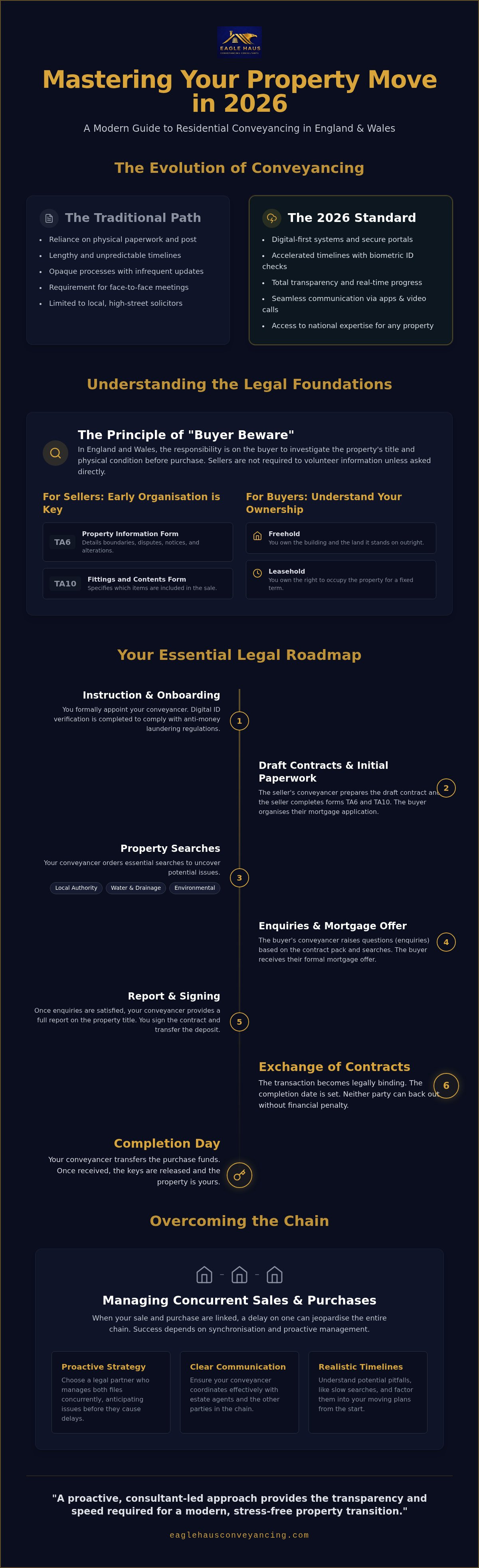
From Instruction to Completion: Your Essential Legal Roadmap
Your journey begins the moment you instruct your legal consultant. In 2026, the first step is no longer a trip to a physical office with a passport. Instead, you'll likely complete your ID and anti-money laundering checks via biometric digital verification. This secure, app-based process uses facial recognition and encrypted data to confirm your identity in minutes. Once this hurdle is cleared, your solicitor will issue or review the Draft Contract and the Home Information Pack, ensuring all initial disclosures are accurate and transparent.
The search phase follows, where your legal team digs into the history and future of the land. This is where we look for anything that could affect your enjoyment of the property, such as planned developments or environmental risks. After the searches are returned and your mortgage offer is formally issued, we enter the final enquiry stage. This is the last chance to resolve any lingering questions before the Exchange of Contracts. At the point of exchange, you'll pay your deposit, and the agreement becomes legally binding. If you want to see how this streamlined approach can work for your move, you can request a transparent quote for your move today.
The Final Countdown: Completion Day Logistics
Completion day is the finish line. At approximately 9:00 AM, the buyer's solicitor begins the transfer of the remaining purchase funds through the banking system. Once the seller's solicitor confirms receipt of the money, they will "release" the keys. You'll usually collect these from the estate agent. Your legal partner's work continues after you move in, as they must file your Stamp Duty Land Tax (SDLT) return within 14 days and update the Land Registry to record you as the new legal owner. These post-completion tasks are vital for securing your title.
Modern Tools for a Faster Process
Managing residential purchases and sales is significantly more efficient when using real-time digital portals. These platforms allow you to track every milestone of your conveyancing progress from your smartphone. Electronic signatures are now the industry standard, removing the delays caused by the postal service. To protect you from "Completion Day Fraud", we use secure, encrypted communication protocols for all financial discussions. We never ask for bank details via unencrypted email. This modern methodology doesn't just speed up the process; it provides a level of security that traditional high-street firms often struggle to match.
Modern Conveyancing for Stress-Free Property Transitions
The landscape of residential purchases and sales is changing. Many home movers are moving away from traditional "High Street" firms that can often feel distant or slow. At Eagle Haus Conveyancing Consultants, we believe conveyancing should be a proactive partnership rather than a bureaucratic hurdle. Our philosophy is built on three pillars: absolute transparency, tech-enabled speed, and unwavering personal support. We don't just process files; we guide people through one of the most significant transitions of their lives. We understand that behind every contract is a person or a family looking for a fresh start.
By operating as a trading name of TRW Legal Consulting Ltd, we provide regulated legal services through Taylor Rose. This partnership means you benefit from the agility of a modern consultancy while enjoying the robust legal protection and insurance of a top-tier national firm. You get the best of both worlds: boutique-style attention combined with large-firm security. When you request a fixed-fee quote from us, you'll see every cost upfront. We eliminate the fear of hidden disbursements or "surprise" hourly rates that often plague traditional property transactions. This clarity allows you to budget with total confidence from the very beginning.
Personalised Support for Every Mover
We treat every transaction as a unique partnership. You won't be passed between junior assistants or left waiting for days for a callback. Having a direct line to your conveyancing expert is a standard feature of our service, not a luxury. We prioritise clear, jargon-free communication so you always understand exactly where your move stands. This approach builds trust and ensures that you feel supported from the first enquiry until the final completion. It's about providing a service that feels human and accessible in an increasingly digital world.
Ready to Start Your Journey?
Instructing us for your upcoming move is simple and efficient. We've removed the barriers to entry so you can focus on the excitement of your new home. First, you'll provide some basic details about your property. Then, we'll generate an accurate, no-obligation conveyancing quote tailored to your specific needs. Once you're happy to proceed, our digital onboarding process gets your file active in record time. If you're looking for a proactive partner to handle your residential purchases and sales, speak to our residential property experts today. We are ready to help you secure your next move with confidence and ease.
Secure Your Next Move with Confidence
The 2026 property market demands a faster, more transparent approach to residential purchases and sales. By embracing digital ID verification and proactive chain management, you can navigate the complexities of English property law without the traditional stress. Whether you are a first-time buyer or an experienced investor managing complex company purchases, having a partner who prioritises clarity and speed makes all the difference. Our nationwide service across England and Wales ensures you receive top-tier legal protection, regulated by the Solicitors Regulation Authority through our partnership with Taylor Rose. We specialise in both standard home moves and complex property finance, providing the expertise needed to keep your transaction on track.
Get a Fixed-Fee Conveyancing Quote from Eagle Haus
Your new home is within reach, and we are here to ensure you get there smoothly. Let us handle the legal heavy lifting while you focus on the excitement of your next chapter.
Frequently Asked Questions
How long does the conveyancing process take for residential purchases and sales in 2026?
The average timeframe for residential purchases and sales in 2026 is approximately five months. This can fluctuate based on the length of the property chain and the speed of local authority searches in your specific area. Whilst market movement in 2026 remains modest, a proactive legal partner can often reduce this timeline by identifying potential hurdles early and using digital tools to bypass postal delays.
What is the difference between a solicitor and a conveyancer?
A solicitor is a qualified lawyer with expertise in many areas of law, whilst a licensed conveyancer is a specialist specifically trained in property law. Both are fully qualified to manage your move. At Eagle Haus, we provide regulated legal services through Taylor Rose, ensuring you receive expert guidance that balances technical property knowledge with a comprehensive understanding of the wider legal landscape across England and Wales.
Do I need a different solicitor for my sale and my purchase?
You don't need different solicitors, and using the same firm for both transactions is usually much more efficient. This allows your legal consultant to synchronise both files, ensuring that the exchange and completion dates align perfectly. It simplifies the communication process and ensures that your deposit moves seamlessly from your buyer to your seller on completion day without unnecessary banking delays.
What are the main costs involved in residential property transactions?
The primary costs include legal fees, Stamp Duty Land Tax (SDLT), and disbursements such as local authority searches. As of July 2026, SDLT rates start at 2% for properties over £125,000, whilst first-time buyers pay 0% on the first £300,000. You should also budget for Land Registry fees and bank transfer charges. We provide a transparent, fixed-fee quote to help you manage these expenses with total clarity.
Can I speed up my property transaction by using a digital-first solicitor?
Yes, a digital-first approach can significantly accelerate the timeline for residential purchases and sales. By using biometric ID verification and electronic signatures, we remove the traditional delays associated with the postal service. Real-time digital portals allow you to track progress and sign documents instantly from your smartphone, which often shaves weeks off the standard timeline compared to traditional high-street firms.
What happens if my buyer pulls out after I have exchanged contracts?
If a buyer pulls out after the exchange of contracts, they are in breach of a legally binding agreement. In most cases, you are entitled to keep their 10% deposit as compensation. You may also be able to claim for additional losses, such as legal costs or the difference in price if you eventually sell the property for less. This provides a vital financial safety net during the final move.
What is a Transfer of Equity and when do I need one during a sale?
A Transfer of Equity is the legal process used to add or remove someone from the property's title deeds. You might need this during a sale if the ownership structure is changing before completion, such as when a partner is being removed from the mortgage. It ensures that the legal ownership accurately reflects the current situation and is a service we provide alongside standard residential purchases and sales.
How does Eagle Haus handle company-based property purchases?
We manage company purchases with a focus on corporate compliance and lender requirements. This involves reviewing personal guarantees, drafting board minutes, and ensuring the transaction meets the specific criteria for limited company buy-to-lets. Because we operate through Taylor Rose, we have the specialist expertise to handle these complex investor scenarios, including the 5% Stamp Duty surcharge that applies to additional residential properties in 2026.



Comments