How Does Shared Ownership Work? A 2026 Step-by-Step Guide

What if you could stop waiting for a housing market correction and start building equity in your own home with a deposit as low as 5%? If you've been watching property prices across Staffordshire or Birmingham, you've likely wondered how does shared ownership work in the current climate. It's natural to feel a sense of anxiety about the complexity of legal paperwork or the fear of hidden costs buried within a leasehold agreement. We know that balancing a mortgage alongside monthly rent feels like a daunting financial commitment, but it's a path that thousands of first-time buyers are successfully taking in 2026.
In this guide, we promise to strip away the jargon and provide a clear, step-by-step roadmap to securing your home. We'll detail the latest eligibility criteria, including the £80,000 household income threshold, and explain the financial reality of service charges and staircasing. You'll also discover how to find a specialist solicitor who understands the local West Midlands market. From your initial application to the moment you get your keys, we're here to ensure the process feels transparent, secure, and entirely manageable.
Table of Contents
Defining Shared Ownership: A Modern Path to Property
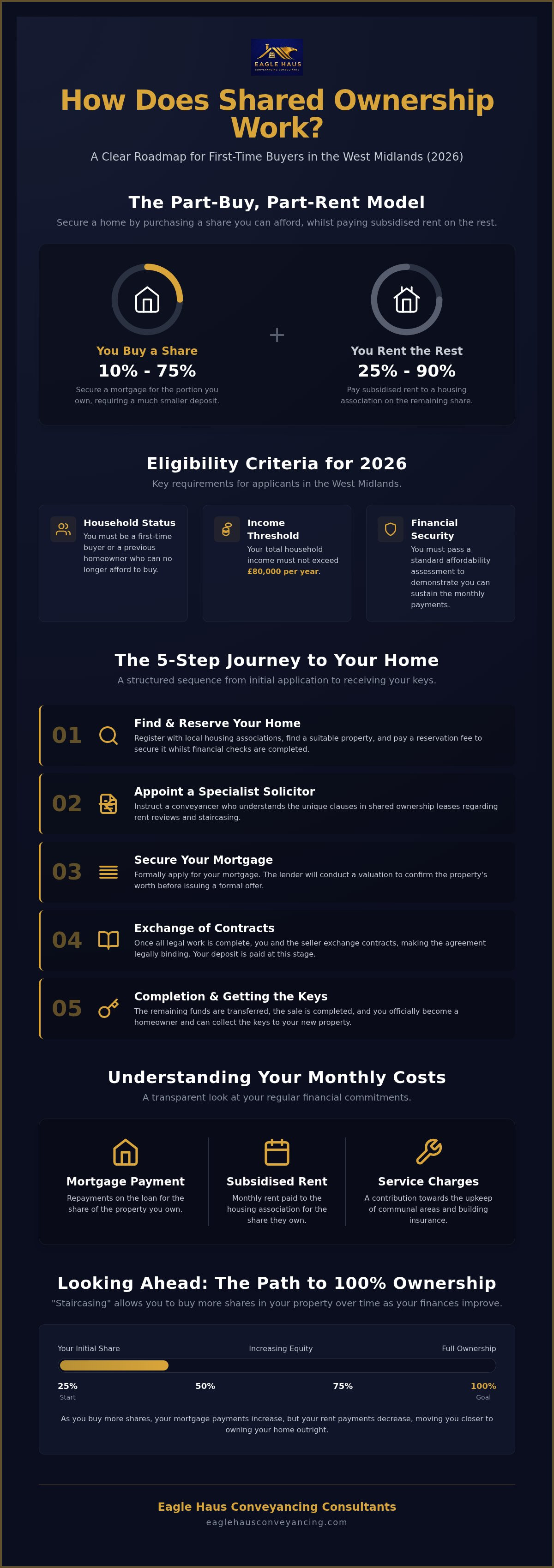
Shared ownership is a practical "part-buy, part-rent" scheme designed to help people get onto the property ladder when the open market feels out of reach. Essentially, you buy a share of a property, usually between 10% and 75%, and pay a subsidised rent on the portion held by the landlord. These landlords are typically housing associations or local councils across the West Midlands. When people ask how does shared ownership work, they're often surprised to learn that even with a 10% share, you have the full legal rights and responsibilities of a homeowner. You aren't just a tenant; you're a leaseholder with a long-term stake in the property.
This model is a form of Defining Shared Ownership: A Modern Path to Property that bridges the gap between private renting and full ownership. It allows you to start with what you can afford today whilst keeping the door open to owning the entire property in the future. It's a modern solution for those who want the stability of their own front door without the immediate burden of a massive mortgage. Understanding how does shared ownership work in a legal sense is the first step toward moving into a home that fits your budget and your lifestyle.
Who Is Eligible for Shared Ownership in 2026?
Eligibility is primarily based on your financial situation and your current housing status. The scheme is aimed at first-time buyers, though it's also open to those who used to own a home but can no longer afford to buy one on the open market. This is particularly helpful for people navigating major life changes like a relationship breakdown or a relocation for work. In 2026, the household income rule dictates that your total combined gross earnings must not exceed £80,000 to qualify for a shared ownership property anywhere in the West Midlands or outside London.
You'll need to demonstrate that you can afford the monthly costs through a standard affordability assessment. This ensures that the combination of your mortgage, rent, and service charges remains sustainable for your budget. If you've lived or worked in a specific area like Staffordshire, some local authorities may even give you priority for new developments in those communities.
The Benefits of Starting Small
The most immediate advantage is the significantly lower deposit requirement. Because your deposit is calculated as a percentage of the share you're buying, not the full market value, the upfront cost is much more manageable. This makes it possible to move into high-demand areas like Solihull or Lichfield much sooner than if you were saving for a traditional 10% deposit on a full-price home.
Shared ownership also provides far greater security of tenure than the private rental sector. You won't face the sudden "no-fault" evictions that can disrupt lives, and as the property value increases, so does the value of your share. It's a proactive way to build equity whilst enjoying the peace of mind that comes with a permanent home.
The 5-Step Process: How to Buy a Shared Ownership Home
Moving from the "what" to the "how" is where many buyers feel the most pressure. To understand how does shared ownership work in practice, it's best to view it as a structured journey. This isn't just about finding a house; it's a legal and financial sequence that requires precision at every stage. Once you grasp the mechanics of the process, the path to your first home becomes much clearer and far less intimidating.
Step 1: Finding and Reserving Your Home
Your search begins by registering with local housing providers or checking portals for new-builds and resales in Birmingham or Staffordshire. Once you find a suitable home, you'll pay a reservation fee to take it off the market. This fee secures the property whilst you undergo a formal financial assessment with the housing association. It's vital to check the lease length and service charge estimates at this stage, as these impact your long-term costs. For official guidance on national rules, you can refer to the government's outline on How to Buy a Shared Ownership Home.
Step 2: The Critical Legal Instruction
As soon as your reservation is confirmed, you need to appoint a solicitor. Shared ownership conveyancing is a specialist field because the leases contain unique clauses regarding rent reviews and "staircasing" that standard contracts don't have. Understanding first time buyer conveyancing fees and how they differ for shared ownership will help you budget accurately. Knowing exactly how does shared ownership work from a legal perspective ensures that you aren't caught out by restrictive terms later on. A proactive solicitor will ensure the housing association’s requirements meet your mortgage lender’s standards, preventing delays later in the process.
The final three steps move quickly once the legal groundwork is laid:
The Memorandum of Sale: The housing association issues this document to all parties, officially triggering the legal process.
Conveyancing and Mortgage: Your solicitor performs local searches and title checks whilst your lender finalises your mortgage offer.
Exchange and Completion: You sign the contracts, pay your deposit, and finally receive the keys to your new home.
If you're feeling overwhelmed by the paperwork, it's a good idea to speak to a team that specialises in residential purchases and sales to ensure your move stays on track.
Calculating the Real Costs: Mortgage, Rent, and Service Charges
Many buyers find that understanding how does shared ownership work financially is the biggest hurdle to clear. Your monthly outgoings are split into three distinct parts: your mortgage payment, the rent paid to the housing association, and a service charge. Currently, the rent on the share you don't own is typically set at 2.75% of that share’s value per year, though it is capped at a maximum of 3%. These rent payments are usually linked to inflation, with newer leases often increasing by the Consumer Price Index (CPI) plus 1%. According to official government guidance on Shared Ownership, this structure keeps the entry point accessible whilst allowing you to build equity over time.
Service charges are another critical factor, typically ranging from £1,200 to £3,000 annually. These fees cover building insurance and the maintenance of communal areas, such as hallways, lifts, or shared gardens. In many leasehold flats, a portion of this money goes into a "sinking fund." This acts as a collective savings pot for major future repairs, such as roof replacements or structural work. This proactive approach prevents sudden, massive bills, providing a layer of financial security that many private tenants lack.
The Deposit: How Much Do You Actually Need?
The deposit requirement is where the scheme truly shines for those in the West Midlands. Instead of saving a percentage of the full property price, you only need a deposit based on the share you are purchasing. If you are buying a 25% share of a £200,000 home (£50,000), a 5% deposit would only be £2,500. This is a fraction of the £20,000 you might need for a traditional 10% deposit on the open market. When planning your budget, you must also account for shared ownership conveyancing fees and other moving costs to ensure you're fully prepared for the legal journey.
Leasehold Obligations and Ground Rent
As of 2026, most new shared ownership leases benefit from "peppercorn" ground rent, meaning you effectively pay nothing for this specific charge. However, a common point of confusion is the "repair obligation" clause found in almost all housing association leases. This clause states that you are responsible for 100% of the maintenance and repair costs for your home, even if you only own a 10% share. Whilst some new-build properties offer a 10-year period where the housing association covers external repairs, you remain the primary person responsible for the interior. Fully grasping how does shared ownership work in terms of maintenance ensures you can budget for the long term without any unexpected surprises.
Looking Ahead: Staircasing and Selling Your Shared Ownership Property
One of the most appealing features of this scheme is the ability to increase your stake over time through a process called "staircasing." Many residents ask how does shared ownership work when they feel ready to buy more equity and reduce their monthly rent. Simply put, you purchase additional shares in increments, usually at least 10% at a time, although some newer leases allow for smaller 5% steps. As your share in the property grows, the amount of rent you pay to the housing association decreases proportionally. If you eventually staircase to 100%, you will stop paying rent altogether, though you will likely still pay service charges if the property is a flat.
The Staircasing Legal Process
Increasing your ownership isn't as simple as just making a payment; it requires a formal legal process. First, you must obtain a valuation from a RICS-qualified surveyor rather than a local estate agent. This ensures the price you pay for the new share reflects the current market value accurately. Once the price is agreed, your solicitor will handle the "Memorandum of Staircasing" and update the title deeds at the Land Registry. To keep costs down, it's often strategic to staircase in larger chunks. This reduces the number of times you have to pay for valuations, mortgage arrangement fees, and legal services.
Selling and Moving On
When you decide it's time to move, the process differs slightly from a traditional house sale. Your housing association usually has a "nomination period," which is a set timeframe (often four to eight weeks) where they have the right to find a buyer for your share. This helps keep the property available for other people who need affordable housing. This "first refusal" right is a standard part of the leasehold agreement. If they don't find a buyer within this window, you can typically sell your share on the open market through an estate agent.
If you have already staircased to 100%, you can usually sell the property just like any other homeowner. At this stage, you'll be moving into the standard world of residential purchases and sales for your next move. Whether you are buying more shares or preparing to sell, having a legal partner who understands the nuances of these leases is essential. If you're ready to take the next step, you can get a transparent conveyancing quote from our specialist team today to see how we can support your transition.
Expert Conveyancing in the West Midlands: Navigating the Legal Fine Print
Truly understanding how does shared ownership work in a practical, legal sense involves more than just reading a brochure. It requires a specialist who can dissect complex leasehold agreements to ensure your rights are protected for the long term. Because these properties involve a three-way relationship between you, your lender, and the housing association, the legal paperwork is significantly more detailed than a standard purchase. A specialist solicitor is non-negotiable here, as they must ensure the lease meets the stringent requirements of your mortgage provider whilst safeguarding your future ability to staircase or sell.
At Eagle Haus Conveyancing Consultants, we organise your file using a modern, tech-savvy methodology that prioritises speed without sacrificing the personal touch. We know that the wait between an offer and completion is often the most stressful part of the journey. By providing proactive updates and maintaining transparent communication, we aim to alleviate the anxiety typically associated with these major life transitions. You won't be left wondering about the status of your searches or whether the housing association has responded to a query; we keep the momentum moving forward.
Our Presence in Staffordshire and Birmingham
Our deep roots in the West Midlands give our clients a distinct advantage. We have established relationships and extensive experience dealing with housing providers across Telford, Wolverhampton, and Cannock. This local knowledge is vital because regional associations often have their own specific procedural requirements that can catch out firms from outside the area. Whilst our systems are built for the digital age, we remain a boutique service that values individual attention. We're a professional guide that stays human and accessible, acting as your supportive partner throughout the entire transaction.
Your Next Steps with Eagle Haus
Securing your first home is a significant milestone, and having the right legal team behind you makes all the difference. We provide the peace of mind that comes with regulated expertise through TRW Legal Consulting Ltd and Taylor Rose. When you're ready to move from researching how does shared ownership work to making your purchase a reality, we're here to provide a clear roadmap. You can expect a service that is fundamentally reassuring, professional, and tailored to the unique West Midlands market.
Ready to start your journey? Get a reassuring, professional conveyancing quote today and take the first step towards your new home with confidence.
Taking the First Step Toward Your New Home
Transitioning from renting to owning is a significant life milestone. We have covered the essential mechanics of the scheme, from the initial five-step purchase process to the long-term benefits of staircasing. By now, you should have a much clearer picture of how does shared ownership work and how it can be tailored to your financial goals in 2026. Whether you're looking at new developments in Birmingham or resales in Staffordshire, the right legal support ensures your investment is protected from day one.
Our specialist shared ownership legal team at Eagle Haus, a trading name of TRW Legal Consulting Ltd, combines modern efficiency with deep local expertise. We understand the nuances of West Midlands housing associations and the specific fine print within their leases. We're here to act as your proactive partner, managing the complex paperwork so you can focus on the excitement of moving in. If you're ready to turn these insights into action, you can secure your shared ownership home with professional legal guidance from Eagle Haus. Your journey to homeownership starts here, and we're ready to help you every step of the way.
Frequently Asked Questions
Is shared ownership worth it in 2026?
Yes, shared ownership remains one of the most accessible routes to homeownership for those with smaller deposits. With average five-year fixed mortgage rates sitting at 5.12% in August 2026, buying a smaller share significantly reduces your total borrowing. It provides a level of security and the ability to build equity that private renting simply cannot offer in the current market.
Can I renovate or improve my shared ownership home?
You are free to carry out minor decorative changes, but structural alterations almost always require written permission from your housing association. If you install a new kitchen or bathroom, these improvements could increase the property's value. It is vital to keep records of these works, as they need to be factored into the valuation when you eventually staircase or sell.
Do I need a special solicitor for shared ownership?
Yes, it is essential to instruct a solicitor who specialises in shared ownership leases rather than a general practitioner. These leases contain complex clauses regarding rent reviews and repair obligations that require expert interpretation. A specialist ensures the contract meets your lender's specific requirements, which is a critical step in ensuring your mortgage is approved without unnecessary delays.
What happens if I want to sell my shared ownership property?
You must first give the housing association the opportunity to find a buyer during a set nomination period, typically lasting four to eight weeks. If they cannot find a buyer within this window, you can then sell your share on the open market through an estate agent. The sale price will be determined by an independent RICS valuation conducted at the time of sale.
Can I buy a shared ownership house as a limited company?
No, shared ownership properties are strictly for individuals who intend to live in the home as their only and primary residence. The scheme is a government-backed initiative designed to help people secure a home to live in, rather than an investment vehicle. Consequently, company purchases and buy-to-let mortgages are not permitted under the standard terms of the lease.
Are service charges capped in shared ownership schemes?
Service charges are not capped and can fluctuate based on the actual costs of maintaining communal areas and building insurance. Whilst rent increases are usually linked to inflation, service charges reflect real-world maintenance expenses. We always recommend reviewing at least three years of service charge history during the legal process to understand the likely trajectory of these costs.
What is the minimum share I can buy in 2026?
Under the current 2021 to 2026 Affordable Homes Programme, the minimum initial share you can purchase is 10%. This lower entry point has changed the conversation around how does shared ownership work for many first-time buyers, as it significantly reduces the required deposit. You can then choose to buy further shares in 1% or 5% increments depending on your specific lease terms.
How long does the shared ownership conveyancing process take?
The legal process typically takes between 8 and 12 weeks from the point your solicitor receives the initial contract pack. This timeline depends on the efficiency of the housing association and how quickly your mortgage offer is issued. Using a modern, tech-savvy firm with experience in the West Midlands market can help streamline communication and keep the momentum of your purchase moving forward.



Comments