Freehold vs Leasehold in Cannock: Key Differences for Buyers

The freehold option isn’t automatically the better buy, and a leasehold home isn’t necessarily one to avoid. The freehold vs leasehold differences Cannock buyers need to understand come down to the rights and responsibilities attached to the specific property, not just its label.
It’s understandable to feel unsure about what you’ll own, what you may have to pay and whether the title could affect a future sale. In simple terms, freehold usually means owning the property and the land it stands on, while leasehold gives you the right to occupy a property for a set period under a lease. The documents set out the detail, including ongoing costs, restrictions and responsibilities.
This guide explains how each type of ownership works and what to look for when comparing properties in Cannock. You’ll see why lease length, ground rent and service charges matter, and how conveyancing review of the title, lease terms and transaction enquiries can give you a clearer picture of a specific purchase.
Table of Contents
Freehold vs leasehold in Cannock: what does each type of ownership mean?
Freehold vs leasehold differences: compare control, charges and responsibilities
Which Cannock property tenure suits your plans? Compare the trade-offs
Buying in Cannock? Use this checklist to compare the title and lease
How conveyancing support helps Cannock buyers choose with confidence
Freehold vs leasehold in Cannock: what does each type of ownership mean?
Freehold means owning the property and the land it stands on, subject to the title and applicable law. Leasehold means holding a legal interest in a property for the period set out in a lease, which also governs important rights and responsibilities. For a Cannock buyer, the tenure label is only the starting point. The title documents and, for a leasehold home, the lease explain what you’ll own and the obligations that come with it.
A freeholder owns the freehold estate; a leaseholder holds a separate property interest for a defined term under a lease. The distinction is central to understanding the Freehold (law) concept and how it differs from leasehold. Houses are often freehold and flats often leasehold, but this is a common pattern, not a rule for identifying the tenure of every property.
What does owning a freehold property mean?
With a freehold, ownership generally includes both the home and its land, subject to restrictions or obligations recorded on the title and laws that apply to the property. That doesn’t mean unlimited freedom: planning rules, covenants and other legal restrictions may affect what you can do.
A straightforward freehold arrangement usually has no landlord collecting rent under a lease. However, estate covenants or shared-maintenance arrangements can still require contributions or limit certain activities. For example, a freehold home on a managed development may have responsibilities linked to shared areas. Check the title and purchase documents to see whether this applies.
What does owning a leasehold property mean?
A leasehold buyer owns the leasehold interest for the term stated in the lease, rather than the freehold estate. The freeholder owns the underlying freehold interest; the leaseholder holds the right to occupy and use the property under the lease’s conditions. A managing agent may handle building management or collect charges, but not every property has one.
The lease sets out the rights and obligations that shape ownership. Depending on its terms, it may cover ground rent, service charges, repairs, shared areas, alterations and permissions. These details can affect both day-to-day costs and future plans. Don’t assume that two Cannock flats have identical arrangements simply because they share a building or appear similar.
To establish the position for a property you’re considering, review its Land Registry title documents and, if it’s leasehold, the lease itself. A conveyancer can examine the registered title entries and relevant transaction documents, then explain how they apply to that purchase. This property-specific review turns the general freehold vs leasehold differences Cannock buyers search for into a clearer picture of the ownership on offer.
Freehold vs leasehold differences: compare control, charges and responsibilities
The main differences are usually the length of ownership, who manages shared parts and which costs or permissions apply. These are general patterns, not automatic rules. The registered title and, for a leasehold property, the lease determine the legal position for the individual home.
Who controls repairs, alterations and shared spaces?
A freeholder may be responsible for their home, but covenants or estate arrangements can still govern changes or require contributions towards shared areas. In a leasehold building, the lease may set out who handles repairs inside the flat and who manages common parts such as corridors or the roof. It may also set conditions for alterations, pets, subletting or use of shared spaces.
Leasehold obligations come from the lease, so check the terms of each property individually. The GOV.UK guide for leaseholders explains common lease terms and responsibilities. The property’s own documents show which provisions apply.
What charges and lease terms should buyers compare?
For a leasehold home, review any ground rent, service-charge provisions and reserve-fund arrangements. Check how charges are set and what they cover, as these vary between leases and not every property has the same charges. For a flat, establish how responsibilities for the home and the building’s common parts are divided.
Check the remaining lease term early. It can matter to a future sale and a lender’s mortgage assessment, but requirements vary. In 2026, the Leasehold and Freehold Reform Act 2024 is in force in part: the two-year ownership requirement for lease extensions or buying the freehold was removed in February 2025, while some major reforms have not yet commenced. Your conveyancer can establish which rules apply to the transaction rather than relying on proposed changes.
For a Cannock purchase, Eagle Haus Conveyancing Consultants provides conveyancing support to review these details against the title and lease. Explore Cannock purchase conveyancing for help understanding the documents and their implications.
Which Cannock property tenure suits your plans? Compare the trade-offs
The right tenure depends on how you plan to use the property, which ongoing responsibilities fit your budget and how long you expect to own it. A house isn’t automatically the better choice because it’s freehold, and a flat isn’t automatically unsuitable because it’s leasehold. The property type alone can’t tell you whether its terms work for your circumstances.
As you weigh the freehold vs leasehold differences Cannock buyers face, focus on the actual title and obligations alongside your priorities. Consider what you may want to change, how comfortable you are with shared arrangements and what could matter when you sell.
When might a freehold property fit your plans?
A freehold house may suit you if you value direct control over the home and land, perhaps because you expect to adapt the property as your household’s needs change. That control remains subject to title restrictions and applicable law, so check whether covenants affect alterations or future use.
Build possible estate charges and shared-facility responsibilities into your budget. If you expect to sell after a relatively short stay, consider whether title obligations or restrictions could be relevant to a future buyer. A conveyancing review can help clarify these points before you commit.
When might a leasehold property still be suitable?
A leasehold flat may suit a buyer who prefers a home within a building where some maintenance and shared areas are managed through arrangements set out in the lease. That structure can be practical, but it’s important to understand how charges are calculated, what the lease says about permissions and how much term remains.
Think about your intended use. If you may want to alter the flat, sublet it or keep a pet, relevant lease conditions could affect those plans. A leasehold purchase isn’t automatically poor value or unsuitable. Its fit depends on the specific terms, costs and your priorities.
Before deciding, compare the likely commitments with your budget and ownership plans, not just the asking price or property label. If you’re unsure how the purchase process fits together, the residential purchases and sales guide explains the wider conveyancing journey, from reviewing legal documents to progressing towards completion.
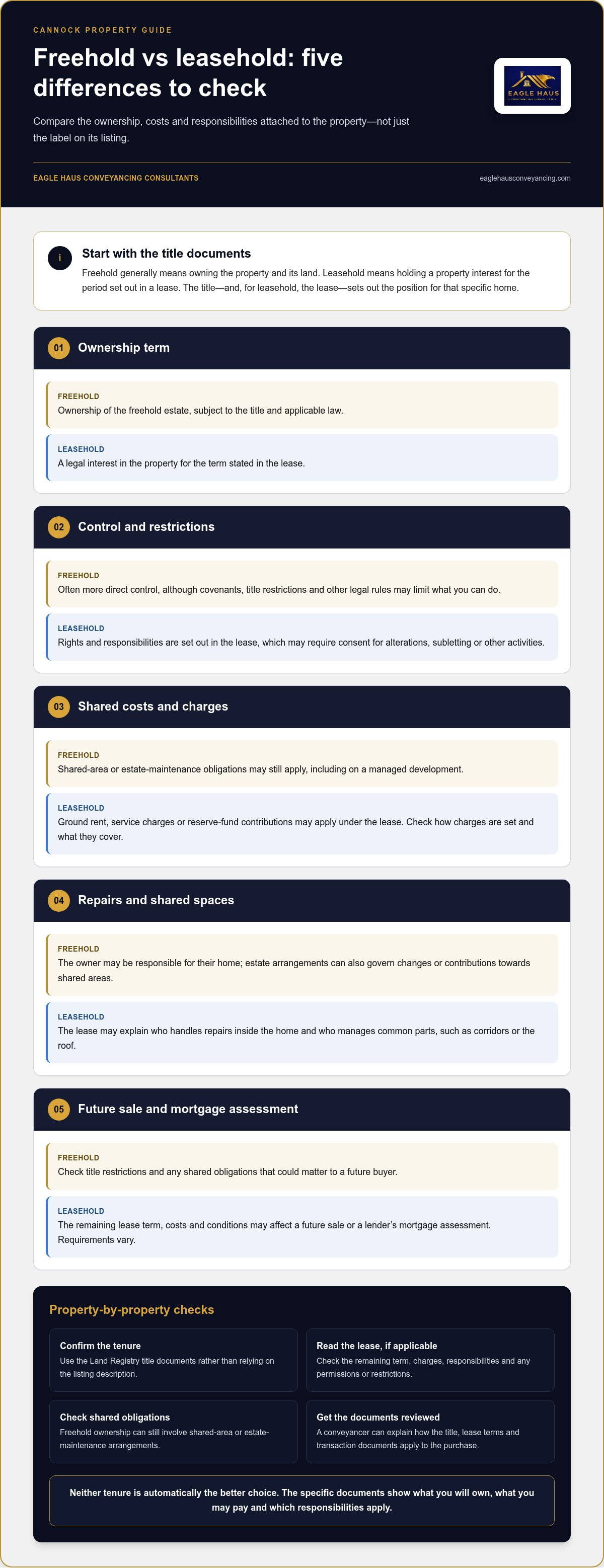
Buying in Cannock? Use this checklist to compare the title and lease
Before deciding whether a property’s tenure fits your plans, work through the documents in order. The freehold vs leasehold differences Cannock buyers need to understand are specific to each title and, where relevant, lease. A conveyancer reviews the registered entries, lease provisions, restrictions and transaction enquiries, then explains how they affect the purchase.
Confirm the tenure. Start with the title documents. Establish whether the property is freehold or leasehold, and whether there are separate titles or interests that need reviewing.
For a freehold, check the title entries. Review registered ownership, rights of way, covenants and restrictions. Look for estate charges or shared-maintenance obligations that could affect your responsibilities or budget.
For a leasehold, examine the lease and management information. Check the remaining term, ground-rent provisions, service-charge arrangements, reserve funds and who is responsible for repairs. Review consent requirements, use restrictions and any steps that could affect a future sale.
Consider relevant enquiries and searches. Your conveyancer raises enquiries to clarify points in the documents and orders searches appropriate to the transaction. A local authority search covering the Cannock Chase area may be relevant, but the right coverage depends on the property’s location and the transaction. Searches help identify property-specific matters; they don’t mean every Cannock home has the same local risks.
Understand the transaction costs. Review the purchase cost breakdown so you know which legal and search costs apply to your transaction. The first-time buyer conveyancing fees guide explains how these costs can be set out.
These checks sit within the wider legal process of a purchase. Read the home purchase conveyancing guide for an overview of how the transaction progresses alongside your property-specific title and lease review.
For a clearer view of the documents behind your Cannock purchase, discuss your Cannock property purchase.
How conveyancing support helps Cannock buyers choose with confidence
Knowing the general freehold vs leasehold differences Cannock buyers may encounter is useful, but the documents for the property you’re buying determine the actual position. Conveyancing review connects your priorities, such as making alterations or letting the property, with the title, lease and transaction information. That helps you understand the implications before deciding how to proceed.
Eagle Haus supports residential purchases in Cannock and the wider local area, with legal services provided through the regulated firm Taylor Rose. Your conveyancer reviews the relevant documents, raises enquiries where clarification is needed and explains the answers in plain English. The review helps you make an informed decision by setting out the legal position and relevant considerations.
How a conveyancer reviews freehold and leasehold documents
For a freehold purchase, the review can cover title entries, rights, covenants, restrictions and any obligations relating to shared areas. For a leasehold property, it also includes the lease clauses and relevant management information, such as provisions for charges, repairs and permissions. Enquiries help clarify points that aren’t clear from the paperwork alone.
Potential obligations and transaction implications are explained before exchange, in line with the transaction timetable and the information available. If a term could affect your plans, you can discuss what it means and consider your options with a clearer understanding of the legal position.
What to prepare before discussing a Cannock purchase
A few details can help focus the conversation on what matters to you. Gather what you have and note any questions or plans you’re weighing up.
The property address or listing details and estate-agent particulars.
Any title information or lease documents already available to you.
Your intended use, including possible alterations or letting plans.
How long you expect to own the property and any concerns about future resale.
You don’t need to interpret the legal wording yourself. Clear explanations can help you see how the documents relate to your priorities and what the next steps in the purchase may involve. For guidance on comparing legal support, read the guide to choosing a conveyancing partner.
Ready to discuss the title or lease for a Cannock property you’re considering? Speak to Eagle Haus about your purchase.
Make your Cannock property decision with confidence
The right choice isn’t decided by the freehold or leasehold label alone. Your plans, the title and, where relevant, the lease all matter. Check the ownership term, restrictions and ongoing obligations, then consider how they fit your budget and the way you want to use the property.
Understanding the freehold vs leasehold differences Cannock buyers face is a useful starting point. A conveyancer can review the property documents, raise relevant enquiries and explain what the findings mean for your purchase. This gives you a clearer basis for weighing your options before committing.
Eagle Haus supports residential purchases and sales across England and Wales, including Cannock. Legal services are provided through the regulated firm Taylor Rose. If you’re considering a property and want to understand its title or lease, talk to Eagle Haus about your Cannock property purchase.
With the right information in front of you, you can take your next step with greater clarity and confidence.
Frequently Asked Questions
Is freehold always better than leasehold?
No. Freehold may offer more direct control, but covenants, title restrictions or shared-maintenance obligations can still apply. A leasehold property may suit you if its lease terms, costs and management arrangements fit your plans. Compare the specific documents, likely ongoing commitments and your intended use rather than choosing by tenure label alone. The better fit is the one whose responsibilities and restrictions you understand and are comfortable accepting.
Can a house in Cannock be leasehold?
Yes. A house in Cannock may be leasehold, although the property type alone doesn’t establish its tenure. The sale of new leasehold houses is banned in England and Wales except in exceptional circumstances, but existing leasehold houses can still come onto the market. Check the registered title and, if it’s leasehold, review the lease to understand its term, conditions and any charges before proceeding.
What happens if a lease is short?
A short lease can make a property harder to sell or mortgage, depending on the remaining term and the buyer’s lender’s criteria. Extending it may be an option, but the process and potential cost depend on the lease and circumstances. Since February 2025, leaseholders no longer need to have owned the property for two years before applying to extend a lease. Other major reforms have not all commenced, so check the rules that apply at the time.
Do leasehold owners in Cannock have to pay ground rent and service charges?
Not necessarily. Ground rent depends on the lease, and service charges apply where the lease makes provision for them, often to cover building management or shared repairs. Ground rent on most new residential leases has been restricted to a peppercorn since 30 June 2022, but this doesn’t apply to existing leases. Review the specific lease and management information to see which charges apply, how they’re calculated and what they cover.
Can I make alterations to a leasehold property?
Possibly, but the lease may require consent for particular alterations, and the type of work matters. Check the lease provisions before planning changes, especially if you’re considering structural work or changes that could affect shared parts of the building. The documents may explain who grants consent and what process applies. A conveyancer can identify relevant clauses and explain their implications for your plans before you commit to the purchase.
How much does the remaining lease length matter when buying?
It can be important because the lease term may affect resale prospects, mortgage assessment and the options available if you later want to extend it. There isn’t one universal lease-length threshold that applies to every lender or buyer. Your conveyancer can confirm the remaining term from the documents, and you can consider current lender requirements alongside your ownership plans. Understanding this early helps you assess the property before exchange.
What should a Cannock buyer check before choosing a freehold or leasehold home?
Confirm the tenure through the title documents first. For freehold, review title restrictions, covenants, rights and shared-maintenance obligations. For leasehold, check the lease term, charges, repair duties and consent requirements. Consider how these fit your budget, intended use and future plans. The freehold vs leasehold differences Cannock buyers need to weigh are property-specific. Eagle Haus supports purchases in Cannock and across Staffordshire, Wolverhampton, Telford, Birmingham, Shropshire and Walsall, with legal services provided through Taylor Rose.



Comments