Declaration of Trust for Property: Protecting Your Investment in 2026

What if the most exciting decision you make this year, buying a home together, is also the one that puts your life savings at risk? It's a question many co-owners avoid because discussing financial splits can feel awkward or even unromantic. However, as property prices and deposit amounts continue to climb in 2026, a declaration of trust for property has become an essential tool for any modern buyer. It isn't a sign of mistrust; it's a practical safeguard that ensures your hard-earned money is protected regardless of what the future holds.
We understand that navigating legal terminology like beneficial interest can feel overwhelming, especially when you're already managing the stress of a move. You want to ensure that your share of the equity is legally certain and that family members who helped with a gift have peace of mind. This article will show you how a professionally drafted deed provides a clear exit strategy and prevents future disputes. We'll walk through the latest 2026 regulations, including Trust Registration Service updates, to help you organise your co-ownership with total confidence and transparency.
Table of Contents
Why is a Declaration of Trust Essential for Co-owners?
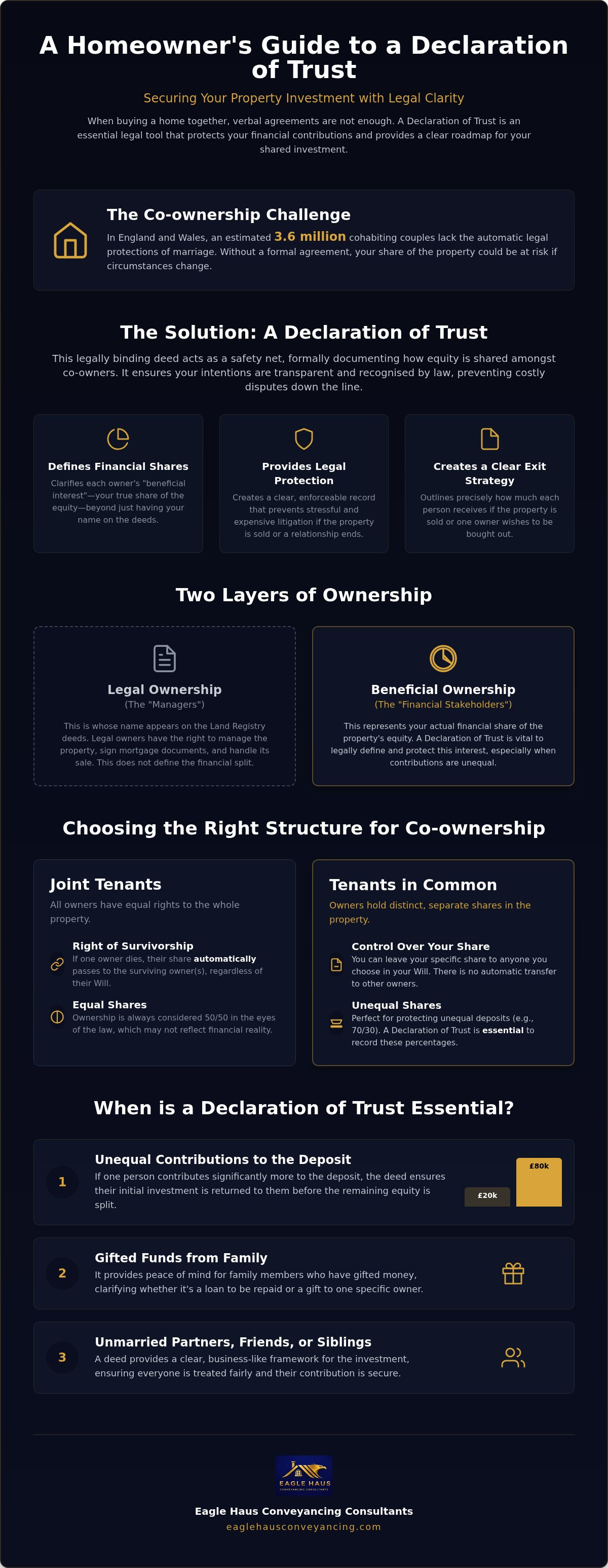
Buying a home with a partner, friend, or family member is a significant financial milestone, yet it's also a complex legal commitment. Without a formal agreement in place, you're essentially relying on verbal promises that may not be enforceable if your circumstances change. In England and Wales, there are approximately 3.6 million cohabiting couples who live together without the automatic legal protections that marriage provides. If a relationship breaks down, the absence of a written record often leads to stressful and expensive litigation. A declaration of trust for property is a legally binding deed that outlines how equity is shared amongst co-owners.
By documenting your financial arrangements from the start, you create a clear safety net for everyone involved. This document prevents costly disputes by ensuring that your intentions are transparent and legally recognised. It provides a definitive answer to how much each person should receive if the property is sold or if one person wants to be bought out. Establishing a declaration of trust for property allows you to focus on enjoying your new home, knowing your investment is secure regardless of what the future holds.
Defining the Beneficial Interest
Whilst the Land Registry records who holds the legal title to a property, it doesn't specify the percentage of the home each person truly owns. This is where beneficial interest becomes vital. It represents your actual share of the equity, which is the value remaining after the mortgage and sale costs have been paid. Relying solely on your name appearing on the deeds is a common mistake that can leave your initial deposit vulnerable. In legal terms, the owners act as "Trustees" who hold the property on behalf of the "Beneficiaries." Even if you're both, the deed clarifies exactly what each beneficiary is entitled to receive. This level of detail is essential for maintaining fairness, particularly when contributions to the purchase price or monthly mortgage payments aren't equal.
The Difference Between Legal and Beneficial Ownership
It's helpful to view property ownership as two distinct layers. Legal ownership gives you the right to manage the property, sign mortgage documents, and handle the administrative side of a sale. Beneficial ownership, however, dictates who enjoys the financial fruits of the asset. You might encounter a situation where four people are listed as legal owners to satisfy a lender's requirements, yet only two of them hold a beneficial interest because they provided the funds. Understanding this structure, often referred to as a Deed of Trust, ensures that the financial reality of your arrangement matches the official paperwork. It's a proactive way to manage your assets that prioritises personal connection and transparency over rigid, impersonal legal defaults.
Joint Tenants vs Tenants in Common: Choosing the Right Structure
Choosing how to hold your property is a decision that shapes your financial future long after the keys are handed over. This choice is vital. During the conveyancing process, you'll be asked to choose between two main structures for joint property ownership: joint tenants or tenants in common. Whilst joint tenancy is a popular choice for many, it often lacks the flexibility modern co-owners need. If you're contributing different amounts to the deposit, a declaration of trust for property is typically required to protect those unequal shares, which necessitates a tenants in common arrangement. A bespoke declaration of trust for property provides the legal framework to ensure these shares are respected from day one.
The Right of Survivorship Explained
Under a joint tenancy, all owners have equal rights to the whole property. The most significant feature here is the "Right of Survivorship." If one owner passes away, their share automatically transfers to the surviving owner, regardless of what's written in their Will. This provides a sense of security for some, but it's often unsuitable for friends, siblings, or business partners who want their investment to benefit their own heirs. Choosing to be tenants in common removes this automatic transfer, allowing you to leave your specific share to whoever you choose. If your circumstances change later, you can "sever" a joint tenancy to become tenants in common, ensuring your equity is handled according to your current wishes.
Tailoring Shares for Tenants in Common
The real power of a tenants in common structure lies in its ability to reflect the reality of your finances. Owners aren't restricted to a simple 50/50 split. You might opt for fixed percentage shares, such as 70/30, to mirror your initial contributions. Some owners prefer "floating" shares, where the split adjusts over time if one person pays for significant renovations or takes on a larger portion of the mortgage. Maintaining an accurate residential purchases and sales record is essential for these calculations. This flexibility ensures that the person who invested the most is the one who benefits most when the property is sold. If you're unsure which path fits your situation, speaking with a specialist can help you organise your co-ownership with clarity and ease.
Common Scenarios Where a Declaration of Trust is Non-Negotiable
While every co-ownership arrangement benefits from clarity, certain financial scenarios make a formal agreement essential for protecting your capital. According to official government guidance on declarations of trust, these documents provide the necessary evidence of how assets are held, which is vital for both tax purposes and personal security. Without this record, the law often assumes an equal split, which can be devastating if one person has invested significantly more than the other.
Establishing a declaration of trust for property at the point of purchase removes the emotional weight from financial discussions. It transforms an awkward conversation into a standard part of your property journey. Whether you're buying with a long-term partner or entering a business venture with a friend, having a clear roadmap ensures that everyone's interests are respected and documented.
Protecting Unequal Deposits and Contributions
Imagine a scenario where one partner provides a £50,000 deposit while the other contributes £5,000. Without a declaration of trust for property, a sale could result in the equity being split 50/50, effectively gifting £22,500 of the larger investor's money to the other party. A well-drafted deed ensures that the initial deposits are returned to each person first, before any remaining profit is divided. This protection can also extend to monthly outgoings, accounting for situations where one person pays a larger share of the mortgage or covers the cost of structural repairs.
The Bank of Mum and Dad: Protecting Family Wealth
Parents often provide substantial gifts to help their children onto the property ladder, but they naturally want to ensure this wealth stays within the family. A trust deed allows parents to protect their contribution as either a loan or a specific percentage of the home. This prevents a child's partner from claiming half of that family gift if the relationship breaks down. When planning these arrangements, it's also helpful to factor in first time buyer conveyancing fees to ensure the total cost of the transaction is transparent for all parties involved.
Declarations for Property Investors
For those involved in company purchases or property syndicates, trust deeds are indispensable for defining profit-sharing ratios. Business partners often have different roles; one might provide the capital whilst the other manages the renovation. A declaration clearly outlines how rental income and eventual sale proceeds are split. It also establishes vital exit strategies, such as "first refusal" clauses, which allow one partner to buy out the other before the property is listed on the open market. This proactive approach ensures the investment remains a professional partnership rather than a source of conflict.
The Legal Process: Drafting and Registering Your Deed of Trust
The most efficient time to arrange your declaration of trust for property is whilst your residential purchase or remortgage is already in progress. By instructing your solicitor early, you ensure the deed is ready for signature alongside your mortgage documents, avoiding unnecessary delays to your completion date. Your legal advisor will require a clear breakdown of each person's initial contribution, including any stamp duty payments or legal fees covered by one party. They'll also need to know how you intend to share mortgage liabilities and what happens if one person's income changes significantly in the future. Providing this information upfront allows for a smooth, transparent process that builds trust between co-owners.
Drafting the Document: What to Include
A comprehensive deed goes beyond just the initial deposit. It acts as a practical rulebook for your co-ownership, detailing who is responsible for ongoing maintenance, building insurance, and monthly utility bills. You should also include agreed procedures for selling the home or buying out a partner. For example, you might decide that the property must be valued by an independent RICS surveyor before a buyout can occur. This might also include a "right of first refusal" or a specific timeframe for putting the house on the market if one person wants to move on. Clear terms today prevent friction tomorrow, ensuring that your home remains a source of security rather than stress.
Registering Restrictions at the Land Registry
Signing the document is only half the battle. You must ensure it's protected through official channels. Unlike a standard transfer of equity, which legally changes the names on the deeds, a declaration of trust for property is often supported by a "Form A" restriction at the Land Registry. This restriction is the ultimate safeguard for your investment. It alerts any future buyer or lender that a trust exists, effectively preventing one owner from selling the property alone and pocketing the proceeds. It ensures that the beneficial interest you've worked hard to protect is respected during any future transaction.
Life situations naturally evolve, and your deed should be able to keep pace. If one partner later pays for a major extension or receives a significant inheritance to pay down the mortgage, you can formally update the document to reflect these new equity shares. Keeping your legal paperwork current ensures your financial protection remains accurate and enforceable. If you're ready to secure your share, you can speak to our conveyancing specialists to ensure your interests are fully registered. At Eagle Haus, we provide our legal services through Taylor Rose, ensuring you receive regulated, expert support throughout the process.
Expert Legal Support: Securing Your Interests with Eagle Haus
Choosing the right legal partner is as important as the document itself. At Eagle Haus, we offer a personalised service that understands the nuances of the Staffordshire and Birmingham property markets. We specialise in helping co-owners organise their affairs whilst they're already navigating a residential purchase or remortgage. This integrated approach ensures your declaration of trust for property is handled with the same care and attention as your main transaction, providing a seamless experience from start to finish. Our legal services are provided through Taylor Rose, which means you benefit from the weight of a regulated national firm combined with our boutique, client-focused approach. We prioritise transparent communication and proactive support, ensuring you never feel like just another file in a call centre.
Why Professional Oversight Matters
DIY trust deeds might seem cost-effective initially, but they often fail to meet the rigorous standards required by the courts or mortgage lenders. A poorly drafted document can lead to the very disputes it was designed to prevent. We ensure your deed is fully compatible with your lender's requirements and provides the legal certainty you need. Many lenders have specific rules about how beneficial interests are recorded, and failing to adhere to these can complicate your mortgage application. Eagle Haus is committed to providing reassuring, modern legal guidance that prioritises your financial security and peace of mind.
Local Legal Support Across the West Midlands
We're proud to serve clients across the West Midlands, including Wolverhampton, Telford, Cannock, and Walsall. Having conveyancing solicitors near me is particularly advantageous when dealing with complex family matters or sensitive financial splits. Local knowledge of the property landscape allows us to provide advice that's both legally sound and practically relevant to your area. You can start your application today by requesting a tailored quote for your specific co-ownership needs. Our team is ready to guide you through a simple consultation to ensure your investment is protected for 2026 and beyond. By addressing these concerns early, you can move into your new home with the confidence that your financial future is secure.
Secure Your Property Future for 2026 and Beyond
Taking the step to formalise your financial arrangements today ensures that your home remains a source of joy rather than a potential point of conflict. By choosing a tenants in common structure and registering a declaration of trust for property, you create a transparent roadmap for your investment. This clarity is invaluable, whether you're protecting an unequal deposit or safeguarding a generous gift from the "Bank of Mum and Dad." It provides the legal certainty required to navigate major life transitions with total confidence.
At Eagle Haus, we specialise in complex transfers of equity and residential conveyancing across the West Midlands. As a trading name of TRW Legal Consulting Ltd, our services are provided through Taylor Rose, ensuring you receive regulated, expert support for your residential or company purchases. We pride ourselves on offering a modern, boutique service that prioritises your personal connection and financial security whilst demystifying the legal process.
Secure your property investment with a professional Declaration of Trust from Eagle Haus. Our team is ready to help you build a solid foundation for your co-ownership journey today.
Frequently Asked Questions
Is a declaration of trust legally binding in the UK?
Yes, a declaration of trust for property is a legally binding deed that outlines the financial arrangements between co-owners. Once signed and witnessed, it's conclusive evidence of your respective shares in the property's equity. This document is recognised by the courts in England and Wales. It provides a level of certainty that verbal agreements simply cannot offer, effectively preventing expensive litigation if a relationship breaks down or a dispute arises later.
Can I create a declaration of trust after I have already bought the property?
You can certainly create a deed of trust at any point during your ownership, not just when you first buy. If your financial contributions change, or if a partner moves in and begins contributing to the mortgage, you might decide to formalise the new arrangement. We often assist clients in Staffordshire and Birmingham with these documents during a transfer of equity or a remortgage to ensure their current financial interests are accurately reflected.
Does a declaration of trust affect my ability to get a mortgage?
Most mortgage lenders are comfortable with a declaration of trust, provided they're informed. However, they'll usually require that their own mortgage deed takes priority over your private agreement. Some lenders may charge a small administrative fee to review or note the trust on your account. It's essential to ensure your deed is compatible with your lender’s requirements to avoid any delays with your application or remortgage process whilst buying your home.
How much are the legal fees for a declaration of trust in 2026?
Legal fees for a declaration of trust for property depend on the complexity of your specific financial arrangements. A straightforward deed recording fixed percentage shares is generally more cost-effective than a bespoke document involving "floating" shares or multiple investment properties. We encourage co-owners in the West Midlands to request a personalised quote. This ensures you receive a transparent breakdown of costs tailored to your unique situation, including any necessary Land Registry registration fees.
What happens to our declaration of trust if we get married?
If you marry or enter a civil partnership, the legal standing of your trust deed changes significantly. Under the Matrimonial Causes Act 1973, courts have the power to override private agreements to ensure a fair financial settlement. Whilst the trust still provides evidence of your initial intentions and contributions, it may no longer be the final word. We advise couples in the West Midlands to review their legal paperwork alongside a potential pre-nuptial agreement.
Can one co-owner cancel or change the declaration of trust without the other?
No, a declaration of trust cannot be cancelled or altered by just one person. Since it's a contract between all co-owners, any changes require the mutual consent of everyone involved. To vary the terms, you'll typically need to draft a "Deed of Variation" or a new trust deed that replaces the old one. This ensures that no single owner can unfairly diminish another person's share of the property equity without their full agreement.
Do I need a new declaration of trust if I remortgage my property?
You don't always need a new deed when you remortgage, but it's the ideal time to review your existing one. If your new mortgage significantly changes the loan amount or if one person is taking on more debt, your current percentage splits might no longer be fair. Our team often helps clients in Telford and Shropshire update their legal documents during the remortgage process to ensure their financial protection remains accurate and current.
How does a declaration of trust work for a limited company purchase?
In a company purchase, a declaration of trust is often used to define the beneficial interest of directors or external investors. The limited company holds the legal title, but the trust deed specifies how the profits and capital are shared amongst the individuals involved. This is particularly useful for property syndicates or business partners in Birmingham who contribute different levels of capital or manage different aspects of the investment portfolio.


Comments