Conveyancing in 2026: A Guide for Home Movers

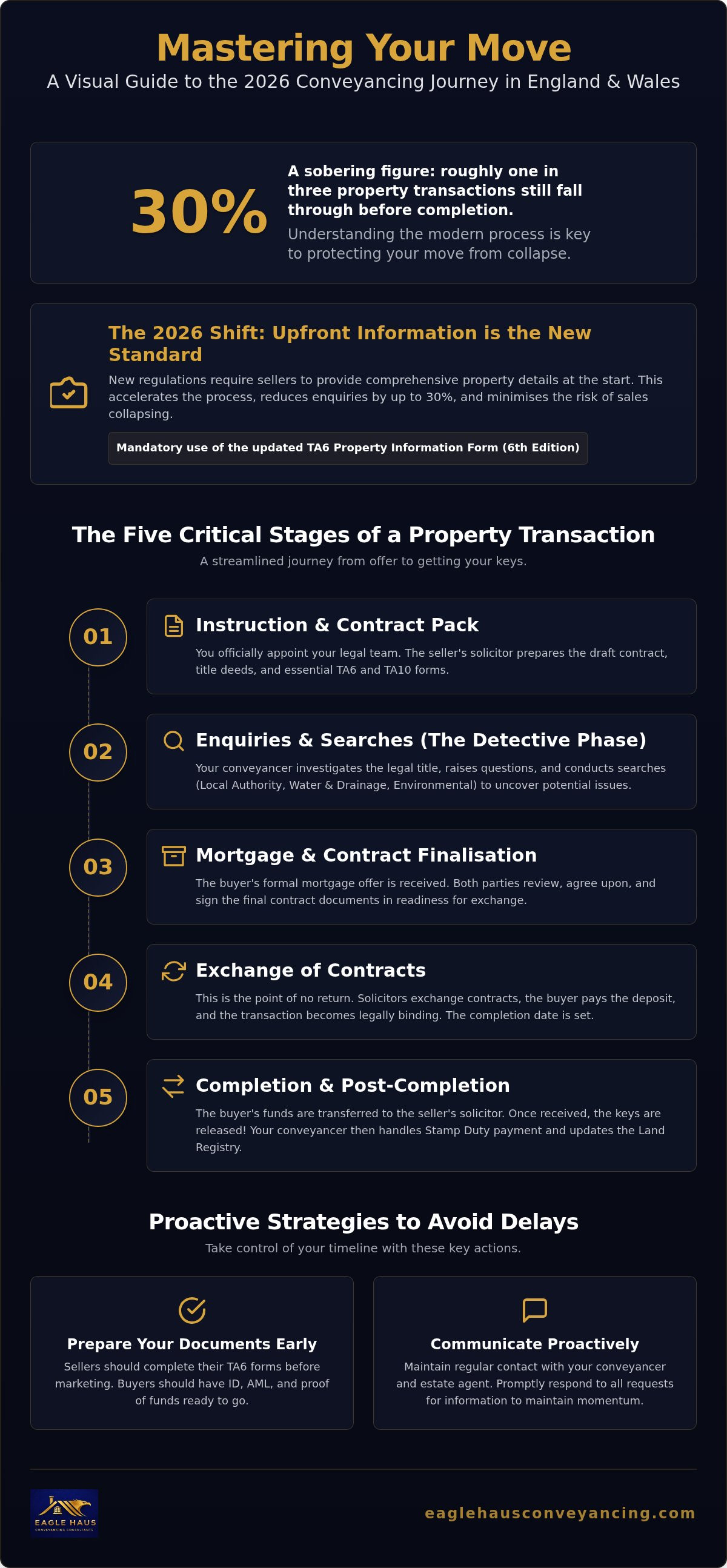
Did you know that roughly 30% of property transactions in England and Wales still fall through before completion? It's a sobering figure that highlights why so many home movers feel anxious about the legal side of their move. You're likely worried about unexpected delays, confusing legalese, or the risk of a chain collapsing just as you've started packing your boxes. We understand that the silence from a traditional solicitor's office can make a stressful time feel even more uncertain.
The good news is that the modern conveyancing process has evolved to be more transparent and efficient than ever before. This guide is here to help you master every stage of your legal journey, providing the clarity you need for a stress-free completion. We'll preview the latest 2026 regulations, explain your essential legal obligations, and show you how to avoid hidden fees whilst keeping your move on track. By the end of this article, you'll have a clear roadmap for your 2026 move, ensuring you feel like a partner in the process rather than a passenger.
Table of Contents
Understanding the Modern Conveyancing Process in 2026
Moving home in 2026 is a vastly different experience than it was just a few years ago. The conveyancing process has shifted from a slow, paper-heavy chore into a streamlined digital partnership. At its core, what is conveyancing? It is the legal transfer of property ownership from a seller to a buyer, ensuring that every condition of the contract is met and that the title is legally secure. Today, this process is defined by transparency and speed, moving away from the "black box" mystery of traditional legal services.
The role of your conveyancer has evolved into that of a proactive investigator and legal facilitator. They don't just process documents; they protect your investment by identifying potential risks before they become deal-breakers. Digital-first firms are now significantly outperforming traditional high street solicitors in completion speed. By using integrated technology and real-time data sharing, modern practices can shave weeks off the journey, providing the momentum that 2026's property market demands.
Digital ID and AML Compliance
Verification is no longer about trekking to a physical office with your original passport in hand. We now utilise biometric ID apps that verify your identity in seconds using your smartphone's camera and chip reader. This isn't just about modern convenience; it's about robust security. Anti-Money Laundering (AML) checks are more rigorous than ever, requiring clear, digital evidence of your "Source of Funds" to prevent property fraud. These AML requirements are the bedrock of property security in 2026.
The Importance of Upfront Information
The smartest move a seller can make in 2026 is preparing their legal pack before the property even hits the market. Since March 30, 2026, it has been mandatory for firms accredited under the Law Society's Conveyancing Quality Scheme to use the updated TA6 Property Information Form (6th edition). This shift supports the Material Information rules that came into force in April 2025, which require estate agents to disclose critical property facts at the very start of the marketing process.
By completing these forms early, you provide potential buyers with the "upfront information" they need to make a confident offer. Some industry professionals report that using digital property logbooks to store this data can reduce the time spent on legal enquiries by up to 30%. When you have every document ready at the point of sale, you eliminate the traditional "passive wait" and significantly reduce the chances of your property chain collapsing.
The Five Critical Stages of a Property Transaction
While every move has its own unique rhythm, the legal conveyancing process follows a structured sequence designed to protect all parties. Understanding these milestones helps you anticipate what's coming next, reducing the "fear of the unknown" that often plagues home movers. In 2026, these stages move faster thanks to digital integration, yet the underlying legal rigour remains as vital as ever.
The journey begins with Instruction, where you officially appoint your legal team and complete initial paperwork. This leads into the Enquiries and Searches phase, which functions as the detective stage of the move. Once the legal work is verified, we move to the Mortgage and Contract stage, followed by the Exchange of Contracts. Finally, Completion marks the day you get your keys, followed by post-completion tasks like paying Stamp Duty and updating the Land Registry.
From Instruction to Contract Pack
Once you've instructed your solicitor, the seller's legal team prepares the "Contract Pack." This essential bundle includes the draft contract, title deeds from the Land Registry, and protocol forms like the TA6 (Property Information) and TA10 (Fixtures and Fittings). In 2026, the use of the TA6 6th edition is mandatory for accredited firms, ensuring more material information is disclosed upfront.
The buyer's solicitor reviews this pack to identify "red flags" such as restrictive covenants or missing building regulations. It's important to recognise that residential property transactions differ significantly between freehold and leasehold properties. Leasehold moves require additional documentation, such as the TA7 Leasehold Information Form and a management pack from the freeholder, which can add time to the initial setup. If you're concerned about how these complexities might affect your timeline, our team can provide a tailored conveyancing quote to help you plan ahead.
Searches, Enquiries, and the Mortgage Offer
The "detective" phase is where the buyer's solicitor digs into the property's history. They order the "Big Three" searches: Local Authority, Water and Drainage, and Environmental. These searches reveal if there are planned motorways nearby, shared sewers, or potential flood risks. Whilst these searches are underway, your solicitor will raise "pre-contract enquiries" with the seller's team to clarify specific details about the property's condition or legal boundaries.
This phase often feels like the longest part of the conveyancing process because it relies on third-party responses. You can find detailed checklists for the conveyancing process for buyers via Citizens Advice to help you track these requirements. A critical moment occurs when your solicitor receives your formal mortgage offer. They must validate the lender's conditions against the property title to ensure the house is "good security" for the loan. Only when the searches, enquiries, and mortgage offer all align can you safely move towards the binding commitment of exchange.
Comparing Buying, Selling, and Specialist Investment Timelines
Not all moves are created equal. While a standard residential purchase often takes months, a specialist investment deal might conclude in weeks or even days. Understanding how long does conveyancing take depends heavily on your position in the market and the complexity of your funding. Sellers generally enjoy a faster experience because they aren't waiting for local authority searches or mortgage offers. However, if you're part of a property chain, your completion speed is often dictated by the slowest link in the sequence.
The conveyancing process requires a different strategic approach depending on whether you're moving into a new home or expanding a commercial portfolio. Referencing the UK government's guide to conveyancing provides a useful baseline for standard moves, but real-world timelines vary based on the efficiency of your legal partner and the type of property involved. Digital integration in 2026 has helped, but the human element of coordination remains the most significant variable.
Residential Purchase vs. Sale Requirements
Sellers concentrate on disclosure and title preparation. They must ensure all protocol forms are accurate and settle any outstanding mortgage charges upon completion. Buyers, conversely, carry the burden of due diligence. They must satisfy lender requirements and calculate Stamp Duty Land Tax (SDLT) liabilities accurately. For those using specific schemes, right to buy conveyancing follows a distinct statutory timeline that requires precise coordination with local authorities to meet strict deadlines.
Investor Focus: Bridging Loans and Company Purchases
Investors often operate on a much tighter clock. When using bridging loans, the conveyancing process must be significantly accelerated to meet the short-term nature of the finance. Bridging is designed for speed, often used to secure auction properties or renovation projects before traditional lending is available. This doesn't mean cutting corners. It means your solicitor must work with extreme focus to verify titles and satisfy lender conditions, often within a matter of days rather than months.
Purchasing through a limited company adds another layer of legal requirement. Directors often need to provide Personal Guarantees, which requires Independent Legal Advice (ILA) to ensure they fully understand their personal liabilities. This boutique approach ensures your portfolio grows securely whilst maintaining the momentum required in a competitive market. Specialist conveyancers who understand these nuances are essential for investors who cannot afford the delays associated with traditional high street firms.
Proactive Strategies to Organise Your Move and Avoid Delays
Managing a property chain is often compared to a high-stakes game of dominoes. If one person stops communicating, the entire conveyancing process can stall. Staying proactive means moving beyond passive waiting. You should maintain a direct line of communication with your estate agent and solicitor, ensuring you're always aware of the status of the links above and below you. A quick phone call can often resolve a misunderstanding that might otherwise take days to filter through via email.
Whilst "No Move, No Fee" deals are popular, they aren't always the best fit for complex transactions. High-volume firms often prioritise straightforward files to maintain profit margins, which can lead to delays if your case requires specialist attention. If your move involves a complex chain or specialist finance, a boutique service that offers dedicated attention is often the safer route to completion. You also need to ensure your deposit funds are ready and liquid weeks before exchange. Moving money between accounts or waiting for ISA withdrawals can cause avoidable last-minute panics.
Local Search Nuances in the West Midlands
Local knowledge is a powerful tool in the conveyancing process, especially in our region. If you're moving to areas like Wolverhampton or Cannock, specific mining searches are a mandatory requirement due to the historical coal workings in the area. Missing this detail early on can lead to significant delays when a lender's solicitor raises it as a late enquiry.
Turnaround times also vary significantly across the region. Whilst Birmingham City Council has modernised many of its systems, smaller local authorities can sometimes experience backlogs that catch out-of-area solicitors off guard. Understanding these local rhythms allows us to order searches at the precise moment to keep your move on track. If you want to ensure your move is handled by experts who know the local landscape, you can get an instant conveyancing quote from our team today.
Managing the "Enquiry Back-and-Forth"
The enquiry stage is where many transactions lose momentum. You'll likely face questions about building regulations for that extension you built five years ago or requests for FENSA certificates for your windows. Some industry professionals report that up to 40% of transaction delays are caused by missing paperwork for historical home improvements. Having these documents organised in a digital folder before you even find a buyer is the best way to bypass this hurdle.
When a document simply cannot be found, indemnity insurance often provides the solution. These policies "fix" minor legal defects, such as a lack of planning permission for a small alteration, by protecting the buyer and lender against future losses. Rather than spending weeks arguing over a missing certificate, a one-off insurance premium can keep the chain moving and get you to your completion date faster.
Navigating Your Legal Journey with Eagle Haus Conveyancing
Eagle Haus Conveyancing Consultants represents a shift in how legal services are delivered to home movers. We don't believe you should have to choose between the personal touch of a boutique firm and the security of a national practice. Our approach to the conveyancing process is built on transparency. You won't find us hiding behind archaic legalese or leaving your phone calls unreturned for days. Instead, we act as your proactive partner, ensuring your move stays on track whilst providing the reassurance you need during a major life transition.
We specialise in the transactions that traditional high street firms often find too complex. Whether you're navigating the rapid timelines of bridging loans, executing property acquisitions through a limited company, or managing a particularly fragile property chain, our team has the specific expertise required. Our local presence in Staffordshire and the West Midlands isn't just about geography. It's about having a deep understanding of local authority behaviours and specific search requirements that can make or break a completion date.
The Taylor Rose Partnership: Regulated Security
Eagle Haus Conveyancing Consultants operates as a trading name under Taylor Rose, a major SRA-regulated firm. This partnership gives you the best of both worlds. You receive the dedicated, individual attention of a boutique service whilst benefiting from the robust professional indemnity insurance and high-level compliance of a national leader. We leverage these significant national resources to provide faster turnaround times, ensuring our local clients in the West Midlands aren't left waiting for administrative bottlenecks to clear.
Your Next Steps: Getting a Modern Quote
Budgeting for a move in 2026 requires absolute certainty. This is why we provide fixed-fee quotes that ensure there are no unwelcome surprises on your final completion statement. We've removed the friction from the initial stages of your instruction through our digital onboarding portal. You can complete your ID checks and provide initial documentation from the comfort of your home, allowing us to open your file and start the legal work immediately.
If you're ready for a more supportive, tech-savvy approach to your next move, contact our team for a quote today. We're here to provide a professional discussion about your property goals and show you how a modern conveyancing process should feel. Whether you're a first-time buyer or an experienced investor, we'll ensure your legal journey is handled with the care and efficiency it deserves.
Take Control of Your 2026 Property Move
Navigating the property market in 2026 requires a shift from passive waiting to proactive planning. By embracing the new standards of upfront material information and utilising digital verification tools, you can significantly reduce the risk of your transaction falling through. We've explored how the modern conveyancing process relies on transparency and speed, especially when coordinating complex chains or specialist finance. Whether you're a first-time buyer in Staffordshire or a seasoned investor managing a commercial portfolio, having the right legal partner makes all the difference.
At Eagle Haus Conveyancing Consultants, we combine the personal attention of a boutique firm with the regulated security of Taylor Rose, an SRA-regulated national leader. Our team specialises in the "difficult" deals, from rapid bridging loans to intricate company purchases, bringing deep local expertise to every West Midlands transaction. Don't let confusing legalese or slow communication stand in the way of your next chapter. You can get a transparent conveyancing quote from Eagle Haus Conveyancing Consultants today and start your journey with confidence. Your completion day is closer than you think, and we're here to ensure you reach it with ease.
Frequently Asked Questions
How long does the conveyancing process take in 2026?
A standard residential move in 2026 typically takes between 12 and 16 weeks, though this can vary significantly based on chain length and the speed of third-party searches. Whilst digital onboarding and upfront information have streamlined many steps, the coordination of multiple parties remains the primary variable. Specialist transactions like bridging loans can often be completed much faster, sometimes in as little as 10 to 14 days.
What is the difference between exchange and completion?
Exchange of contracts is the moment the transaction becomes legally binding, whereas completion is the actual moving day when funds are transferred and you receive the keys. Once you exchange, neither party can pull out without significant financial penalties. Completion usually happens one to two weeks after exchange, allowing you time to finalise your removals and utility transfers.
Do I need a local solicitor for the conveyancing process?
You aren't legally required to use a local solicitor for the conveyancing process, but local expertise can prevent specific regional delays. Modern firms use digital portals to act for clients nationwide, yet having a team that understands local authority quirks in the West Midlands is a distinct advantage. This local insight is particularly useful when dealing with specific land issues like historical mining works or local planning policies.
What searches are essential for properties in Birmingham or Wolverhampton?
Properties in Birmingham and Wolverhampton often require a coal mining search alongside the standard local authority, water, and environmental searches. Because of the industrial heritage of the Black Country, lenders usually insist on verifying that the land isn't at risk from historical shafts or subsidence. We also recommend specific environmental searches if the property is located near historical industrial sites or flood zones.
Can I pull out of a house sale after exchanging contracts?
Pulling out after exchange is possible but carries severe legal and financial consequences, including the loss of your 10% deposit. You may also be sued for breach of contract and held liable for the other party's legal costs and any loss in property value. It is extremely rare for a transaction to fail at this late stage because the risks to both buyer and seller are so high.
What happens if my mortgage offer expires during the process?
If your mortgage offer expires before completion, your solicitor must notify the lender and you will likely need to apply for an extension or a new product. This can be stressful if interest rates have changed since your original application, potentially affecting your affordability. We monitor these dates closely as part of the conveyancing process to ensure we push for completion before any offers lapse.
How much are typical conveyancing fees for a residential purchase?
Typical conveyancing fees are split into two parts: the legal fee for the solicitor's time and disbursements, which are costs paid to third parties like the Land Registry and search providers. Fees vary based on the property's value and whether it is a freehold or leasehold title. In 2026, most modern firms provide a transparent, fixed-fee quote upfront so you can budget accurately without worrying about hidden hourly charges.
What is a "Transfer of Equity" and is it part of the standard process?
A Transfer of Equity involves changing the legal ownership of a property, such as adding a partner to the title or removing an ex-spouse, and it is a standalone service rather than a standard part of a purchase. Whilst it doesn't involve a traditional sale on the open market, it still requires a formal legal process to update the Land Registry. It's often handled alongside a remortgage to ensure the new ownership structure aligns with the lender's requirements.


Comments