Comprehensive Guide to Residential Property Transactions in England & Wales (2026)

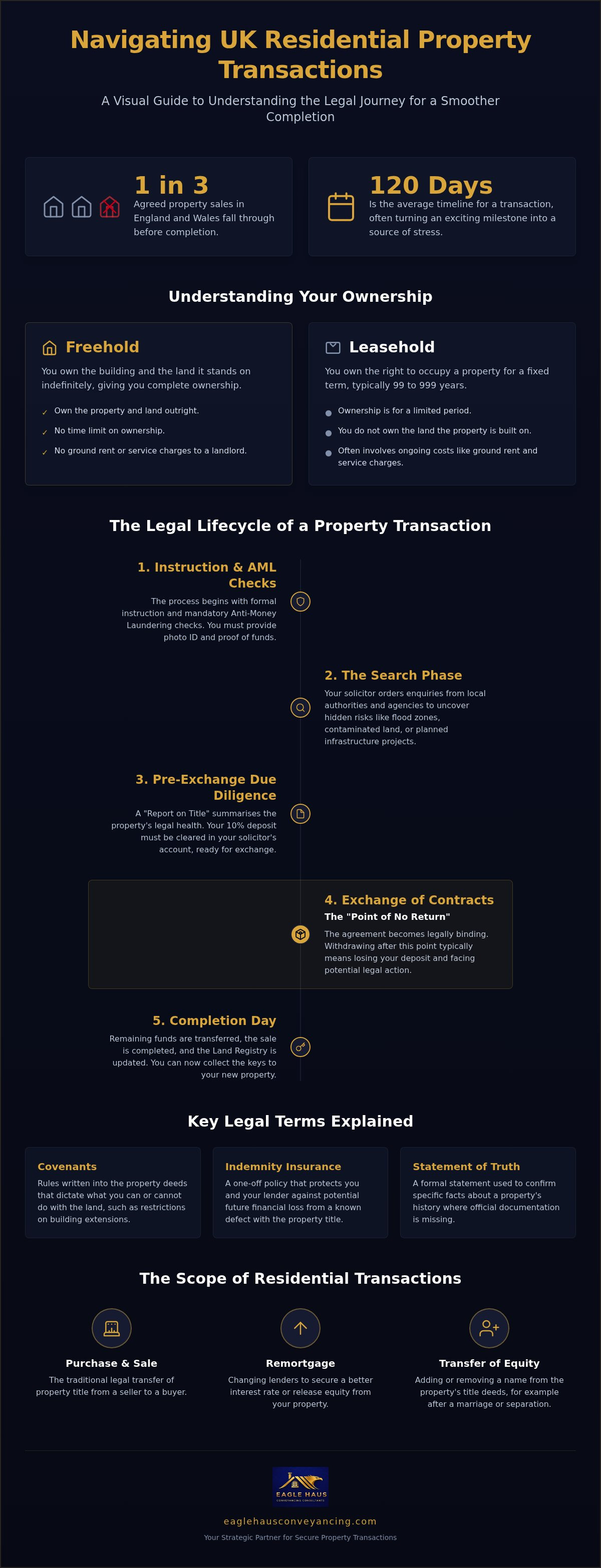
Did you know that one in three agreed property sales in England and Wales falls through before completion? This statistic highlights why residential property transactions can feel like a high-stakes gamble rather than a simple legal process. Whether you're navigating a complex chain or securing a bridging loan for a fast-paced investment, the fear of delays and confusing legal jargon often turns an exciting milestone into a source of significant stress.
It's natural to feel overwhelmed by the 120-day average timeline and the various parties involved in a move. This guide ensures you master the legal complexities of buying, selling, and financing property with professional guidance designed for a smooth completion. We'll walk you through the 2026 conveyancing landscape, explain how to manage a remortgage or equity transfer with confidence, and show you how to navigate the latest government reforms without hitting hidden legal hurdles. By the end of this article, you'll have the clarity needed to move forward with total security.
Table of Contents
Understanding Residential Property Transactions: More Than Just a Sale
At its core, residential property transactions represent the legal transfer of equity or title from one party to another. While most people view a move through the lens of viewings and packing boxes, the legal reality is a precise sequence of events designed to protect your investment. Your solicitor acts as a professional guide throughout this conveyancing process, verifying that the seller has the legal right to sell and ensuring that the funds reach the correct destination securely.
In England and Wales, you'll typically encounter two types of ownership: freehold and leasehold. If you buy a freehold property, you own the building and the land it stands on indefinitely. Leasehold is different; you own the right to occupy the property for a set term, often 99 or 999 years, while the land remains the property of the freeholder. Understanding this distinction is vital, as leasehold properties often involve additional costs like ground rent or service charges that can impact your long-term budget.
The most significant milestone in any transaction is the exchange of contracts. Before this point, either party can withdraw without a financial penalty. Once contracts are exchanged, the agreement becomes legally binding. If you pull out after this stage, you'll likely lose your deposit and could face further legal action. It's the "point of no return" that provides the security needed to set a definitive completion date.
The Scope of Residential Transactions
Residential property transactions aren't limited to traditional house sales between individuals. They also encompass remortgages, where you change lenders to secure a better interest rate or release equity. In these cases, the legal work focuses on ensuring the new lender's interests are protected and the old mortgage is properly discharged. You might also encounter a transfer of equity, which happens when a name is added or removed from the title deeds, perhaps following a marriage, a separation, or for tax planning purposes. Each scenario requires the same level of due diligence to ensure the Land Registry records are updated accurately.
Key Legal Terms You Must Know
You'll likely hear your solicitor mention "Covenants" during the process. These are rules written into the deeds that dictate what you can or cannot do with the land, such as restrictions on building extensions or running a business from home. If a property has a minor title defect that can't be easily fixed, your solicitor might suggest "Indemnity Insurance." This one-off policy protects you and your lender against potential future losses. Finally, whilst standard enquiries cover most bases, a "Statement of Truth" might be used to confirm specific facts about the property's history where official documentation is missing, providing an extra layer of reassurance for the buyer.
The Legal Lifecycle of a Property Transaction
Every legal journey begins with a formal instruction. To keep residential property transactions secure and compliant, solicitors must perform Anti-Money Laundering (AML) checks at the very start. You'll be asked to provide photo identification and clear evidence of how you've built up your funds. It's a proactive step that builds trust between all parties and prevents nasty surprises when the finish line is in sight. Modern firms often use digital verification tools to make this part of the process as quick and painless as possible.
Next, the process moves into the search phase. Your solicitor will order specific enquiries from the local authority, water companies, and environmental agencies. These reports look for hidden risks that aren't visible during a viewing, such as contaminated land, local flood risks, or upcoming infrastructure projects that might affect your property's value. For a helpful overview of the wider consumer steps, you might find the Citizens Advice guidance on buying a home a useful reference during this stage.
Pre-Exchange: The Information Gathering Phase
This period is about due diligence. Your solicitor will produce a "Report on Title," which is a comprehensive summary of the property's legal health. It covers everything from boundaries to rights of way and any restrictions found in the searches. You'll also need to ensure your deposit is sitting in your solicitor's client account. Usually, this is 10% of the purchase price. Having these funds cleared and ready is essential for a smooth transition to the exchange of contracts, which is the point where the deal becomes legally binding. If you're looking for a team to handle these details with a personal touch, choosing a modern legal partner can make the difference between a stressful wait and a confident move.
Post-Completion: Finalising the Legalities
Moving day is the completion date, but the legal work continues after you've collected the keys. Your solicitor has a strict timeframe to file your Stamp Duty Land Tax (SDLT) return and pay any tax due to HMRC. In 2026, keeping an eye on current thresholds is vital to avoid any unexpected costs. Following this, an application is sent to the Land Registry to register you as the new legal owner. This final step ensures your ownership is a matter of public record and that any old mortgages are removed from the title, leaving your new home secure and your file officially closed.
Specialist Transactions: Company Purchases and Bridging Finance
In the 2026 property market, we've seen a significant shift towards professionalised investment. Many landlords and developers now prefer to handle residential property transactions through corporate structures rather than in their own names. This move is largely driven by tax efficiencies and the ability to ring-fence assets within a Special Purpose Vehicle (SPV). However, buying through a company adds layers of legal complexity that go beyond a standard house purchase. It requires a solicitor who understands the intersection of corporate law and traditional conveyancing to ensure the deal remains secure.
Specialist finance also plays a massive role in modern deals. Bridging loans have become a vital tool for those who need to move quickly, perhaps to secure a property at auction or to break a slow-moving chain. Because these loans are designed to be short-term, the legal work must be intensive and highly focused. While a standard move might take around 120 days, a bridging transaction often needs to complete in a fraction of that time. This velocity demands a proactive approach to security documentation and a clear path to your eventual exit strategy.
Limited Company Property Acquisitions
If you're purchasing through an SPV, your lender will almost certainly require a personal guarantee from the company directors. This is a significant legal commitment that makes you personally liable for the debt if the company fails to pay. Because of this risk, lenders insist that directors receive Independent Legal Advice (ILA). This ensures you fully understand the implications before signing. Additionally, company searches at Companies House are required alongside standard property searches. These verify that the company is active, solvent, and has the power to hold property, providing a complete picture of the buying entity's legal health.
The Mechanics of Bridging Loan Legals
Velocity is the priority here. When you're operating within a tight 28-day auction window, the standard timeline simply doesn't work. Your legal team must address complex security requirements from specialist lenders immediately. These often include debentures or first legal charges over the property. We also focus heavily on the "exit." Whether you plan to sell the renovated property or move to a standard buy-to-let mortgage, the legal path must be clear from day one. In 2026, with the Bank of England base rate held at 3.75% in June, many investors are using these fast-paced tools to capitalise on market opportunities before rates shift again. Having a partner who can manage this speed whilst protecting your interests is essential for a successful outcome.
Mitigating Risks and Managing Completion Timelines
The average time to buy a home in England currently sits around 120 days. Whilst this might seem like a long wait, residential property transactions are often at the mercy of complex chains and external variables. With one in three agreed sales falling through before completion, proactive risk management isn't just a luxury; it's a necessity. Failed transactions cost sellers an estimated £400 million every year, often due to preventable delays like slow enquiries or mortgage offer hitches. By identifying potential hurdles early, you can keep your move on track and avoid becoming part of that statistic.
One of the most effective ways to speed up the process is to organise your paperwork before you even find a buyer or a property. Having your proof of funds, building certificates, and initial identity documents ready allows your solicitor to hit the ground running. Clear communication amongst all parties is the glue that holds a chain together. When buyers, sellers, and legal teams share information openly, it reduces the anxiety of the unknown and ensures that small issues don't escalate into deal-breakers. If you want to ensure your move stays on schedule, you can get started with our expert team to secure a proactive legal partner.
Avoiding the Most Common Conveyancing Pitfalls
Many delays stem from "red flags" found during the search phase. Unexplained gaps in the "Root of Title" or missing building regulations for a previous extension can halt a sale in its tracks. It's vital to address these early, perhaps through indemnity insurance or by tracking down old certificates. Managing expectations in a long property chain is also crucial. The more people involved, the higher the risk of a "break" elsewhere. Choosing a firm that offers fixed-fee conveyancing can provide much-needed peace of mind for your budgeting, ensuring that even if the process takes a few extra weeks, your legal costs remain transparent and predictable.
Tech-Enabled Conveyancing in 2026
The 2026 legal landscape is more digital than ever. We use modern tools to bypass traditional bottlenecks, such as digital ID verification that removes the need to post physical passports. Online portals now allow you to track the real-time status of your transaction, so you're never left wondering which stage your search is at. Secure digital signatures have also revolutionised the exchange process, allowing contracts to be executed in minutes rather than days. These government-backed reforms are projected to save first-time buyers an average of £650 by reducing transaction times by approximately four weeks, making the journey to your new front door faster and more efficient than ever before.
Expert Conveyancing: Why Eagle Haus Conveyancing Consultants is Your Strategic Partner
Choosing the right legal team is the most critical decision you'll make once your offer is accepted. Eagle Haus Conveyancing Consultants operates as a modern professional guide, bridging the gap between traditional legal reliability and the forward-thinking efficiency required in today's market. We recognise that residential property transactions are deeply personal milestones, which is why we've moved away from the impersonal, high-volume model of many factory-style firms. Instead, we offer a boutique experience where individual attention ensures you remain a person, not just a case number.
Our operational structure provides the best of both worlds. As a trading name of TRW Legal Consulting Ltd, Eagle Haus Conveyancing Consultants provides regulated legal services via Taylor Rose. This gives you the reassuring, supportive approach of a dedicated consultant combined with the robust regulatory security and extensive resources of a major national practice. Whether you are navigating a straightforward move or require our specialist expertise in complex investor-led finance, our team ensures your interests are protected at every stage of the process.
A Modern Approach to Traditional Law
We've designed our service around transparency and proactive communication. By identifying potential hurdles before they cause friction in the chain, Eagle Haus Conveyancing Consultants reduces the stress often found in the legal journey. Our national reach across England and Wales allows us to provide expert advice from our central hub, regardless of where your new home is located. We don't just process files; we take a proactive interest in your completion, ensuring our methodical rhythm matches your personal moving goals.
Start Your Journey with Eagle Haus Conveyancing Consultants
Every successful transaction begins with a clear understanding of the path ahead. We provide a transparent, no-hidden-cost quote from the outset, allowing you to budget with absolute certainty. During our initial consultation, we take the time to understand your specific needs, ensuring our approach is tailored to your unique situation. If you're looking for a partner who prioritises speed, simplicity, and personal connection, you can organise your property transaction with Eagle Haus Conveyancing Consultants today.
Secure Your Move with Expert Legal Guidance
Mastering the legal nuances of your move is the first step toward a stress-free transition. We've explored how proactive preparation and an understanding of the 2026 regulatory landscape can protect your investment and keep your timeline on track. Whether you're navigating standard residential property transactions or complex bridging finance, having a modern guide ensures you're never left in the dark.
At Eagle Haus Conveyancing Consultants, we combine boutique personal attention with the regulatory security of being SRA-regulated via Taylor Rose. Our specialists in company purchases and bridging loans use a tech-forward client portal to keep you updated in real-time. You don't have to manage these legal complexities alone. Our team is here to provide the transparency and speed you need for a smooth completion.
Get a Professional Conveyancing Quote from Eagle Haus Conveyancing Consultants
We're ready to help you turn the key to your new property with total peace of mind and confidence.
Frequently Asked Questions
How long do residential property transactions usually take in 2026?
Average residential property transactions in England currently take approximately 120 days to reach completion. This timeline can vary significantly depending on the length of the property chain and the speed of local authority searches. Government reforms introduced in June 2026 aim to reduce this period by roughly four weeks through digital sales packs, but for now, you should plan for a four-month journey to be safe.
What is the difference between a solicitor and a conveyancer?
Solicitors are qualified lawyers who can handle a wide range of legal matters, whilst licensed conveyancers are specialists specifically trained in property law. Both are fully regulated and qualified to manage your move. Solicitors often provide a broader perspective if your transaction involves complex elements like trust deeds or probate issues, whereas conveyancers offer dedicated expertise in the day-to-day mechanics of property transfer.
Do I need a solicitor for a transfer of equity if there is no mortgage?
Yes, you should instruct a solicitor for a transfer of equity even if there is no mortgage involved. Professional guidance ensures the deed of transfer is correctly drafted and that the Land Registry records are updated accurately. A solicitor will also check for any Stamp Duty Land Tax liabilities, as tax may still be due if the consideration, including the assumption of debt, exceeds current thresholds.
Can I buy a residential property through a limited company?
You can certainly buy residential property through a limited company, a method often used by investors for tax efficiency. This typically involves a Special Purpose Vehicle (SPV) created specifically for holding property assets. These transactions require specialist legal support to manage personal guarantees for directors and the specific requirements of commercial lenders, which differ significantly from standard individual purchases.
What are the main costs involved in a property transaction besides the purchase price?
Aside from the purchase price, your main costs include Stamp Duty Land Tax (SDLT), Land Registry fees, and your professional legal fees. You'll also need to budget for search fees, including local, water, and environmental reports, and a structural survey. It's vital to check the 2026 SDLT thresholds, as these vary based on whether you're a first-time buyer, a home mover, or a company purchaser.
How does a bridging loan affect the conveyancing process?
A bridging loan significantly accelerates the legal timeline, often requiring completion within weeks rather than months. This intensity means your solicitor must work proactively to satisfy the lender's strict security requirements, such as first legal charges or debentures. Because bridging is a short-term solution, having a clear exit strategy is a legal necessity that must be documented at the start of the residential property transactions process.
What happens if a property transaction falls through before exchange?
If a transaction falls through before the exchange of contracts, neither party is legally bound to the sale. You won't be forced to complete, but you'll likely lose any money spent on searches, surveys, and initial legal fees. This is why one in three sales failing is such a significant issue, costing sellers an estimated £400 million annually in wasted expenses and aborted legal costs.
Is Stamp Duty Land Tax (SDLT) different for company purchases?
Company purchases are subject to different SDLT rules, typically attracting a higher rate than standard personal purchases. Most companies pay a surcharge on top of the standard residential rates for any purchase price. For properties over £500,000, companies may even face a flat 15% rate unless a specific relief applies, making professional tax and legal advice essential before you commit to the purchase.



Comments