Choosing a Transfer of Equity Solicitor: A Comprehensive 2026 How-To Guide

Changing the names on your property deeds is rarely a simple administrative swap; it's a significant financial restructure that your mortgage lender and HMRC will scrutinise with a microscope. You likely feel that updating your home's ownership should be a straightforward task, yet the anxiety of hitting a surprise Stamp Duty bill or facing a flat rejection from your bank can make the process feel like a legal minefield. Finding the right transfer of equity solicitor is the first step in resolving the confusion surrounding gifting versus selling equity, especially when your financial security is on the line.
Our guide will help you master this transition with ease. We'll show you how to ensure your change of ownership is legally binding and tax-efficient while keeping your mortgage arrangements intact. We'll walk through the essential steps for 2026, covering everything from the latest Land Registry fees to the vital link between equity transfers and remortgaging. This structured approach moves you from initial uncertainty to a smooth, professional resolution with total transparency.
Table of Contents
Transfer of Equity: Why a Solicitor is Essential
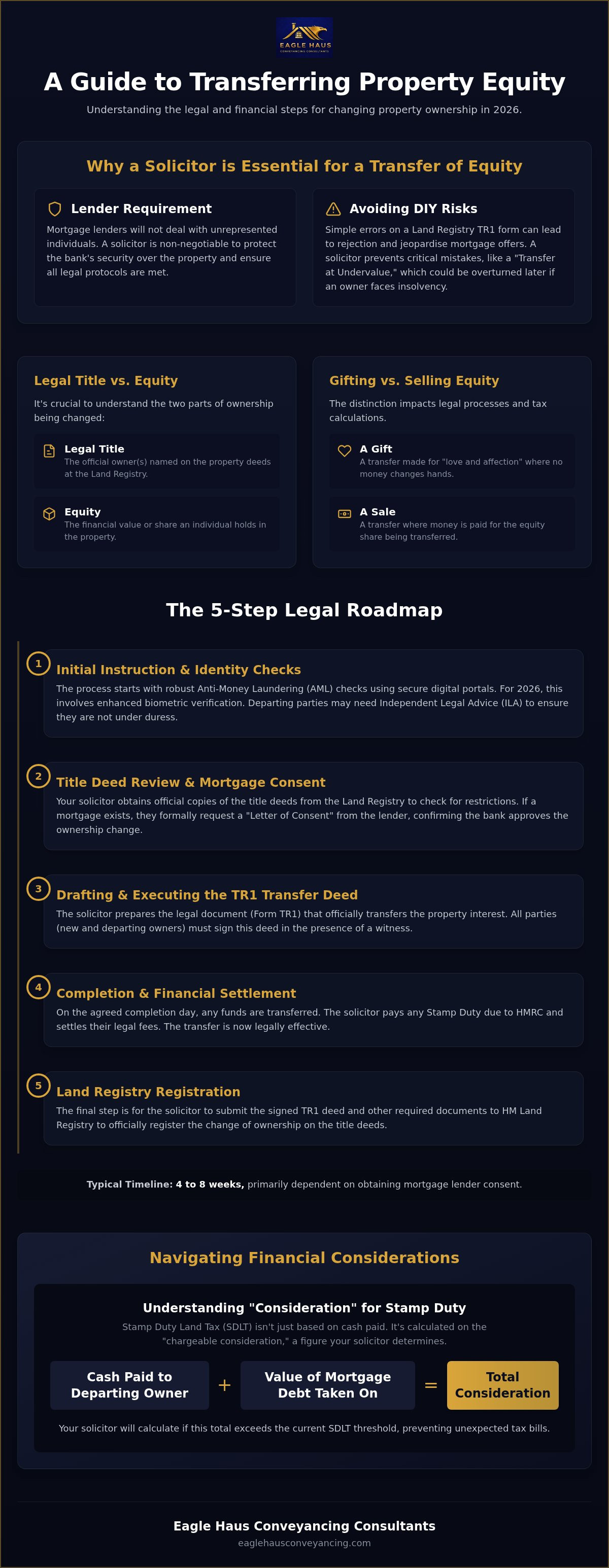
A transfer of equity occurs when an existing owner adds or removes someone from the property deeds, essentially changing the legal ownership structure. For those asking What is a Transfer of Equity?, it's vital to understand that this isn't just a paperwork exercise. It represents a formal shift in legal liability and financial interest. You might be marrying and want to add a spouse, or perhaps you're separating and need to remove a former partner. Some owners choose to gift a portion of their home to children for tax planning. Whatever the reason, the process involves two distinct elements: the legal title, which is the name on the deeds, and the equity, which is the actual financial value or share you hold in the property.
If there's an existing mortgage on the property, you'll find that a transfer of equity solicitor is a non-negotiable requirement. Mortgage lenders refuse to deal with unrepresented individuals because they need to ensure their security over the home remains protected throughout the change. A solicitor acts as the essential bridge between you, the other owners, and the bank.
The Legal Risks of DIY Transfers
Attempting a DIY transfer can lead to significant headaches. The Land Registry TR1 form may look simple, but errors often lead to immediate rejection, causing delays that can jeopardise your mortgage offer. Beyond administrative slips, there are deeper risks like a Transfer at Undervalue. If a property is transferred for less than its market worth and the original owner later faces insolvency, the law can sometimes overturn the transfer. A qualified transfer of equity solicitor provides the necessary legal oversight to prevent these issues and ensures the transaction is robust enough to withstand future scrutiny.
Distinguishing Between Gifting and Selling Equity
Lawyers distinguish between transfers involving money and those made out of love and affection. When money changes hands, it's a sale of equity. If no money is exchanged, it's a gift. In both cases, the solicitor must verify the source of any funds to comply with anti-money laundering regulations. They also calculate the consideration. This is the total value of the transfer, which includes any cash paid plus the proportion of mortgage debt the new owner is taking on. This figure is crucial because it determines whether you'll need to pay Stamp Duty, a cost that often catches unrepresented owners by surprise.
How to Organise a Transfer of Equity: A 5-Step Legal Roadmap
Organising a change in property ownership requires a methodical approach to satisfy both Land Registry requirements and lender criteria. The timeline typically spans four to eight weeks, depending on how quickly mortgage consent is granted. Early disclosure is vital; you must inform your solicitor about all parties involved, including any "silent" interests or occupiers. Your transfer of equity solicitor acts as a neutral coordinator, ensuring the departing party understands their release from liability while the remaining party secures their new interest. In 2026, this process is underpinned by enhanced digital identity verification, requiring all participants to complete secure biometric checks via mobile apps to prevent fraud.
The roadmap generally follows these five phases:
Initial instruction and digital identity verification.
Title deed review and obtaining lender consent.
Drafting and executing the TR1 transfer deed.
Completion of the transfer and financial settlement.
Final registration of the new ownership at the Land Registry.
Step 1: Initial Instruction and Identity Checks
The onboarding process begins with robust Anti-Money Laundering (AML) checks. You'll use digital portals to upload ID and proof of address, which are verified against global databases in real-time. For departing parties, the solicitor will often recommend or require Independent Legal Advice (ILA). Independent Legal Advice is a private consultation with a separate lawyer to ensure a person isn't being pressured and fully understands the legal consequences of the transfer. This step is essential for preventing future litigation and ensuring the transfer is seen as a voluntary "gift of love and affection" or a fair sale.
Step 2: Reviewing Title Deeds and Mortgage Consent
Your solicitor will obtain official copies of the title deeds directly from the Land Registry to confirm there are no hidden restrictions or charges. If you have a mortgage, the solicitor must notify the lender to obtain a "Letter of Consent". This document confirms the bank is happy for the ownership to change whilst the debt remains. In some cases, the lender might decide the change is significant enough to require a full remortgage, which involves a fresh valuation and a new set of loan terms.
Step 3: Drafting and Executing the TR1 Form
The TR1 form is the primary deed that legally transfers the property. Accuracy is paramount; even a minor typo in a name or address can lead to a Land Registry rejection and weeks of delay. By 2026, digital signatures have become the standard for executing these deeds, allowing you to sign securely from your smartphone. Your transfer of equity solicitor still oversees this execution, acting as a professional witness to ensure the process remains legally sound. If you're ready to begin, you can organise your initial consultation to review your specific requirements.
Navigating Mortgages and Stamp Duty: Financial Considerations
Many homeowners are surprised to learn that Stamp Duty Land Tax (SDLT) can apply to a transfer even when no cash changes hands. This confusion often leads to the common objection: why pay tax on a house you already own? The answer lies in how HMRC defines "consideration". It isn't just the physical money you pay for a share of the property; it also includes the value of the mortgage debt you're taking on. If you're becoming responsible for a partner's half of a £300,000 mortgage, HMRC views that £150,000 as a taxable value transfer. A transfer of equity solicitor is essential here to calculate these figures accurately and ensure you don't overpay.
As of August 2026, the standard SDLT thresholds for residential properties in England are:
0% on the first £125,000
2% on the portion between £125,001 and £250,000
5% on the portion between £250,001 and £925,000
If the transfer involves a second home or a buy-to-let property, you'll need to add a 5% surcharge to each of these bands. Your solicitor will handle the SDLT return, which must be filed and paid within 14 days of completion. Missing this deadline can result in hefty penalties, so professional oversight is a vital safeguard for your finances.
The Remortgage and Transfer of Equity Hybrid
It's common for owners to remortgage and transfer equity at the same time. This hybrid approach is often the most cost-effective route because it allows you to use a single transfer of equity solicitor for both legal processes. By aligning these transactions, you can ensure your new mortgage starts the moment the ownership changes, avoiding any gap where you might be left on an expensive standard variable rate. The requirements of your new lender will dictate the timeline, as they'll need to approve the transfer of deeds before releasing any funds.
Lender Consent and "Release of Liability"
When you remove a name from a property deed, the mortgage lender must formally issue a "Release of Liability". This document confirms the departing individual is no longer responsible for the debt. Lenders don't grant this lightly; they'll perform a full affordability assessment on the remaining owner to ensure they can manage the full mortgage alone. If the lender feels the remaining income is insufficient, they may reject the transfer. Your solicitor acts as a proactive guide in these scenarios, helping you present the necessary evidence or suggesting alternative mortgage arrangements to keep the process moving.
Choosing a Transfer of Equity Solicitor in the West Midlands
Selecting a transfer of equity solicitor with deep roots in the West Midlands provides a distinct advantage that national firms often miss. Whether your property is in the heart of Birmingham or a residential pocket of Staffordshire, regional insight is crucial for navigating local authority search nuances. In areas like Wolverhampton, Telford, and Cannock, specific historical land use or local planning policies can influence the speed of your transaction. A solicitor who understands these regional quirks can anticipate delays before they occur, ensuring your change of ownership remains on track.
In 2026, the definition of a local expert has evolved into a blend of digital efficiency and regional presence. You shouldn't have to choose between a slow, traditional firm and an impersonal national factory. Modern conveyancing allows for biometric ID checks and digital deed signing whilst maintaining the personal touch of a boutique service. This approach ensures that clients across the Midlands receive a swift, tech-savvy experience without losing the security that comes from working with a partner who knows their specific neighbourhood.
Why Regional Expertise Matters for Valuation
When you're removing a partner from a deed, establishing a fair market value for an equity buy-out is essential. Local market trends in the Walsall and Dudley areas can fluctuate significantly, and an inaccurate valuation can lead to issues with Capital Gains Tax (CGT) reporting. Your transfer of equity solicitor will often collaborate with local surveyors and estate agents to ensure the figures used in your TR1 form are robust. This precision protects you from future HMRC enquiries and ensures the departing party receives a fair settlement based on real-world Midlands data.
The Eagle Haus Approach: Modern Conveyancing
At Eagle Haus, a trading name of TRW Legal Consulting Ltd, we provide regulated legal services through our partnership with Taylor Rose. This structure allows us to offer the high-standard legal delivery of a large firm whilst maintaining a proactive, human connection. Unlike high-volume conveyancing factories where you're just a file number, we prioritise individual attention. We use modern communication tools to keep you updated at every milestone, ensuring you always know the status of your ownership change. If you're ready to secure your property's future, you can get a tailored quote for your transfer today.
Next Steps: How to Start Your Ownership Change Today
Starting the legal process of changing your home's ownership can feel like a daunting milestone. It's often tied to major life events like marriage, a new addition to the family, or a separation. To move forward with confidence, you should begin by gathering your essential documents. Having these ready will allow your transfer of equity solicitor to provide an accurate assessment from the very first conversation. You'll need a recent mortgage statement to confirm the outstanding balance, as this figure is vital for calculating Stamp Duty liability. You should also ensure everyone currently on the deeds has valid, in-date photo identification ready for the digital verification process.
Before you reach out for professional help, it's beneficial to have an open, transparent conversation with all parties involved. Misunderstandings about who is paying for what or who will remain in the property can cause significant delays later. Once everyone is aligned, you can request a fixed-fee quote. At Eagle Haus, we view the first phone call as a strategy session rather than a simple transaction. It's an opportunity to map out your specific timeline and identify any potential hurdles with your lender early on.
Preparing for Your Initial Consultation
When you speak with your solicitor, you should have a clear set of questions ready. Ask about the specific disbursements involved, such as Land Registry search fees, to ensure there are no hidden costs later. It's also helpful to define your primary goal immediately. Are you performing a simple "gift of love and affection", or is this a complex buy-out involving a lump sum payment? Defining whether the transfer is voluntary or court-ordered helps your lawyer tailor their advice to your specific situation. Our role is to provide a reassuring starting point, taking the weight of the legal details off your shoulders so you can focus on your future.
Securing Your Property Interests
Professional transfers of equity provide long-term peace of mind that a DIY approach simply cannot match. By ensuring your title deeds are legally robust and accurately reflect your current life situation, you're protecting your most valuable asset for future sales or inheritance. Clear deeds prevent disputes and simplify the process if you ever decide to move house or remortgage again. If you're looking for a boutique, West Midlands-based service that prioritises personal connection over high-volume transactions, our team is ready to help. Contact us today to discuss your ownership change and receive a transparent, fixed-fee quote that puts you in control.
Securing Your Property's Future Ownership
Managing a change in property ownership is a significant financial restructure that requires precision and professional oversight. By following our 2026 roadmap, you can navigate the complexities of mortgage lender consent and Stamp Duty calculations without the typical stress of legal transitions. The right transfer of equity solicitor doesn't just process paperwork; they act as a strategic partner to ensure your home's legal title is robust and future-proofed against potential disputes.
At Eagle Haus, we combine modern digital efficiency with deep local expertise across Staffordshire, Wolverhampton, and the wider West Midlands. Our boutique approach prioritises your individual needs over high-volume transactions, providing fixed-fee transparency and regulated legal services through our partnership with Taylor Rose. Whether you're gifting a share to a loved one or completing a complex buy-out, we are here to provide the proactive support you deserve.
Ready to take the next step in your ownership journey? Contact Eagle Haus for a Professional Transfer of Equity Quote. We look forward to helping you achieve a smooth and secure transition for your property.
Frequently Asked Questions
Do I need a solicitor for a transfer of equity if there is no mortgage?
Whilst it's legally possible to update the Land Registry yourself if no mortgage exists, it's rarely advisable. A transfer of equity solicitor ensures that the TR1 form is executed correctly and that all legal interests are protected. DIY attempts often lead to errors that complicate future property sales or inheritance. Having professional oversight provides a guarantee that the change of ownership is legally binding and recognised by all authorities.
How much does a transfer of equity solicitor cost in 2026?
Legal fees for this process depend on the complexity of your specific case, such as whether you are also remortgaging or if the property is leasehold. Most modern firms provide a fixed-fee structure to give you cost certainty from the outset. In addition to legal fees, you'll need to budget for disbursements like Land Registry filing fees and identity check costs. Requesting a bespoke quote is the best way to understand the total investment.
Can I remove an ex-partner from the deeds without their consent?
You cannot remove an owner from the title deeds without their express written consent, as they must sign the transfer deed. If an ex-partner refuses to cooperate, you'll likely need to obtain a court order, often as part of a financial settlement in divorce or separation proceedings. Once a court order is in place, the transfer can proceed even if one party remains uncooperative, ensuring the property's legal status matches the court's decision.
How long does the transfer of equity process typically take?
The legal work usually takes between four and eight weeks to reach completion. This timeline is heavily influenced by how quickly your mortgage lender provides their formal letter of consent. Once the solicitor submits the final TR1 form, the Land Registry may take several additional months to update their digital records. However, the change of ownership is legally effective from the moment of completion, allowing you to move forward with your plans.
Will I have to pay Stamp Duty when adding my spouse to the property title?
Stamp Duty liability depends on the "consideration" involved, which includes any cash payment plus the share of the mortgage debt the spouse takes on. If this total value stays below the 2026 threshold of £125,000, no tax is usually payable. However, if you're adding a spouse to a high-value mortgage, you may trigger a tax bill. Your solicitor will calculate this precisely to ensure you remain compliant with HMRC's latest regulations.
Does a transfer of equity affect my existing mortgage rate?
A simple transfer of equity with your current lender usually allows you to keep your existing mortgage rate and terms. The lender will simply issue a letter of consent or a deed of substitution. However, if the lender decides the remaining owner doesn't meet their 2026 affordability criteria, they might require a full remortgage. This would involve moving to a new product with different interest rates and terms based on current market availability.
What is the difference between a Transfer of Equity and a Deed of Gift?
A transfer of equity is the overarching legal process of changing ownership, whilst a Deed of Gift is a specific type of transfer where no money changes hands. If you're giving a share of your home to a family member out of love and affection, it's often documented as a gift. Both require a transfer of equity solicitor to update the Land Registry, but a gift involves different considerations regarding insolvency law and potential future claims.
Do both parties need their own separate solicitors for the transfer?
To prevent a conflict of interest, it's standard practice for the departing party to receive Independent Legal Advice from a separate lawyer. This ensures they fully understand they're giving up their rights to the property and are doing so without pressure. Whilst one firm can often coordinate the administrative side of the transaction, having separate representation for the final advice protects both parties from future legal challenges and ensures the process remains transparent.



Comments