Bridging Loans: A Comprehensive Guide to Fast Property Finance in 2026

Imagine you've just found your dream investment property at auction, but your mortgage lender says they'll need twelve weeks to process the paperwork. If you can't complete in twenty-eight days, your hard-earned deposit simply vanishes. It's a high-pressure situation that many investors face, and the stress of a broken property chain or a ticking clock can make even the most seasoned buyer feel overwhelmed.
Securing bridging loans shouldn't feel like a gamble with your capital. We understand that you need transparency and speed to keep your plans moving forward. This guide will help you master the complexities of fast property finance so you can secure your transaction without delay. We'll demystify the essential legal steps, from understanding first and second charge legalities to finalising a credible exit strategy.
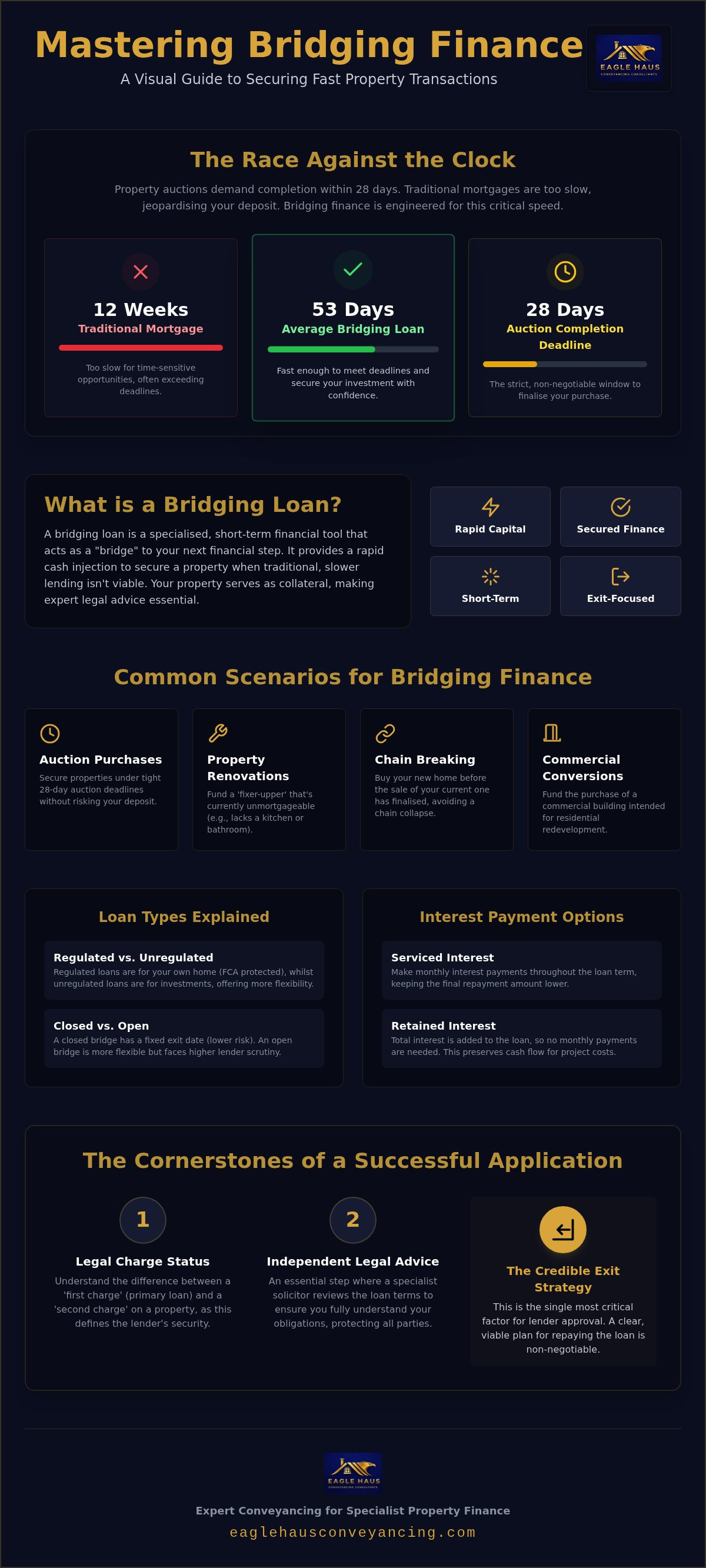
You'll learn how to navigate the 2026 market, where the average completion time is fifty-three days and total loan books have surpassed thirteen billion pounds. We'll also show you how to find a solicitor who truly understands specialist finance. This ensures your funding lands exactly when you need it, giving you the security to grow your portfolio with confidence.
Table of Contents
What is a Bridging Loan and How Does it Work?
A bridging loan is a specialised form of short-term, secured finance designed to provide a fast cash injection when traditional lending isn't an option. It's best understood through the "bridge" metaphor: it acts as a temporary financial span that carries you from your current situation to a future "exit" event. This exit is usually the sale of a property or the transition to a long-term mortgage. Because these are secured loans, your property or land serves as collateral. This means your assets are at risk if the loan isn't repaid, making professional legal oversight a necessity rather than an option.
The primary users of this finance include auction buyers, property developers, and homeowners caught in a broken property chain. In these scenarios, the ability to access capital quickly is more important than the long-term interest rates associated with a standard 25-year mortgage. Bridging loans provide the liquidity needed to seize opportunities that would otherwise be lost to slower traditional banking processes.
The Mechanics of Bridging Finance
Most bridging deals are structured over a short period, typically averaging around 12 months, though they can extend to 18 or 24 months depending on the project. Speed is the defining characteristic of this finance type. Whilst a standard residential mortgage might take several months to process, the average completion time for a bridging loan in 2026 is approximately 53 days. This efficiency is achieved through a more flexible approach to credit and income, focusing instead on the value of the security property and the viability of the exit strategy.
You'll also need to consider how interest is handled. You can choose "serviced interest", where you pay the monthly interest as you go, or "retained interest", where the total interest for the term is added to the loan amount. Retained interest is particularly popular with developers who want to preserve their cash flow for building works rather than monthly repayments. Your solicitor will help you review these terms to ensure the structure aligns with your financial goals.
Common Scenarios for Bridging
Auction purchases are perhaps the most common reason for seeking this funding. When the hammer falls, you typically have just 28 days to complete the transaction. If you don't have the cash ready, you risk losing your deposit. Bridging loans are specifically designed to meet these aggressive deadlines. Other frequent scenarios include:
Property Renovations: Buying a "fixer-upper" that is currently unmortgageable because it lacks a kitchen or bathroom.
Chain Breaking: Securing a new home before the sale of your current property has finalised, preventing you from losing your dream move.
Commercial Conversions: Funding the initial purchase of a commercial building intended for residential redevelopment.
Understanding the Different Types of Bridging Loans
Not all bridging loans are structured in the same way. The legal framework surrounding your finance depends on the purpose of the loan and whether there is existing debt secured against the property. In 2026, the distinction between regulated and unregulated products remains a critical starting point for any borrower. If you or a family member intend to live in the property, the loan is regulated by the Financial Conduct Authority (FCA). This provides significant consumer protection but often involves more stringent affordability checks. Unregulated loans are typically used for investment properties, commercial developments, or business purposes, offering more flexibility in exchange for fewer regulatory safeguards.
The type of loan you choose dictates the level of legal scrutiny required during the application. Lenders will assess the risk profile based on your "charge" status and the certainty of your repayment timeline. Understanding these categories helps you prepare the correct documentation and avoid unnecessary delays during the conveyancing process.
Open vs Closed Bridging Loans
A closed bridging loan has a fixed repayment date. This is a common choice when you've already exchanged contracts on a property sale and have a confirmed completion date in place. Because the lender has a clear, legally binding date for when they'll receive their funds, these loans are often seen as lower risk. They provide a straightforward path to completion for those with a finalised exit route.
An open bridging loan offers more flexibility but comes with higher lender scrutiny. There is no fixed repayment date, though most lenders expect the debt to be settled within 12 months. This is often the preferred route for developers waiting for planning permission or homeowners who haven't yet found a buyer. Whilst flexible, you must present a robust, viable exit strategy to satisfy the lender's risk requirements. Our specialists at Eagle Haus can help you navigate the nuances of bridging loans to ensure your chosen structure matches your project timeline.
First Charge and Second Charge Legalities
The "charge" refers to the legal priority a lender holds over your asset. A first charge loan is the primary debt on a property. If the property is sold, this lender is the first to be repaid from the proceeds. If you own your property outright, any bridging finance you take will be a first charge. This is the most common and simplest legal structure for lenders to approve.
A second charge loan sits behind an existing mortgage. If you're borrowing against your current home to fund a new purchase, the bridging lender takes a secondary position. This process requires formal consent from your primary mortgage provider. In these scenarios, a "deed of priority" is often required. This legal document outlines the ranking of each lender, ensuring there is no confusion regarding who is repaid first. Managing these multi-lender relationships requires proactive legal support to prevent the transaction from stalling.
The Legal Requirements for Specialist Property Finance
The legal framework for bridging loans is more intensive than a standard mortgage because the risks and timelines are compressed. Your solicitor acts as the bridge between your commercial ambitions and the lender's security requirements. They'll review the loan offer and security documents with meticulous detail. This process includes rigorous "Know Your Customer" (KYC) and Anti-Money Laundering (AML) checks. These digital checks are often completed in minutes using modern verification tools, but they remain a non-negotiable step to ensure the legitimacy of the transaction.
Lenders frequently insist on Independent Legal Advice (ILA) for certain borrowers or guarantors. This is common if a family member provides security or if a director guarantees a company loan. The solicitor ensures you fully understand the implications of the debt you're securing against your assets. It's a protective measure that prevents future legal challenges regarding "undue influence", giving both you and the lender peace of mind.
Conveyancing for Bridging Loans
Speed shouldn't lead to shortcuts. During the conveyancing process, a thorough title investigation is vital to ensure the security property is free from legal defects that could jeopardise the lender's position. Bridging lenders often have requirements that are significantly stricter than high-street banks, particularly regarding planning permissions or building regulations. To keep the deal moving, we often use "no-search insurance" or expedited personal searches to meet the tight deadlines common in auction or renovation projects. This proactive approach ensures that bridging loans can be finalised without the traditional delays of local authority paperwork.
Limited Company Bridging Considerations
Many property investors choose to facilitate company purchases using Special Purpose Vehicles (SPVs). Using a limited company can offer tax efficiencies, but it adds a layer of corporate legal complexity to the application. Lenders will usually require personal guarantees from the company directors, meaning you remain personally liable for the debt if the company defaults. At Eagle Haus, we manage these dual layers of corporate and property law simultaneously. We ensure the company's articles of association permit the borrowing whilst handling the property transfer, providing a seamless experience for West Midlands investors who need to move quickly.
Costs, Risks, and the Essential Exit Strategy
Understanding the true cost of bridging loans involves looking beyond the headline interest rate. Whilst the speed of these products is a major advantage, you must be prepared for a fee structure that differs significantly from a standard mortgage. In the 2026 market, typical arrangement fees range from 1% to 2% of the total loan amount. You'll also need to budget for valuation fees, which commonly fall between £300 and £1,500 for residential properties, and legal fees to cover both your own representation and the lender's costs. Transparency in these figures is vital to ensure your project remains profitable from start to finish.
Lenders will not approve a loan without a clear, documented way to pay it back. This is known as the exit strategy. If your plan is vague or unrealistic, the legal process will likely stall before it even begins. Underwriters require concrete evidence that you can settle the debt within the agreed term, usually 12 months. Without this, the loan is considered a legal non-starter, as the lender has no security regarding how their capital will be returned.
Defining Your Exit Strategy
Your primary exit strategy is usually the sale of the property or transitioning to a long-term financial product. For many investors, this means moving onto a buy to let remortgage once renovations are complete. Alternatively, a secondary exit might involve redeeming the loan using cash from other business assets or the sale of a different property in your portfolio. Your solicitor's role is to verify these plans, ensuring that any redemption figures or mortgage offers are legally sound and ready to be executed when the bridge term ends.
Risk Management for Borrowers
The most significant risk in bridging finance is the failure of the exit strategy. If you don't repay the loan on time, you may be hit with "default interest" rates, which are often substantially higher than the standard monthly rate. This can erode your equity at an alarming speed. There's also the risk of "re-bridging", where you take out a second bridge to pay off the first. This is an expensive cycle that most professional advisors suggest avoiding. The exit strategy is the legal foundation upon which the entire loan agreement is built. Failing to meet the repayment deadline can lead to repossession proceedings, so it's essential to have a backup plan in place. If you're ready to secure your funding with professional oversight, speak to our bridging specialists today.
Why Expert Legal Advice is Crucial for West Midlands Investors
Investors in Birmingham, Wolverhampton, and Staffordshire face a fast-paced market where opportunities don't wait for slow legal processes. In cities like Telford and Walsall, the demand for commercial-to-residential conversions remains high. This makes local expertise a significant advantage. When you're dealing with bridging loans, you need a legal partner who understands the regional investment landscape and the specific quirks of West Midlands property hubs.
Choosing the right solicitor is just as important as finding the right lender. You should look for a firm that offers:
Proven experience in specialist bridging and development finance
A proactive, tech-savvy approach to communication
Transparent fee structures with no hidden surprises
Strong relationships with local authorities to expedite searches
Regulated status through a reputable national partnership
Local Market Insight and Speed
Understanding the local authority search times in Cannock or across Shropshire can be the difference between meeting an auction deadline and losing your deposit. We don't just work from a distance; we're immersed in the regional market. This proximity allows for faster communication and a deeper understanding of local planning departments. Whilst some national firms might treat your case as just another file, we combine this local insight with a modern, efficient methodology that prioritises your project's timeline.
Our relationship with Taylor Rose is a key part of our service. It provides the national reach and maximum client security of a large, regulated firm whilst maintaining the boutique, personal attention of a specialist consultancy. This hybrid model is particularly beneficial in fast-paced markets where you need the gravity of a major legal name behind your transaction to satisfy high-value bridging lenders. It gives you the best of both worlds: individual care and institutional reliability.
Your Next Steps with Eagle Haus
Securing your short-term funding doesn't have to be a source of stress. We've designed our process to be as straightforward and transparent as possible. During your initial consultation, we'll set a realistic timeline for your completion and identify any potential legal hurdles before they become delays. This proactive stance ensures that your bridging loans are finalised with the speed your project demands, helping you scale your portfolio without the usual administrative friction.
If you're ready to move forward, we can provide a clear, transparent quote that outlines all the legal costs involved. We'll help you navigate the complexities of the 2026 property market with confidence and professional ease. Contact Eagle Haus today for specialist bridging loan advice and let's get your transaction across the finish line.
Securing Your Property Future with Confidence
Navigating the 2026 property market requires more than just capital. It demands a strategic legal partner who can match the pace of your ambitions. You now understand that bridging loans are a powerful tool for auction buys and renovations, provided you have a credible exit strategy and a clear grasp of the legal charges involved. By prioritising transparency and speed, you can avoid the common pitfalls that cause transactions to stall.
Our team specialises in West Midlands property investment, offering the security of regulated legal services via Taylor Rose. We focus on providing transparent, fixed-fee conveyancing quotes so you can budget with absolute certainty from day one. This proactive approach ensures your funding lands exactly when the hammer falls or the property chain breaks.
Secure your property deal with Eagle Haus—Expert Bridging Loan Solicitors. With the right professional guidance, your next property transaction can be a seamless transition to long-term success.
Frequently Asked Questions
What is the difference between an open and a closed bridging loan?
The main difference is the repayment date. A closed loan has a fixed date for repayment, usually because you've already exchanged on a property sale. An open loan has no set date but generally lasts up to 12 months. Open options require a more robust exit strategy because the lender takes on more risk without a guaranteed completion date. Both are common in the 2026 market for different investor needs.
How long does the legal process take for a bridging loan?
The legal process for bridging loans typically takes around 53 days on average. Whilst this is much faster than a standard mortgage, the exact timeline depends on the complexity of the property title and how quickly local searches are returned. If you're buying at auction, we often use expedited searches or no-search insurance to meet the 28-day completion window. Proactive legal support is essential to keeping this timeline on track.
Can I get a bridging loan for a property I intend to live in?
Yes, you can, but these are known as regulated products. The Financial Conduct Authority (FCA) regulates any loan secured against a property that you or your immediate family live in or plan to occupy. These loans offer higher consumer protection but involve stricter affordability checks compared to unregulated investment loans. In 2025, there were 4,691 regulated sales, showing they're a popular choice for homeowners caught in property chains.
Why do I need independent legal advice for a bridging loan?
Lenders often require Independent Legal Advice (ILA) to ensure you fully understand the risks and obligations of the finance. This is a standard requirement if you're a company director providing a personal guarantee or if a third party is putting up security. It protects both you and the lender from future claims of undue influence. Receiving this advice from a separate solicitor ensures the process remains transparent and legally robust for all parties.
What happens if I cannot repay my bridging loan on time?
If you miss your repayment deadline, you'll likely face "default interest" rates, which are significantly higher than your standard monthly rate. This can quickly reduce the equity in your property. Lenders may also initiate repossession proceedings to recover their capital. It's vital to communicate with your solicitor and lender early if your exit strategy stalls. Having a secondary exit plan, such as a quick sale or refinance, is a key safety measure.
Are bridging loans more expensive than traditional mortgages?
Yes, bridging loans carry higher interest rates than traditional mortgages because they're short-term and higher risk. In 2026, average monthly rates are around 0.82%, compared to much lower annual rates for standard home loans. You also have to factor in arrangement fees of 1% to 2% and valuation costs. However, the value lies in the speed and flexibility they provide, allowing you to secure properties that would otherwise be lost to slower funding.
Can I use a bridging loan to buy a property at auction in Birmingham?
Absolutely. Auction purchases in Birmingham and the wider West Midlands are one of the most common uses for this finance. Since auctions require completion within 28 days, a standard mortgage is rarely fast enough. Short-term funding provides the liquidity to meet this deadline and secure your deposit. We specialise in these fast-paced transactions, ensuring all legal title checks are completed within the tight window required by the auction house and the lender.
Do I need a solicitor if I am taking a bridging loan through my limited company?
Yes, you'll need a solicitor to handle the dual layers of property and corporate law. Lenders require a professional to review the company's articles of association and ensure directors have the authority to borrow. They'll also manage the personal guarantees often required from shareholders. At Eagle Haus, we coordinate these requirements through our partnership with Taylor Rose, providing the specialist oversight needed for company-based property purchases in the West Midlands.



Comments