Bridging Loan Legal Process: 2026 Property Investor Guide

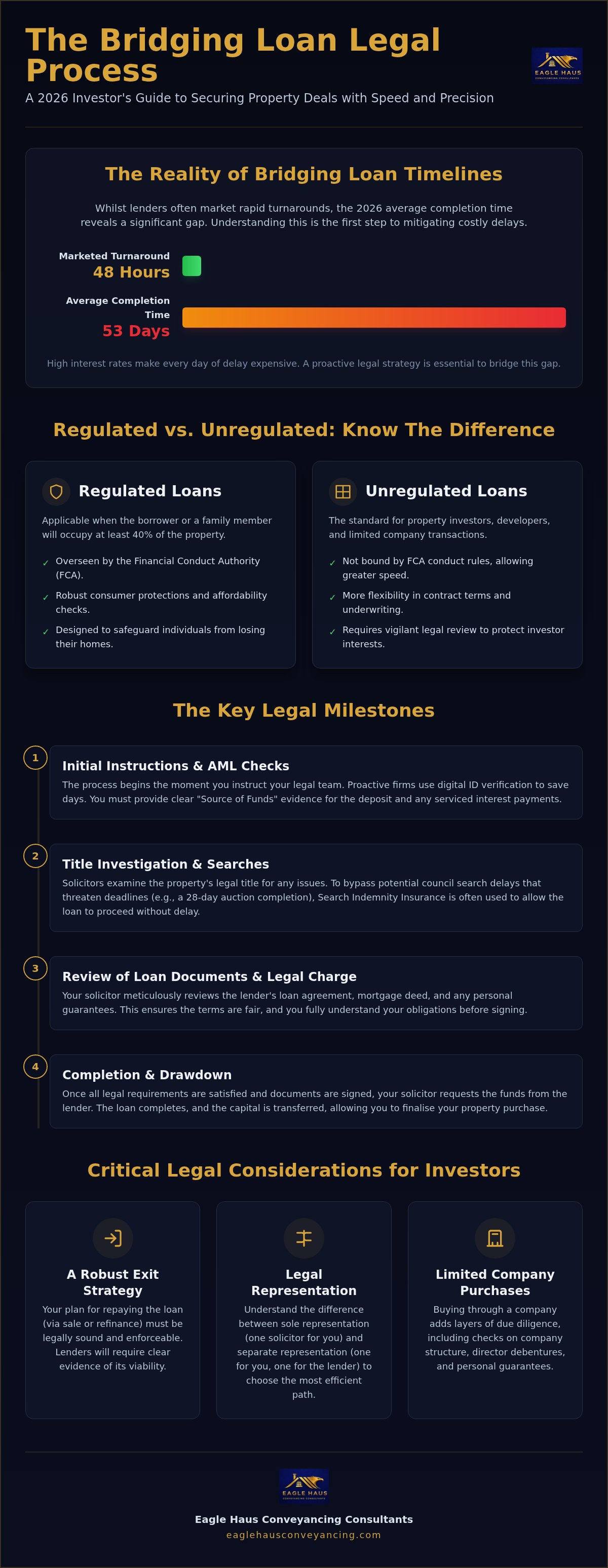
Did you know that whilst many lenders market 48-hour turnarounds, the average time to completion for a bridging loan in 2026 is actually 53 days? If you're a property investor eyeing a time-sensitive auction deal or a West Midlands refurbishment project, that discrepancy is more than just a statistic; it's a direct risk to your deposit and your peace of mind. It's frustrating when high interest rates make every day of delay expensive, especially when you're caught between confusing dual-representation requirements and unexpected paperwork hurdles. Understanding the bridging loan legal process is the only way to close that gap and regain control.
This guide will help you master the complexities of bridging finance legalities to secure your property deal with speed and professional precision. We'll provide a clear timeline of legal milestones, explain how to prepare your documents to bypass common bottlenecks, and ensure your exit strategy is legally sound. By the end, you'll have the confidence to move from initial enquiry to final resolution without the stress of the unknown.
Table of Contents
Understanding the Legal Framework of Bridging Finance in 2026
Bridging finance is essentially a short-term, secured legal charge against a property asset. It's designed to provide capital when timing is everything. For those new to the concept, understanding bridging loans involves seeing them as a sprint rather than a marathon; they usually last between 6 and 24 months. Because these loans are short-term and often involve higher risk for the lender, the bridging loan legal process is significantly more intensive than a standard residential mortgage. Solicitors must move with precision to verify titles and exit strategies within days, not months.
In 2026, the legal framework remains a critical safeguard for both the lender and the borrower. The lender needs absolute certainty that their capital is protected by a first or second legal charge. Meanwhile, the borrower needs a legal team that can navigate complex title issues at pace. This intensity is why specialised legal support is non-negotiable for investors who can't afford to let a deal collapse due to slow paperwork.
Regulated vs. Unregulated Bridging Loans
The legal landscape is split into two distinct categories. Regulated bridging loans fall under the oversight of the Financial Conduct Authority (FCA). These apply if you, or a close family member, intend to live in at least 40% of the property being used as security. The legal protections here are robust, focusing on affordability and consumer safety to prevent people from losing their homes to predatory terms.
Unregulated loans are the tool of choice for property investors and limited companies. These aren't bound by the same FCA conduct rules, which allows for greater speed and flexibility in the contract terms. However, the lack of consumer regulation means your solicitor must be even more vigilant when reviewing the lender’s specific conditions. This is particularly relevant for company-based purchases where the legal structure of the borrowing entity adds another layer of due diligence during the bridging loan legal process.
Why Investors Choose Bridging Over Traditional Mortgages
Traditional mortgages often fail when a property is deemed "unmortgageable" by high-street standards, perhaps due to a lack of a functional kitchen or bathroom. Bridging finance fills this gap, allowing investors across the West Midlands to secure dilapidated terraces or former commercial buildings for refurbishment. Speed is the other primary driver. In an auction environment, you usually have 28 days to complete. A standard bank simply can't move that fast.
The role of the legal process here is to facilitate these rapid completions by front-loading the due diligence. Whether it's a strategic acquisition in Birmingham or a "broken chain" solution for a residential move, bridging provides the liquidity to act. Once the property is refurbished or the chain is resolved, the loan is typically repaid through a sale or a long-term remortgage.
The Step-by-Step Bridging Loan Legal Process
The bridging loan legal process is a structured sprint. It requires a methodical approach where every day counts, especially when high interest rates make any delay expensive. In 2026, this workflow is increasingly digital, allowing investors to bypass the traditional paper-heavy delays that once plagued the industry. By understanding each milestone, you can keep the momentum moving from the first instruction to the final draw-down of funds.
Initial Instructions and Anti-Money Laundering (AML)
Efficiency starts the moment you instruct your legal team. Modern firms now utilise biometrically-linked digital ID verification platforms. This technology can save several days compared to physical document certifying at a local office. You'll need to provide clear evidence for your "Source of Funds," covering both the deposit and any interest you plan to service. Instructing experienced property solicitors early is vital. They can begin these checks even before the formal offer arrives. This proactive stance is particularly helpful when navigating FCA regulations for bridging loans, as the compliance requirements vary significantly between regulated and unregulated deals.
Title Investigation and Search Insurance
Once the lender’s solicitors issue the Legal Requirements Instrument (LRI), the focus shifts to the property itself. In the West Midlands market, council search delays can sometimes threaten a 28-day auction deadline. To counter this, we often use Search Indemnity Insurance. This allows the bridging loan legal process to move forward without waiting weeks for local authority results. Your solicitor will also investigate restrictive covenants or easements that might impact your eventual exit strategy. Ensuring the title is "clean" is a prerequisite for the lender to secure their first legal charge over the asset.
Execution and Completion
The final phase involves the execution of the Charge Deed and any required legal opinions, which are common in company-based purchases. By 2026, the shift towards HMLR-approved witness platforms means many documents can be signed and witnessed digitally. This removes the need for recorded delivery post and physical meetings. Once all conditions are met, your solicitor submits a final "Report on Title" and requests the draw-down of funds. Post-completion duties include SDLT returns and the formal registration of the charge at HM Land Registry. If you want to start your next Staffordshire project with a team that understands these digital workflows, early engagement is the key to a smooth completion.
Navigating Lender Requirements and Due Diligence
The interaction between your solicitor and the lender's legal team is often where the bridging loan legal process encounters its biggest hurdles. Unlike a traditional mortgage where one firm might act for both parties, bridging finance frequently requires "Separate Representation." This means the lender appoints their own specialist firm to scrutinise every detail of the security property and your corporate structure. Their priority isn't your completion date; it's the absolute protection of the lender's capital.
Understanding the difference between representation models is crucial for your timeline. In a "Sole Representation" scenario, one firm handles everything. Whilst this sounds efficient, many lenders now insist on separate firms to mitigate risk, especially for high-value acquisitions in Birmingham or complex company purchases across Staffordshire. This firm explains the key terms of bridge loans, highlighting how specific conditions precedent and commitment letters form the backbone of the agreement. If these two sets of solicitors don't communicate effectively, the deal can stall over minor enquiries.
The Role of the Lender’s Legal Team
The lender’s solicitor acts as a gatekeeper. They'll issue a series of "Enquiries" based on the title investigation and the valuation report. These aren't just box-ticking exercises; they're deep dives into potential risks like flying freeholds or restrictive covenants. To keep the deal moving, you must respond to these requests immediately. Any delay in providing a requested document or clarification can push your completion date back by several days. This is particularly costly when interest is calculated monthly, making every day of delay an added expense.
Independent Legal Advice (ILA)
Personal guarantees are a standard requirement for most unregulated bridging loans in 2026. If you're borrowing through a limited company, the lender will almost certainly require the directors to provide a personal guarantee. To ensure this is enforceable, you'll need Independent Legal Advice (ILA). This advice must come from a solicitor who has no connection to the transaction or the firm handling the main conveyancing.
The legal purpose of ILA is to ensure you fully understand the personal financial risks if the company fails to repay. Organising this early is essential. In the West Midlands, we recommend identifying an ILA provider at the same time you instruct your lead solicitor. This prevents a last-minute scramble for a witness just as you're ready to complete. By treating ILA as a priority rather than an afterthought, you remove one of the most common final-stage bottlenecks in the bridging loan legal process.
Critical Legal Considerations: Exit Strategies and Limited Companies
The exit strategy is the cornerstone of any bridging agreement. Without a legally sound plan to repay the capital, the lender will simply refuse to release funds. During the bridging loan legal process, your solicitor must scrutinise the feasibility of your proposed exit. Whether you plan to sell the asset or transition to long-term finance, the legal documentation must reflect this clearly. Some investors opt for cross-collateralisation, using existing property equity to secure better terms. This adds a layer of complexity as it involves placing legal charges over multiple titles; it requires precise coordination across your portfolio.
Legally Sound Exit Planning
A common pitfall for investors is failing to account for the time it takes to refinance. If your loan term expires before your new mortgage is in place, you face heavy default interest rates or even possession proceedings. Your solicitor ensures the exit strategy isn't just a "best-case scenario" but a legally enforceable roadmap. We often recommend instructing a buy to let remortgage solicitor at the same time you take out the bridge. This dual-track approach ensures that the moment your refurbishment is complete, the legal paperwork for the exit is already well-advanced.
Bridging for Limited Company Purchases
Most professional investors in 2026 operate through a Special Purpose Vehicle (SPV). This legal structure requires specific documentation that isn't found in individual purchases. Lenders will demand directors' minutes and formal board resolutions to authorise the borrowing. Because the company is a separate legal entity, directors are almost always required to sign Personal Guarantees (PGs). This makes you personally liable if the company defaults, which is why Independent Legal Advice is so critical.
Managing the bridging loan legal process within a company often involves transfers of equity, particularly if you're moving a property from your personal name into a limited company. This transition must be handled with care to satisfy both HMRC and your lender's requirements. This level of detail is a standard part of our company purchases methodology, ensuring your corporate structure supports your investment goals. If you're ready to secure your next asset through an SPV, speak to our specialist team today to ensure your legal foundations are solid.
Securing Your Property Deal with Eagle Haus
Eagle Haus (the trading name of TRW Legal Consulting Ltd) provides specialist property finance legals through our partnership with Taylor Rose. This unique arrangement offers you the best of both worlds: the regulatory security and resource depth of a national, top-tier firm combined with the boutique, client-focused attention of a local specialist. In the high-stakes environment of property investing, you don't just need a solicitor; you need a partner who understands that speed is a competitive advantage.
Our approach to the bridging loan legal process is fundamentally proactive. We don't wait for the valuation report to arrive before we start our due diligence. Instead, our team begins spotting potential "red flags" in the title or corporate structure from day one. By identifying restrictive covenants or complex easements early, we can resolve issues before they threaten your completion deadline. This local expertise is particularly valuable for investors targeting the Staffordshire, Wolverhampton, and Birmingham property markets, where we understand the specific nuances of the regional landscape.
A Modern Approach to Complex Conveyancing
We've built our service around the needs of the modern investor. By utilising digital-first workflows, we meet the aggressive timelines that bridging finance demands. You won't be bogged down by archaic legalese or slow, paper-based communication. We provide clear, professional guidance that cuts through the complexity, keeping you informed at every milestone. This transparency builds the trust necessary to move quickly on new opportunities.
Our support extends far beyond the initial bridge. We specialise in the seamless transition from short-term finance to long-term stability, whether that involves refinancing or moving into residential purchases and sales. By handling the entire lifecycle of your investment legals, we ensure that your exit strategy is baked into the initial loan structure, reducing the risk of friction when it's time to move to a long-term product.
Contact Us for Expert Bridging Legal Support
Getting a quote for your next transaction is simple and transparent. The benefit of working with a firm that specialises in both bridging and company purchases is that we understand the interlinked risks of corporate borrowing and property security. We don't just tick boxes; we provide the strategic legal oversight required to protect your capital and your reputation.
Ready to move? Contact Eagle Haus today for bridging loan legal advice. Whether you're a seasoned developer in the West Midlands or a first-time investor using an SPV, we're here to ensure your property deal is secured with professional precision and modern efficiency.
Mastering Your Property Finance Timeline
Success in the 2026 property market requires more than just capital; it demands a blend of proactive due diligence and a rock-solid exit strategy. Mastering the bridging loan legal process is the only way to ensure your time-sensitive acquisitions in Birmingham or Staffordshire don't fall through due to avoidable delays. By identifying potential title issues early and choosing the right representation model, you protect your investment from the high costs of extended interest payments.
At Eagle Haus, we provide regulated legal services via Taylor Rose, offering you national-scale protection with a boutique, client-focused approach. Our modern, digital-first conveyancing methodology is designed specifically for investors who need speed without compromising on professional precision. As specialists in West Midlands property investment, we understand the local landscape and the unique requirements of company-based purchases.
Secure your property deal with expert bridging loan legal advice from Eagle Haus. Your next project deserves a legal partner that's as proactive and forward-thinking as your investment strategy. Let's get started today.
Frequently Asked Questions
How long does the bridging loan legal process typically take in 2026?
The average time to completion for a bridging loan in 2026 is 53 days. Whilst some lenders market 48-hour turnarounds, the bridging loan legal process requires comprehensive title investigations and AML checks that take time to resolve. You can speed up your Staffordshire or Birmingham transaction by using digital-first workflows and preparing your "Source of Funds" evidence before the formal offer is even issued by the lender.
Do I need a different solicitor for a bridging loan than for a normal house sale?
You aren't legally required to use a different firm, but instructing a specialist in property finance legals is highly recommended. Standard residential conveyancing often lacks the technical depth and speed needed for complex bridging deals, especially those involving "Separate Representation." A specialist solicitor understands the aggressive timelines of the West Midlands market and can navigate the specific lender requirements that typically stall traditional high-street firms.
What is a legal "Report on Title" in a bridging transaction?
A "Report on Title" is a formal document your solicitor prepares to confirm the property is suitable security for the lender. It details any restrictive covenants, planning issues, or easements that might affect the asset's value or your eventual exit. This report is the final legal milestone before funds are released. It provides the lender with the necessary certainty to register their legal charge at HM Land Registry once completion occurs.
Can I use a bridging loan to buy a property through my Limited Company?
Yes, buying via a Special Purpose Vehicle (SPV) is a core part of the property investment landscape. This process involves additional legal documentation, including directors' minutes and board resolutions to authorise the borrowing. Lenders will also require Personal Guarantees from the company directors to secure the debt. We specialise in these company purchases across Wolverhampton and Telford, ensuring your corporate structure aligns perfectly with the lender’s specific requirements.
What happens if my exit strategy fails at the end of the term?
If your exit strategy fails, you risk entering default, which usually triggers higher interest rates and potential possession proceedings. It's vital to communicate with your lender as soon as a delay in sale or refinancing becomes apparent. Your solicitor can help negotiate extension requests or explore "re-bridging" options to protect your capital. This is why we always recommend having a robust, legally enforceable backup plan for every Staffordshire project.
Is search indemnity insurance always accepted by bridging lenders?
Search indemnity insurance is frequently used in the bridging loan legal process to bypass council delays, but its acceptance depends on the lender's specific criteria. Whilst many lenders in Birmingham and Shropshire accept it for speed, some may still insist on full local authority searches for high-value or commercial assets. Your solicitor will review the "Legal Requirements Instrument" to determine if indemnity insurance is a viable option for your particular deal.
What legal documents do I need to prepare for a bridging loan application?
You should prepare biometric ID, proof of address, and comprehensive "Source of Funds" evidence for your deposit. If you're borrowing through a company, you'll also need your Articles of Association and any relevant shareholder agreements. Having a clear, documented exit strategy, such as a mortgage offer in principle, is equally essential. Providing these documents to your solicitor early in the process prevents the common bottlenecks that delay West Midlands property completions.
Why do I need Independent Legal Advice (ILA) for a bridging loan?
Lenders require ILA to ensure that anyone providing a Personal Guarantee fully understands the financial risks they're undertaking. This advice must be provided by a solicitor from a different firm than the one handling the main transaction to prevent any conflict of interest. It makes the guarantee legally enforceable by proving you weren't under undue pressure. Organising ILA early is a vital step for investors in Walsall or Cannock to avoid completion delays.


Comments