Restrictive covenant advice for clients in Walsall

Updated: 1 day ago
A restrictive covenant doesn’t automatically determine what you can do with a property. Restrictive covenant advice in Walsall can help you understand what the wording may mean for your plans, and whether negotiation or a challenge is worth exploring.
It’s understandable to feel uncertain when a restriction appears in property documents, especially if it could affect a sale, purchase or proposed change. The key is to assess the covenant in context: its wording, the property it relates to and what you want to do.
This article explains the information that can shape your options and the practical steps involved in considering a restriction. You’ll also find out how to prepare for a discussion and whether face-to-face or telephone support may suit your circumstances, so you can decide on a clear next step.
Table of Contents
How can someone challenge or negotiate a restrictive covenant in the UK?
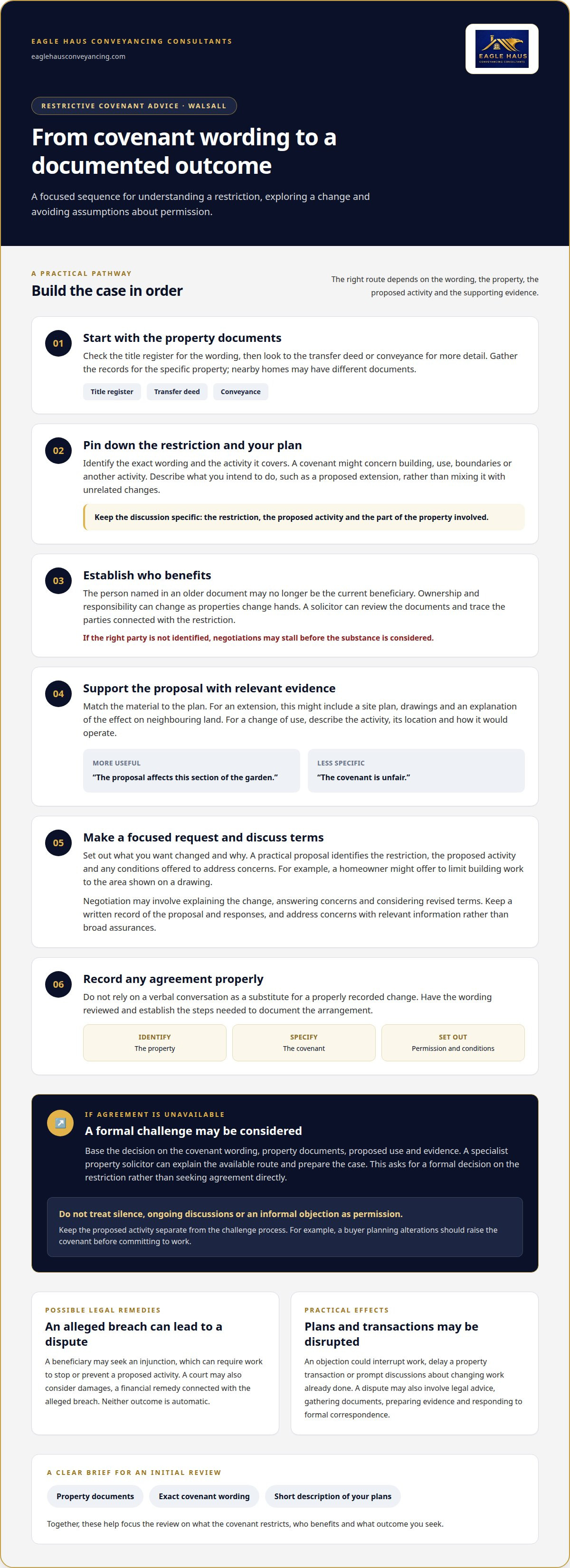
Start with the property documents, not assumptions about what the restriction means. The title register may point to the wording, while the transfer deed or conveyance can provide more detail. For a Walsall home, the relevant documents relate to that specific property, not every nearby house. Gather the available records before discussing a challenge or proposed change.
Next, identify the exact restriction and the action it covers. A covenant might concern building, use, boundaries or another activity. For example, a homeowner planning an extension should distinguish the proposed work from unrelated changes. Note the relevant wording and describe the intended activity clearly. This keeps any discussion focused on the covenant’s practical effect.
Then establish who benefits from the restriction and who can discuss a change. The person named in an old document may no longer be the current beneficiary. Ownership and responsibility can shift as properties change hands. A solicitor can review the documents and trace the parties connected with the restriction. Without identifying the right party, negotiations may stall before the substance is considered.
Evidence can make a proposed change easier to assess. For a planned extension, useful material might include a site plan, drawings and an explanation of the effect on neighbouring land. For a proposed change of use, describe the activity, its location and how it would operate. Keep claims specific. “The proposal affects this section of the garden” gives more to assess than “the covenant is unfair”.
Prepare a focused proposal
Set out what you want changed and why. A practical proposal identifies the restriction, the proposed activity and any conditions offered to address concerns. For instance, a homeowner might offer to limit building work to the area shown on a drawing. This is not a standard solution, but it shows how a clear, defined request can support a focused discussion.
Negotiation can involve explaining the proposed change, answering concerns and considering revised terms. Keep a written record of the proposal and responses. If the beneficiary raises a concern about impact, address it with relevant information rather than broad assurances. A clear exchange helps show whether agreement may be possible and gives a legal adviser a useful record if discussions do not resolve the issue.
Document any agreement carefully. A verbal conversation is not a reliable substitute for a properly recorded change. Before relying on consent, have the wording reviewed and establish what steps are needed to document the arrangement. The written terms should identify the property, the covenant and the permission or change agreed. Clear drafting reduces the risk of later disagreement about what was allowed.
When negotiation does not resolve it
If agreement is unavailable, a formal challenge may be considered. The decision should be based on the covenant’s wording, the property documents, the proposed use and the evidence. A specialist property solicitor can explain the available route and prepare the case. Unlike negotiation, this involves asking for a formal decision on the restriction rather than seeking agreement directly.
Keep the proposed activity separate from the challenge process. Do not treat silence, ongoing discussions or an informal objection as permission. For example, a buyer planning alterations should raise the covenant before committing to work. Early review can help clarify the restriction’s effect on the transaction and avoid plans based on assumptions.
For restrictive covenant advice in Walsall, organise the title documents, the exact wording and a short description of your plans. A clear brief focuses the first review on the key issues: what the covenant restricts, who benefits and what outcome you seek. Then consider whether a negotiated request or formal challenge best fits the documents and evidence.
To finalise any resolution, keep a clear written record of the agreed terms. Make sure it identifies the covenant, the change permitted and any conditions, and have a solicitor review the wording before relying on it. If agreement cannot be reached, return to the documents and evidence to assess the options. Avoid acting on an assumption that a proposed change has been accepted. Anyone wanting to discuss the issue in person can arrange a consultation with Eagle Haus Conveyancing Consultants. Bring the relevant property documents and a concise description of the proposed activity to keep the conversation focused.
What are the risks and remedies for breaching a restrictive covenant?
A breach can create practical problems before any formal dispute begins. For example, building an extension despite a restriction could prompt an objection from someone who benefits from it. That may interrupt work, delay a property transaction or require discussions about changing what has already been done. The precise consequences depend on the covenant and the activity involved.
There is also a risk of legal action. A beneficiary may seek an injunction, which can require work to stop or prevent a proposed activity. If building has already taken place, the dispute may concern whether it can remain. A court may also consider damages, a financial remedy connected with the alleged breach. Neither outcome is automatic.
Costs can extend beyond a possible damages award. A dispute may involve legal advice, gathering documents, preparing evidence and responding to formal correspondence. Unfinished work could also mean further building costs or disruption for a homeowner. A buyer might face uncertainty about planned alterations. Clear records of the covenant, activity and communications help identify the issues early.
What can affect the outcome?
The wording matters. A restriction aimed at a particular use may raise different issues from one concerning construction or a boundary. The location and scale of the activity matter too. For instance, a small structure in one part of a garden raises different practical questions from extensive building across the plot. Plans, photographs and correspondence can help explain what happened.
An injunction: work may need to stop, or a planned activity may be restrained.
Damages: a financial remedy may be sought in response to the alleged breach.
Negotiation: the parties can discuss consent, revised terms or another resolution.
Practical changes: a project may need altering or reversing to address the dispute.
These are possible routes, not a fixed sequence. A dispute about an unstarted extension differs from one involving completed work. The beneficiary’s concerns, the documents and the effect of the activity all shape the discussion. Do not treat an objection as permission to continue, or assume every complaint establishes a breach.
Steps to take after an objection
First, pause the activity connected with the complaint. If a neighbour objects to an extension, continuing construction could deepen the disagreement. Next, gather the title documents, plans, photographs and relevant messages. Keep a dated record of events, including what work has happened and what remains proposed. These details help an adviser understand the dispute without relying on memory alone.
Then seek advice on the covenant’s wording and the response received. A legal adviser can explain the options, assess the evidence and help frame a reply. Avoid admitting liability or promising remedial work before understanding the position. If the parties discuss a settlement, record its terms clearly. Document any permission or agreed change rather than leaving it as an informal conversation.
If a dispute concerns a home purchase or sale, the covenant can affect the transaction as well as the proposed work. Residential purchase or sale conveyancing can help address property transaction issues. For a planned extension or change of use, focus first on the exact restriction, the objection and the outcome sought. Those details provide a practical starting point for resolving the matter.
How much does restrictive covenant legal advice cost in Walsall?
The cost depends on the work needed for your particular covenant issue. A quote can reflect the case and the work involved. A short review of a title document differs from support involving negotiation, detailed evidence or a formal dispute. The scope of work, rather than the postcode alone, shapes the estimate.
For example, a homeowner considering a small extension may need advice focused on the restriction’s wording and its effect on that proposal. A dispute about completed building work could require reviewing plans, correspondence and the other party’s position. Each additional document or issue may change the scope. A useful estimate therefore starts with a clear description of the problem.
What affects the estimate?
The first factor is the information that needs review. A title register may identify the covenant, while a transfer deed or older conveyance may add context. If the relevant wording is unclear or several documents refer to it, more review may be needed. Gathering the documents can help define the initial task and avoid time spent locating basic information.
The next factor is the outcome you want. Advice on whether a planned use may be restricted differs from preparing a negotiation proposal. A request for consent may involve drafting correspondence and considering responses. If the other party disputes the interpretation, further work may be needed to assess the arguments and explain the options.
The stage of the matter also affects the work. A question raised before building starts may be narrower than a dispute after construction. An urgent transaction or imminent work can require a different response from early planning. Explain important dates when requesting a quote, and describe what has already happened. This helps the adviser assess the scope realistically.
Documents: title entries, deeds, plans and previous correspondence may need review.
Complexity: multiple restrictions or unclear wording can require closer analysis.
Negotiation: preparing a request and responding to objections adds work.
Dispute stage: formal correspondence or proceedings involve different tasks.
Property plans: the activity and its effect help define the advice required.
Make the quote request useful
Give a concise account of the property and the decision you face. For example, say whether you are planning an extension, dealing with an objection or buying a home with a covenant. Include the relevant documents and explain any discussions already held. A focused request helps separate the immediate question from possible later work.
Ask what the proposed fee covers, how additional work would be handled and whether the estimate includes correspondence or negotiation. These points help you understand the scope instead of comparing figures without knowing what each includes. If the matter changes, such as an objection arriving after initial advice, the work required may change too.
Keep the first request specific. “I need advice about this covenant” gives less direction than “I’m buying a Walsall property and need to understand a restriction affecting planned alterations”. The second example identifies the property transaction, covenant issue and decision involved. Clear details help establish whether the immediate task is document review, transaction support or a wider dispute.
If the covenant issue affects a purchase, sale, remortgage or ownership transfer, explain that connection when seeking a quote. Discuss your property transaction to consider the conveyancing work involved. This does not replace specialist advice about challenging a covenant, but it can help identify how the restriction relates to the property transaction.
Explain what you hope to achieve, whether anyone has objected and what response or work is already under way. If you do not have every document, identify what is available and say which wording or decision concerns you. A focused request can help distinguish an initial review from further negotiation or dispute work. Ask what the proposed scope covers, what information is still needed and whether later stages would require a separate estimate. This makes it easier to compare the work offered, rather than judging a fee without knowing which tasks it includes.
The Law Society’s official database contains 218,805 legal professionals. This may be a useful point of reference when looking for a solicitor to approach, but the estimate should still be based on your covenant documents, aims and the stage of the issue. Before agreeing to work, clarify the advice covered, any assumptions and how the adviser will tell you if the scope changes. A clear outline of the question and supporting papers gives the discussion a practical starting point and helps ensure the quote reflects the work you need.
Eagle Haus Conveyancing Consultants
Eagle Haus Conveyancing Consultants can help with the conveyancing when a restrictive covenant affects a property transaction. If you’re buying or selling a home, a restriction may raise questions about the plans or documents involved. The team also handles remortgages, transfers of equity and company purchases, where understanding the property’s circumstances can matter to the transaction.
Raise the covenant issue early, particularly if it relates to a planned purchase, sale or ownership change. This can clarify how the conveyancing work connects with your next steps. Advice on challenging or negotiating a covenant is a separate legal question. For business owners navigating commercial purchases or workforce transitions where restrictive covenants also apply to contracts and staffing, Altum HR provides outsourced HR support and employment law advice.
To discuss a property transaction affected by a covenant, contact Eagle Haus Conveyancing Consultants.
Take a clear next step with your property plans
A covenant issue can affect more than a proposed alteration. It may also shape how you approach a property decision already under way. Before moving forward, identify the decision that needs attention now: completing a transaction, changing ownership or understanding how a restriction relates to your plans. This gives your next conversation a practical focus and helps keep the property matter moving with the covenant issue in view.
If you need restrictive covenant advice in Walsall, distinguish the question about the restriction from any conveyancing work connected with your property. Eagle Haus Conveyancing Consultants can discuss the conveyancing aspect of a property transaction and how it relates to your circumstances. A clear outline of the transaction and the point causing concern can make that discussion more useful.
When you’re ready to discuss your property matter, contact Eagle Haus Conveyancing Consultants. Taking that step can help you decide what to address next with greater clarity.



Comments