Management Packs FAQ: Guide for Leasehold Sellers

If you’re selling a leasehold home, notify the managing agent as soon as you decide to sell and ask them for the management pack. Also known as a landlord’s enquiry pack or an LPE1/FME1, it contains information needed during the sale; this management packs FAQ explains how to request it and when to make contact.
It’s easy to focus on finding a buyer and leave the building paperwork until later. Getting in touch with the managing company early helps you understand what the agent needs and gives the sale a clearer starting point.
You’ll learn what to include in your request, which documents may be in the pack and what to do if you’re unsure who manages the building. We’ll also explain how the pack fits into conveyancing, so you can take the next step with confidence.
Table of Contents
How do I request a management pack?
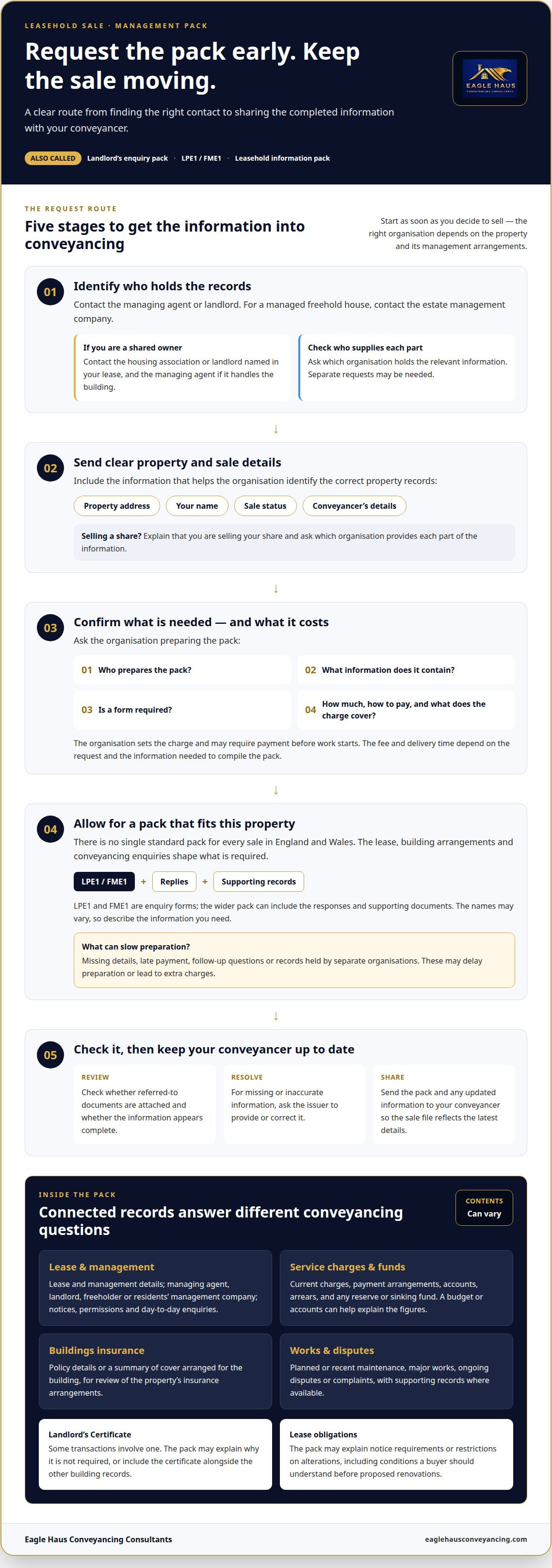
Contact the managing agent or landlord as soon as you plan to sell. If you own a freehold house on a managed estate, contact its estate management company. Provide the property address, your name, sale status and conveyancer’s details. Ask who prepares the pack, what it contains, how to pay and whether you need to complete a form. This management packs FAQ can help you organise these first steps.
A management pack is also known as a landlord’s enquiry pack or an LPE1/FME1. LPE1 and FME1 are enquiry forms; the wider pack can include the responses and supporting records. “Leasehold information pack” is another broad term. The names may vary, so describe the information you need when contacting the relevant organisation.
If you’re a shared owner, contact the housing association or landlord named in your lease. Also contact the managing agent if it handles the building. Explain that you’re selling your share and ask which organisation supplies each part of the information. The lease and management arrangements determine who holds the relevant records and whether you need to make separate requests.
There isn’t one standard pack for every sale in England and Wales. The lease, building arrangements and conveyancing enquiries shape the information required. A pack may cover service charges, building management and permissions linked to the lease. Identify the property clearly in your request so the organisation can find the relevant records and direct questions to the right person.
The organisation preparing the pack usually charges the person requesting it, often the seller. The managing agent or landlord sets the charge and may require payment before starting work. When you submit your request, ask for the amount, payment method and what the charge covers. This management packs FAQ also explains why clarifying the scope upfront can prevent confusion about separate documents.
Missing details, late payment, follow-up questions or records held by separate organisations can slow preparation or lead to extra charges. If the pack is incomplete or inaccurate, identify the missing or incorrect item and ask its issuer to correct the response. Then send the updated information to your conveyancer so the sale file reflects the latest details.
Pre-pack sales are different from leasehold management packs. The term describes a sale arranged before an administration, and around 30% of administration procedures involve pre-pack sales. A pre-pack may be considered where a business sale is arranged before administration. The proposed buyer participates in negotiations with the business and its advisers. This is separate from requesting property-management information.
What documents are included in a UK management pack?
A management pack brings together information used to answer conveyancing enquiries about a leasehold property or managed freehold. Its contents depend on the building, the lease and the managing agent’s records. It may include completed enquiry forms and supporting documents, rather than one standard set of information for every sale.
The LPE1 or FME1 form records answers about the property and its management. Supporting material can explain the figures or arrangements behind those answers. For example, the pack may include service charge accounts, the current budget, details of any arrears, and information about planned works. These records help the buyer understand the property’s ongoing costs and management.
Lease and management details: Replies may cover the lease, managing agent, landlord, freeholder and any residents’ management company. The pack can clarify who handles notices, permissions and day-to-day enquiries.
Service charges and funds: Information may include current charges, payment arrangements, accounts and any reserve or sinking fund. These details help explain how shared building costs are collected and recorded.
Buildings insurance: The pack may include policy details or a summary of cover arranged for the building. The buyer’s conveyancer can use this when reviewing the property’s insurance arrangements.
Works and disputes: Replies may describe planned or recent maintenance, major works, ongoing disputes or complaints affecting the building. Supporting records can add context to the managing agent’s answers.
Some transactions also involve a Landlord’s Certificate. If one isn’t required, the management pack should explain why it doesn’t apply. If the pack includes a certificate, read it alongside the other building records, not as a substitute for them.
A pack may also explain practical obligations under the lease, such as notice requirements or restrictions on alterations. For example, a buyer considering renovations needs to understand whether the lease sets conditions for the proposed work. The wording and supporting documents can clarify which points need further attention during conveyancing.
Read the pack as a set of connected records. A service charge figure, for example, is easier to understand alongside the budget or accounts. If a response refers to a separate document that isn’t attached, ask your conveyancer to raise it with the managing agent. This helps keep the transaction file complete and gives the buyer’s solicitor clearer information to review.
Separately, the pre-pack sales figures describe a trend from 2016 to 2019, rather than documents that form part of a property management pack. Total pre-pack sales increased by 37% from 2016 to 2019, with 128 more pre-pack sales over that period. These figures distinguish the overall change in total sales from the count of additional sales.
Success rates also differ by buyer group: pre-pack sales to outside buyers succeed 84% of the time, while pre-pack sales to existing shareholders or people already known to the company succeed 71% of the time. These percentages refer to the two stated buyer categories; they should be kept separate from the figures for change in total pre-pack sales.
Who prepares and provides a management pack?
The organisation responsible for managing the building usually prepares the management pack. This could be the managing agent, freeholder, landlord or residents’ management company. The right contact depends on the property’s ownership and management arrangements. For a flat, the managing agent may hold service charge and building records, while the freeholder or landlord handles lease-related enquiries. A managed freehold house may instead involve an estate management company.
The seller or their conveyancer normally starts the request, but the information comes from whoever holds the relevant records. For example, a managing agent might complete an LPE1 form using its building records, then provide supporting documents from the landlord or residents’ management company. If different organisations hold separate information, they may need to contribute before the pack is complete.
To identify the right contact, start with recent service charge correspondence, notices or building emails. These often name the managing agent or organisation collecting charges. The lease may identify the landlord or freeholder. If an estate company manages a freehold development, its name may appear on service charge statements or other property paperwork.
Once you have a likely contact, send a clear written request. Include the full property address, your name, confirmation that you’re selling and your conveyancer’s details. Ask who will prepare the pack, which forms it includes, how to pay and where to send follow-up questions. This helps distinguish the information provider from the solicitor handling the sale.
Managing agent: Often coordinates building information and responds to property-management enquiries.
Freeholder or landlord: May provide lease or ownership information, or instruct an agent to respond.
Residents’ management company: May hold records about decisions, maintenance or shared costs for the building.
Estate management company: May handle enquiries for a managed freehold development.
Your conveyancer uses the pack during the sale but doesn’t usually prepare it. Their role is to review the responses, raise relevant enquiries and pass information through the conveyancing process. If a response refers to records held elsewhere, your conveyancer can direct the follow-up question to the appropriate organisation.
Shared ownership can involve more than one contact. The housing association or landlord may hold information about the shared ownership arrangement, while a separate managing agent handles the building. Explain that you’re a shared owner selling your share, then ask each relevant organisation which enquiries it handles. This helps direct your request without assuming one organisation holds every record.
If the first contact says another organisation manages the property, ask for its correct name and contact details. Keep the response with your sale paperwork, then send the request to the named organisation. A clear record of who holds each part helps your conveyancer follow up with the right party.
How much does a management pack cost in the UK
The organisation preparing the management pack, such as a managing agent, landlord or freeholder, sets the charge. The amount depends on the work involved and is provided after you request a quote. Factors can include who holds the records, what information needs to be gathered and whether extra administration is required.
There isn’t one charge for every leasehold flat or managed freehold home. A straightforward request may involve records held by one managing agent. A property involving a separate landlord, residents’ management company and estate manager may require information from several sources. The work involved can affect the quoted amount.
Before paying, ask the organisation preparing the pack to explain what its charge covers. For example, does it cover the completed LPE1 or FME1 form and supporting records, or are separate documents handled differently? A clear breakdown helps you understand what you’re paying for and which items remain outstanding.
Also ask how the organisation accepts payment and whether it needs payment before starting work. Some providers may require payment before compiling information. Keep the written response with your sale paperwork, including any reference number or payment confirmation. Your conveyancer can then relate the charge to the correct property transaction.
Check whether the quote covers only preparation of the management pack. Conveyancing work is separate: your solicitor reviews the pack and handles legal enquiries as part of the sale. If another organisation must supply information, ask whether that work affects the quoted charge or requires a separate payment. This avoids assuming one fee covers every part of the process.
Extra administration may be needed when records must be gathered from different organisations or a response needs updating. For example, a managing agent may hold service charge information, while the landlord holds lease-related details. Requests involving both sets of records can require more coordination than those handled by one organisation.
If the quoted charge is unclear, ask for an itemised explanation before paying. Find out which documents are included, whether additional work is charged separately and what happens if the pack needs correcting. These questions clarify the scope of the service, rather than relying on comparisons that may cover different documents or providers.
Once the charge and scope are clear, pass the payment details to the person handling the sale paperwork and keep a record of the transaction. If a new fee arises later, ask which additional task it covers and whether it falls outside the original request. This gives your conveyancer a clear record and helps avoid confusion about separate charges.
How long does it take to receive a management pack
The time required depends on how quickly the managing agent, landlord or freeholder can gather and check the information. There isn’t one timetable for every property. A pack based on records held by one organisation follows a different process from one requiring input from several organisations.
A complete request also matters. A missing property address, unclear sale details or unpaid charge can hold up the work. Include the full address, your name, confirmation of the sale and your conveyancer’s details. Ask the organisation to confirm receipt and explain what it needs before preparing the pack.
Payment is another practical step. If the managing agent requires payment before preparation, delays in receiving or allocating it can delay the start of work. Pay using the stated method and keep the confirmation with your sale records. If a reference is required, include it so the payment can be matched to the property.
Records held by different parties can require extra coordination. For example, the managing agent may hold service charge information, while the freeholder holds lease-related records. A residents’ management company may need to supply details about building decisions or maintenance. Each organisation must provide its information before the records can be brought together.
After submitting the request, use a simple follow-up sequence:
Confirm receipt: Ask the named contact to acknowledge the request and identify any missing information.
Confirm the next step: Check whether payment or a particular form is needed before preparation begins.
Track outstanding items: Ask which organisation is providing any missing record, such as insurance or service charge information.
Update your conveyancer: Share responses and revised documents so enquiries can move forward with the latest information.
If a response is delayed, contact the organisation handling the request with the property address and any reference number. Ask which specific item is outstanding, who must supply it and whether the organisation needs anything from you. This is more useful than asking for a general update because it identifies the next action.
Once the pack arrives, your conveyancer reviews the responses and raises follow-up enquiries where needed. An incomplete answer or inconsistency between a form and supporting record may need clarification. Sending the pack promptly helps your conveyancer identify these points while the sale progresses.
For practical help coordinating the legal work around a property sale, get support with your residential sale.
A generic administration process may take up to 12 months to complete, but this does not establish the time required for a particular management pack. Treat the period as a possible duration for a generic process, not a completion date for an individual request. If the sale is waiting on the pack, discuss the timing with your conveyancer and ask what remains outstanding; avoid assuming that the generic period predicts when the information will arrive. Clarion does not recommend how leasehold or freehold service charges should be apportioned at completion; the buyer and seller should agree this and formalise it through their solicitors. Keep that allocation as a matter for those parties and their solicitors.
Eagle Haus Conveyancing Consultants
Eagle Haus Conveyancing Consultants supports residential property sales, including the conveyancing work that follows receipt of a management pack. If you’re unsure how the information affects your sale, your conveyancing team can review the documents, identify points needing clarification and handle relevant enquiries as the transaction progresses.
This support is useful when the pack refers to service charges, building arrangements or lease conditions that need attention before completion. Clear legal guidance connects these details with the wider sale process, helping you understand what needs action and who should respond.
If you’d like support with your property transaction, contact Eagle Haus Conveyancing Consultants to discuss the next step.
Keep your property sale moving forward
Use this management packs FAQ as a reference while your sale progresses, and let each new document guide your next decision. Keeping a clear record of outstanding questions helps you and your conveyancer track what needs attention without losing sight of the wider transaction.
If a response raises a concern or you’re unsure how it affects your sale, discuss it with your conveyancer before proceeding. Timely legal guidance can help you understand the issue and decide what to do next. Eagle Haus Conveyancing Consultants supports residential property transactions and other ownership changes, including transfers of equity and remortgages.
For help with your next steps, contact Eagle Haus Conveyancing Consultants. Take the process one step at a time, with clear advice to support your decisions.
Frequently Asked Questions
What are management packs in property sales?
A management pack provides property-specific information to help the buyer and their conveyancer understand how a leasehold home is managed. It supports enquiries beyond the title and lease, such as clarifying the building’s procedures for a change of ownership. For example, the buyer may need to know how to notify the building’s management after completion. Reviewing the pack helps identify questions to resolve before the sale progresses.
How can I request a management pack from a managing agent or freeholder?
Ask the managing company that collects your service charge and ground rent for the pack. Your latest statement can help identify the right organisation. Send a written request with the property address, sale details and your conveyancer’s contact information, then ask which forms and payment steps are required. If you’re selling in Staffordshire, Wolverhampton, Telford, Birmingham, Shropshire, Cannock or Walsall, these steps can help your local property transaction get underway with the relevant building contact.



Comments