How to work with a conveyancer when selling your Cannock home

A seller’s conveyancer handles the legal work that takes your Cannock home sale from offer to completion. They prepare the sale contract and property forms, respond to the buyer’s legal enquiries, arrange repayment of any mortgage secured on the property and deal with the sale proceeds. Understanding what a conveyancer does for a seller in Cannock helps you know what to expect and what information to provide.
Selling a home involves unfamiliar documents and deadlines, especially when questions come back from the buyer’s side. Your conveyancer manages the legal steps and keeps you informed as the sale progresses.
This guide explains the process, from completing the property information and fittings forms to answering enquiries and reaching completion. You’ll also learn how Cannock conveyancing services can support your sale, so you have a clearer idea of what happens next.
Table of Contents
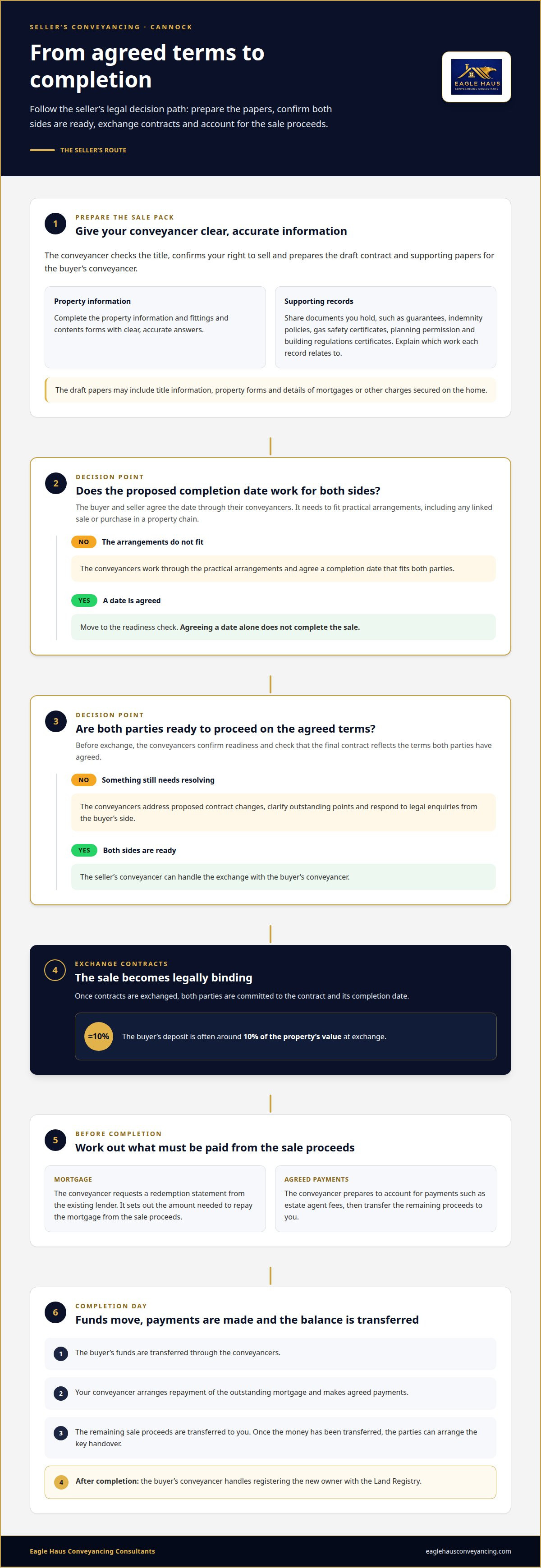
What happens on the completion date?
A seller’s conveyancer prepares the draft contract and supporting papers for the buyer’s conveyancer. These may include title information, property forms and details of mortgages or other charges secured on the home.
Prepare and send the draft contract papers. The conveyancer gathers the information needed to set out the proposed sale. They check the property title, confirm the seller’s right to sell and clarify the agreed terms. The draft contract and supporting paperwork then go to the buyer’s conveyancer, giving them documents to review before exchange.
Review the contract terms. The contract records the property being sold and the terms agreed between buyer and seller. The conveyancers address proposed changes and clarify any points that need agreement. For example, they may need to settle the wording of an agreed completion date. Before either side signs, the final contract should reflect the terms both parties have agreed.
Agree the exchange and completion arrangements. The buyer and seller agree a completion date through their conveyancers. The date needs to fit the practical arrangements, including any linked sale or purchase in a property chain. Before exchange, conveyancers confirm that both parties are ready to proceed on the agreed terms. Agreeing a date alone does not complete the sale.
Exchange contracts once both sides are ready. The seller’s conveyancer handles the exchange with the buyer’s conveyancer. Exchange makes the sale legally binding, so the parties are committed to the contract and its completion date. The buyer’s deposit is often around 10% of the property’s value at exchange. The contract sets out how the agreed arrangements apply to the sale.
Prepare for the completion date. Before completion, the seller’s conveyancer requests a redemption statement from the existing mortgage lender. It sets out the amount needed to repay the mortgage from the sale proceeds. The conveyancer also prepares to account for agreed payments, such as estate agent fees, and transfer the remaining proceeds to the seller.
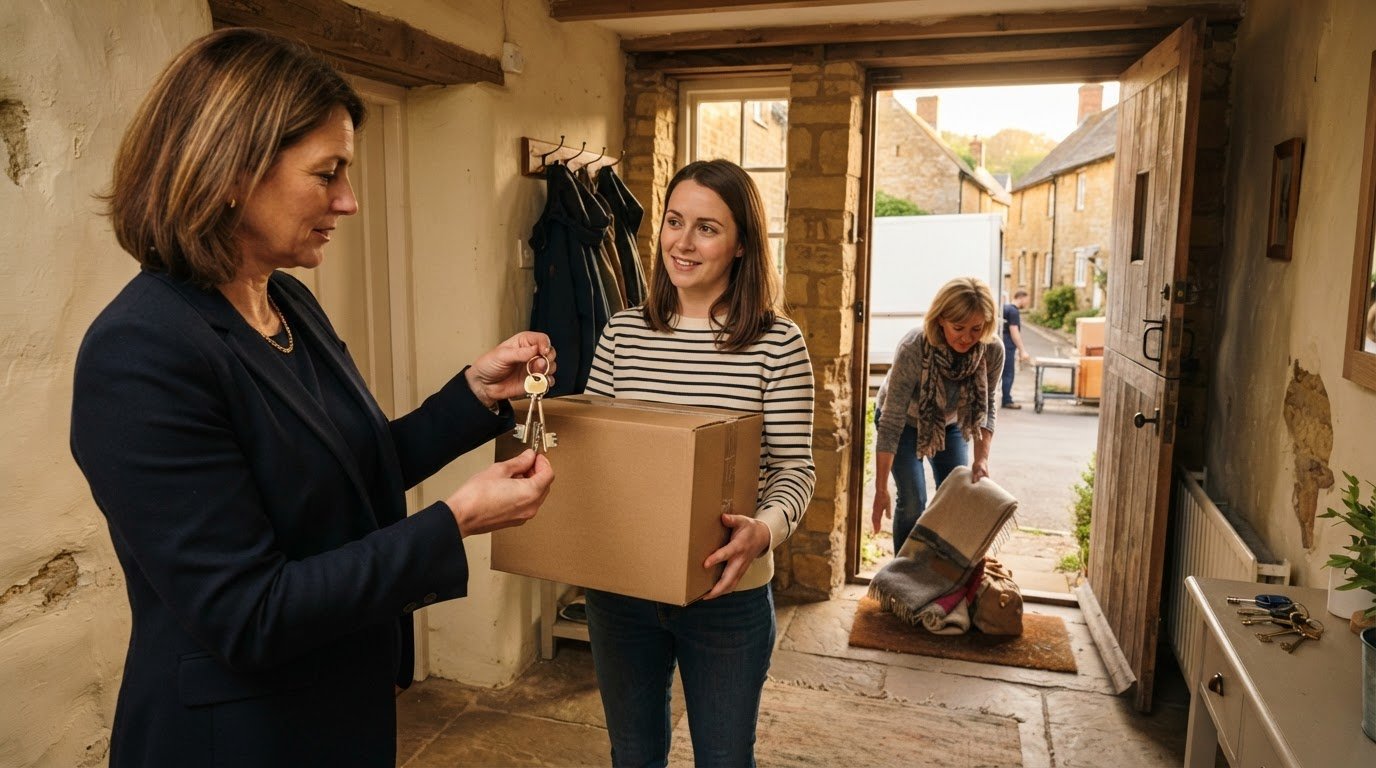
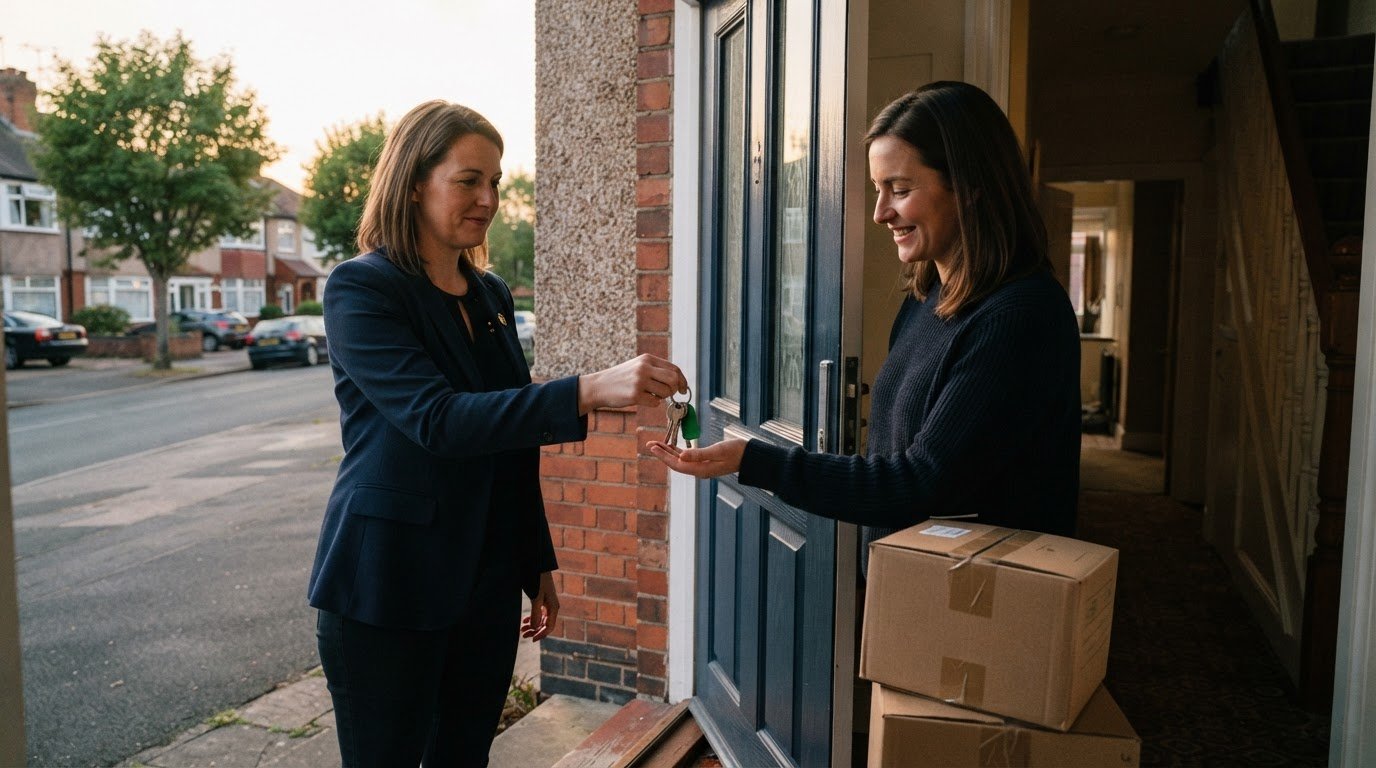
Complete the sale and account for the money. On completion, the buyer’s funds are transferred through the conveyancers. The seller’s conveyancer arranges repayment of the outstanding mortgage, makes agreed payments and transfers the remaining proceeds to the seller. Once the money has been transferred, the parties can arrange the key handover. After completion, the buyer’s conveyancer handles registering the new owner with the Land Registry.
From preparing paperwork to accounting for the sale proceeds, the conveyancer coordinates the legal steps on the seller’s side through completion. The buyer’s conveyancer handles registration of the new owner.
What does a conveyancer do for the seller?
A seller’s conveyancer coordinates the legal work from accepting an offer to completion. If you’re wondering what a conveyancer does for a seller in Cannock, the role includes checking ownership, preparing sale paperwork and addressing issues that could delay the transaction.
Cannock conveyancing solicitors and online or fixed-fee conveyancers can handle the same core legal stages. Practical differences include communication methods, what the work covers and how additional issues are handled. Here’s how the process usually progresses.
Collecting certificates and supporting documents
Step 1: Send the conveyancer the property documents you hold. These may include NHBC or FENSA guarantees, indemnity policies, gas safety certificates, planning permission and building regulations certificates. Such records can help answer questions about work carried out at the property. If a document relates to an alteration, explain which work it covers.
Step 2: Explain relevant history clearly. The conveyancer uses your information to prepare the contract pack and respond to the buyer’s conveyancer. For example, provide the records relating to an extension together. Clear, accurate details help the legal team address the point without relying on guesses.
Checking property titles and searches
Step 3: Have the conveyancer review the title. This check confirms whether you have the right to sell and identifies restrictions or charges affecting the property. The conveyancer also obtains details of any mortgage secured against it. If the title reveals a matter requiring explanation, it can be addressed in the paperwork for the buyer’s side.
Step 4: Consider relevant search information. A residential conveyancer may conduct Land Registry and local authority searches to identify matters affecting a property’s value or marketability. The conveyancer considers any relevant results alongside the title and seller’s information, then responds to questions raised by the buyer’s side. The findings relate to the individual property, not simply its Cannock location.
Confirm the sale information. The conveyancer clarifies the agreed terms, checks ownership details and prepares the contract pack. Your answers and supporting paperwork help the buyer understand the property’s legal position.
Progress the contract towards exchange. Conveyancers address contract wording and outstanding legal points. When both parties are ready, they arrange exchange and work towards the agreed completion date.
Keep tax responsibilities clear. Stamp Duty Land Tax may apply to the buyer’s purchase, depending on the price and circumstances. The seller’s conveyancer focuses on the sale, including title matters and repayment of any mortgage from the proceeds.
Understanding what a conveyancer does for a seller in Cannock can help you prepare for the legal work ahead. For support with selling a residential property, use the conveyancing service available here.
Completing property information and fittings and contents forms
Complete the property information form accurately. Your conveyancer sends this form to gather details for the buyer’s conveyancer. It covers the home and its ownership, including matters such as boundaries, alterations and disputes. Answer from your own knowledge and records. If a question needs clarification, explain what you know rather than guessing.The current TA6 property information form became mandatory on 30 March 2026. Clear answers help the conveyancer prepare the sale paperwork and respond to questions about the property. Tell them if an answer needs supporting documents, such as planning permission or a building regulations certificate.
Set out what stays with the property. The fittings and contents form records which items are included in the sale and which will be removed. For example, state whether fitted appliances, curtains or light fittings are staying. Make sure the form matches the arrangements agreed with the buyer, so any differences can be identified before completion.Describe items clearly rather than relying on broad labels. If a fitted item is excluded, name it and ensure the form reflects that decision. Your conveyancer sends the completed form to the buyer’s side as part of the property paperwork.
Provide information for identity checks. The seller’s conveyancer checks your identity to meet anti-money-laundering requirements and confirms you are the registered owner with the legal right to sell. Respond promptly to requests for identification and ownership information. If more than one person owns the property, the identity and role of each seller must be established.
Tell the conveyancer about a mortgage secured on the home. The conveyancer requests a redemption statement from your lender, showing the amount needed to repay the mortgage. They use it to plan how the completion money will be handled. On completion, repayment comes from the sale proceeds, alongside agreed payments such as estate agent fees, before the balance is transferred to you.
Flag leasehold details and transfer documents. If the property is leasehold, tell the conveyancer and provide relevant paperwork you hold. The lease and related property information form part of the legal picture. The seller’s conveyancer prepares the transfer documents and arranges for them to be signed. The buyer’s conveyancer handles registration of the new owner after completion.
Keep the buyer’s tax steps distinct from the seller’s. Stamp Duty Land Tax may apply to the buyer’s purchase, depending on the price and the buyer’s circumstances. HM Revenue & Customs says the buyer usually needs to pay it within 14 days of completion. Your conveyancer focuses on the sale documents, mortgage repayment and transfer of the sale proceeds.
Return forms and documents promptly. Complete each form carefully and send supporting records to your conveyancer together. For example, providing a certificate for an alteration can help answer the buyer’s question efficiently. Accurate paperwork supports the legal checks and reduces avoidable confusion during the transaction.
Responding to buyer enquiries
After reviewing the contract papers, the buyer’s conveyancer may ask for clarification or supporting evidence. Your conveyancer manages the legal replies and progresses the transaction towards exchange.
Answering the buyer’s conveyancer’s queriesStep 1: Give your conveyancer clear information for each enquiry. Questions may concern boundaries, the property chain or a proposed completion date. Your conveyancer sends replies to the buyer’s solicitor, using your answers and relevant paperwork. For example, explain what you know about a boundary feature rather than assuming the title plan answers every detail.If an enquiry concerns work at the property, your conveyancer can use relevant certificates or guarantees to support the response. Direct, accurate answers help distinguish what the documents show from what you personally know.
Liaising with the transaction partiesStep 2: Pass relevant updates to your conveyancer promptly. They communicate with you and the buyer’s conveyancer about outstanding legal points, agreed terms and completion arrangements. If a lender has a mortgage secured on your home, the conveyancer requests the redemption figure and arranges repayment from the sale proceeds.The buyer’s conveyancer handles Land Registry registration after completion. In the application, they identify the firm that acted for you, allowing the Land Registry to rely on that firm’s identity check. This post-completion step is separate from answering the buyer’s enquiries.
Addressing additional enquiries and indemnity policiesStep 3: Provide any further information your conveyancer needs. The buyer’s conveyancer may raise additional enquiries after reviewing your replies or documents. For example, a question about a restriction or missing paperwork may need a precise response. Your conveyancer assesses the point and explains whether further evidence or a different legal solution is relevant.An indemnity policy may be considered for certain title or documentation issues, but it is not an automatic answer to every enquiry. The conveyancer considers the specific issue and policy terms before discussing whether the policy addresses the concern.
Keeping the legal and tax roles clearStep 4: Keep sale enquiries separate from the buyer’s tax arrangements. In England, the buyer’s conveyancer handles Stamp Duty Land Tax formalities after completion when applicable. Questions about the seller’s title, contract or property information remain part of the sale’s legal work. Directing each issue to the right conveyancer helps keep responsibilities clear.
Moving from replies towards exchangeStep 5: Ask your conveyancer to progress resolved points. Once the buyer’s solicitor has the information needed, both sides can continue towards agreeing the contract and exchange. If an enquiry affects a boundary, mortgage repayment or completion date, it may need resolution before the parties are ready. Your conveyancer coordinates the response and updates the transaction parties.
Conveyancing services in Cannock
For a Cannock property, the title and local authority searches help identify relevant property-specific issues. A conveyancing solicitor coordinates the legal work between the parties while keeping your interests separate from the buyer’s.
Choosing conveyancing services in CannockStep 1: Set out the type of sale and any linked transaction. A residential conveyancing solicitor handles the legal transfer, prepares sale documents and communicates with the buyer’s conveyancer. If your sale depends on another purchase in an estate chain, the completion arrangements need to fit the connected transactions. The buyer and seller should have separate conveyancers because their interests can conflict.Ask for a clear explanation of the work involved, including how enquiries, title matters and completion funds will be handled. A fixed-fee arrangement sets out the charging structure, but the work required can depend on the property and transaction. Focus on whether the service covers the legal steps your sale needs, not simply where the office is based.
Checking local property-sale issuesStep 2: Have the conveyancer consider the property’s specific records. A Cannock or Staffordshire address alone does not establish a legal issue affecting the sale. The title and local authority searches may reveal restrictions or other matters relevant to that individual property. The conveyancer reviews those results alongside the seller’s information and identifies points that need addressing.For example, a title restriction or a question about an alteration may require further documents or an explanation for the buyer. Don’t assume a local feature affects every nearby home. The appropriate legal response depends on the property records and the issue identified.
Step 3: Keep the transaction parties aligned. Your conveyancer liaises with you, the buyer’s conveyancer and, where relevant, your mortgage lender. They clarify outstanding legal points and coordinate the seller’s requirements with the agreed completion arrangements. The estate agent may assist with practical communication, but the conveyancer deals with the contract and legal transfer.
Step 4: Separate legal responsibilities. The seller’s conveyancer focuses on the seller’s title, contract, mortgage repayment and sale proceeds. The buyer’s conveyancer handles the buyer’s legal work and, when applicable, Stamp Duty Land Tax formalities. This division helps both parties understand which conveyancer is dealing with each matter and avoids treating buyer-side tax as a seller’s task.
Step 5: Progress the sale using the facts of your case. Send the conveyancer relevant property information and respond to requests for details. If searches disclose an issue, the conveyancer can explain its effect on the paperwork and the next step. For help with the legal work involved, discuss your Cannock property sale.
Eagle Haus Conveyancing Consultants
Eagle Haus Conveyancing Consultants supports residential sales in Cannock, guiding you through the legal process from preparing the sale paperwork to progressing the transaction towards completion. You’ll have a dedicated point of contact, clear guidance and the option to message your consultant via WhatsApp.
Whether you’re preparing to sell, have accepted an offer or need help understanding buyer enquiries, a conveyancer can explain what information is needed and how each legal step fits together. Clear communication helps you understand the paperwork, respond to requests and follow the sale’s progress.
For guidance on your property sale, contact Eagle Haus Conveyancing Consultants.
Take the next step with confidence
As you prepare to sell, consider what you need from your conveyancer: clear explanations, help organising information and support responding to legal questions. Understanding what a conveyancer does for a seller in Cannock can help you have a focused conversation about your transaction and the steps ahead. It’s also a useful starting point if your circumstances involve more than a straightforward sale.
Eagle Haus handles residential sales and can also assist with a transfer of equity or remortgage when ownership or borrowing arrangements are changing. If one of these applies alongside your move, explain how the transactions relate so the legal work can be considered in context. Discuss your circumstances and what you want to achieve, as each sale follows its own path.
Contact Eagle Haus Conveyancing Consultants to talk through your conveyancing needs and move forward with a clearer plan.
Frequently Asked Questions
What does a conveyancing solicitor do?
A conveyancing solicitor manages the legal work involved in transferring property ownership. They review title information, prepare transaction documents and communicate with the other party’s legal representative. For a seller, they also help meet the mortgage lender’s requirements and coordinate the legal steps around completion. They don’t value the property or conduct viewings, which are separate from conveyancing.
How long will my transaction take?
A residential conveyancing transaction typically takes 8 to 12 weeks. The timing can vary if the property is complex or a chain creates dependencies between several transactions. For example, a completion date may need to fit with both your buyer’s arrangements and your onward purchase. Your conveyancer can keep you updated as the transaction progresses, but external factors can affect the timetable.
What does a residential conveyancer do?
A residential conveyancer handles the legal work for a home sale or purchase and may also assist with remortgages or transfers of equity. Their work concerns ownership and the documents needed for the transaction, not marketing the property or agreeing its asking price. For example, changing ownership between family members through a transfer of equity is a different legal transaction from an ordinary sale.
What does a conveyancer do for a seller when selling a house in England?
For a seller in England and Wales, the conveyancer manages the legal side of the sale and acts in the seller’s interests. They help prepare transaction documents, address legal questions from the buyer’s side and coordinate completion arrangements. A seller is not legally required to use a conveyancer, but handling the legal paperwork, title issues and money arrangements independently means taking responsibility for those tasks.
How long does conveyancing take when selling a property in Cannock?
A Cannock property sale typically takes 8 to 12 weeks, although the specific transaction may take longer if it is complex or part of a delayed chain. The address itself does not set the timetable. Progress depends on matters such as the property information, responses to legal questions and coordination with other transactions. Keep your conveyancer informed about changes that could affect your moving arrangements.
What searches, property information forms and certificates must a seller provide?
A seller usually completes property information and fittings and contents forms, then supplies relevant records they hold. Examples include planning permission, building regulations certificates, FENSA or NHBC guarantees, and indemnity policies. Searches are generally arranged as part of the conveyancing process, rather than supplied by the seller. For a leasehold sale, the seller must obtain a management pack from the managing company responsible for collecting service charges and ground rent.
What does a conveyancer do to handle the contract, enquiries, exchange and completion for the seller?
The seller’s conveyancer prepares and negotiates the contract, then sends replies to the buyer’s conveyancer’s legal enquiries. Once both sides are ready, they arrange exchange, which makes the sale legally binding. The contract records the completion date. At completion, the conveyancer deals with the sale funds and relevant payments. The buyer’s deposit at exchange is often around 10% of the property’s value.
What are the risks of selling a property without a conveyancer in England?
A seller in England and Wales can handle their own conveyancing, but must take responsibility for the legal paperwork and transaction steps. Risks include overlooking a title restriction, giving incomplete property information or mishandling contract and completion arrangements. The buyer will usually have their own conveyancer, whose role is to protect the buyer’s interests. The seller must therefore manage their side of the transaction separately and respond accurately to legal issues.

Comments